Quick Answer
Do bird laser deterrents work for long-term bird control?
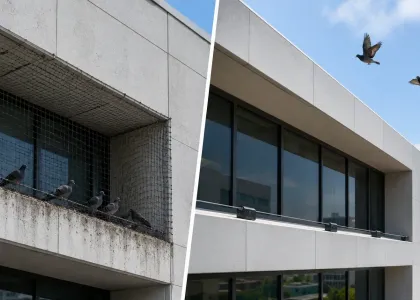
Bird laser deterrents can work in specific low-light, open, and short-term situations, but they are not usually reliable for long-term commercial bird control. Birds may adapt to the light, return when the laser stops, or shift to blind spots. Long-term bird control usually needs consistent, behavior-based deterrence that changes how birds experience the structure.
Bird laser deterrents get a lot of attention for one simple reason. They look high-tech and promise a quick fix. But do bird lasers actually work, and are they a reliable solution for long-term bird control?
Here is the straight answer. Bird lasers work in specific situations, but they are not a permanent solution for most commercial and industrial bird problems. Below is a clear breakdown so you can decide what makes sense for your site.
What Is a Bird Laser Deterrent?
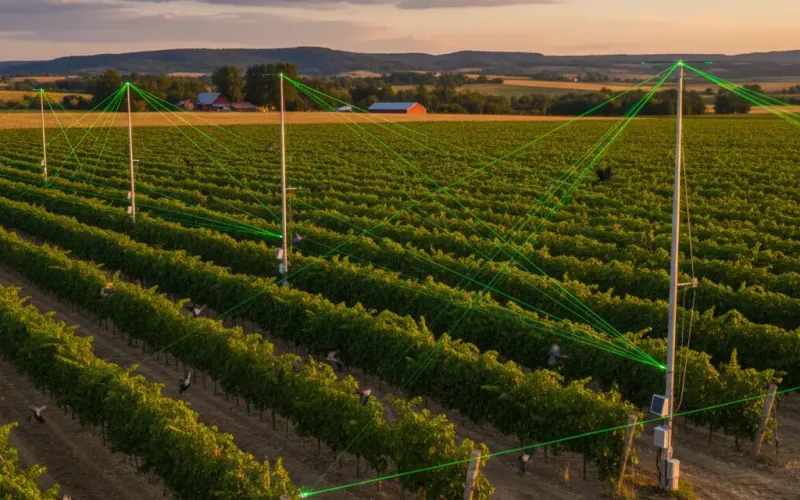
A bird laser deterrent uses moving red or green laser light to scare birds away from an area. The light creates a visual disturbance that birds interpret as danger, causing them to leave the space.
Bird laser systems are commonly used in:
- Agricultural fields
- Warehouses with high ceilings
- Airports and airfields
- Large open outdoor areas
Most systems rely on motion patterns and random light movement to prevent birds from getting comfortable.
Where Bird Lasers Perform Best
Bird lasers are effective under the right conditions.
They work best when:
- The area has low ambient light
- The space is wide and open
- Birds have not started nesting yet
- The goal is short-term or seasonal control
In these situations, lasers can push birds to relocate, especially during dusk or nighttime hours.
Why Bird Lasers Lose Effectiveness Over Time
This is where expectations and reality collide.
Bird lasers struggle when:
- The area is brightly lit or exposed to sunlight
- Birds are already nesting or roosting
- The site has complex structures or blind spots
- Pigeons and urban birds are involved
- The goal is permanent bird prevention
Birds adapt fast. Once they learn the light is not a real threat, the effectiveness drops. In many commercial environments, this happens sooner than expected.
Birds also adapt to predictable tools like sound devices, which is why many facilities compare lasers with ultrasonic bird repellers before choosing a long-term deterrent system.
Limitations of Bird Laser Systems
Laser bird deterrents have real constraints you should understand before investing.
Key limitations include:
- Birds can become accustomed to the light
- Line-of-sight coverage only
- Manual repositioning required
- Reduced daytime performance
- No physical or behavioral barrier
Lasers influence behavior temporarily. They do not change the conditions that attract birds in the first place.
Why Birds May Return After Laser-Only Deterrence
Birds may return after laser-only deterrence because the laser creates temporary movement but does not remove the conditions that attracted birds to the site. If rooftops, ledges, beams, signs, loading areas, or equipment zones still provide shelter, height, warmth, food access, or nesting opportunities, birds may retest the area once the visual disturbance stops.
Laser systems also depend on visibility and line of sight. In commercial buildings with corners, structural shadows, equipment, rafters, signs, and roof features, birds may find areas where the laser does not reach. Once they learn that certain zones remain usable, they may continue roosting or nesting nearby.
For long-term control, the goal should not only be to scare birds away for a moment. The goal should be to make the protected area consistently unsuitable for landing, roosting, and nesting.
Bird Laser Deterrents Compared to Other Bird Control Methods
| Laser deterrent factor | Benefit | Limitation |
|---|---|---|
| Visual movement | Can scare birds in open areas | Birds may adapt when the light is predictable |
| Low-light performance | Works best at dusk, night, or shaded areas | Daylight and bright spaces reduce visibility |
| Open-area coverage | Can move birds across fields, open roofs, or large bays | Line-of-sight limits coverage around beams, corners, signs, and equipment |
| Short-term bird pressure | May help before birds settle or nest | Less effective once birds have established routines |
| Manual adjustment | Can be repositioned as activity changes | Requires labor, monitoring, and repeated setup |
| Commercial bird control | Can support temporary movement | Often fails as a permanent solution when birds keep returning |
| Behavior-based deterrence | Not the main function of lasers | Long-term systems focus on changing bird behavior across protected zones |
Bird lasers can help in the right setting, but commercial properties often need broader coverage. If birds keep returning after short-term scare tactics, a continuous system like Symterra Pulse gives facility teams a stronger long-term option.
Bird Laser vs Modern Non-Physical Deterrent Systems
Laser systems rely on visual disruption. Modern non-physical systems focus on continuous behavioral disruption.
Bird laser deterrents:
- Visual only
- Light dependent
- Short to mid-term effectiveness
- Best for temporary use
Modern field-based deterrent systems:
- Operate continuously
- Do not rely on light or visibility
- Designed for permanent installations
- Better suited for commercial structures
This difference matters when bird pressure is constant and costly.
Visual Deterrents vs Behavior-Based Deterrence
Visual deterrents rely on birds reacting to what they see. Lasers, reflective tape, predator shapes, balloons, and optical scare devices can create movement, but their effectiveness depends on visibility, novelty, and the bird believing there is a real reason to leave.
Behavior-based deterrence works differently. Instead of only creating a visual scare response, it changes how birds experience the protected area. When landing, roosting, or nesting becomes consistently uncomfortable or unreliable, birds are less likely to treat the structure as safe territory.
This distinction matters for commercial buildings. A visual deterrent may move birds temporarily, but behavior-based deterrence is designed to reduce repeat activity over time.
Bird Lasers vs Pulse-Based Bird Deterrents
Bird lasers and pulse-based bird deterrents work in different ways. Lasers rely on visual disruption. Pulse-based deterrents focus on continuous behavioral disruption across the protected area.
| Comparison Point | Bird Lasers | Pulse-Based Bird Deterrents |
|---|---|---|
| How it works | Uses moving laser light to scare birds away. | Uses continuous pulse-based deterrence to discourage birds from settling. |
| Best conditions | Low light, open spaces, and short-term bird pressure. | Commercial buildings, rooftops, ledges, signs, equipment areas, and large facilities. |
| Weakness | Birds adapt, daylight reduces impact, and blind spots limit coverage. | Requires correct site planning and proper system placement. |
| Long-term use | Better for temporary or low-pressure situations. | Better for long-term commercial bird prevention. |
Long-Term Bird Control
Need More Than a Laser Bird Deterrent?
If birds keep returning after laser deterrents, visual scare devices, or short-term disruption, Symterra can help compare your current approach with a long-term bird control strategy built around behavior, structure layout, and consistent deterrent coverage.
Explore Long-Term Bird Control OptionsWhy Commercial Facilities Outgrow Bird Lasers
Warehouses, distribution centers, manufacturing plants, and infrastructure sites face different challenges than farms or open fields.
These facilities need:
- Full coverage without blind spots
- No visual distractions for workers
- No daily adjustments
- Predictable results
That is why many large operations start with lasers and then move on to more consistent solutions once limitations become clear.
Need More Than a Short-Term Bird Scare Tactic?
Bird lasers may help move birds in open areas, but they do not always solve repeat roosting, nesting, or landing behavior. If birds keep coming back, your property needs a deterrent strategy built for long-term pressure, not temporary reaction.
Symterra helps commercial, industrial, and institutional sites reduce recurring bird activity with behavior-based bird control solutions.
Contact Symterra to review your site and find the right long-term bird deterrent approach.
A Smarter Alternative to Laser-Based Bird Control
For sites that need long-term bird control without nets, spikes, or visual deterrents, systems like Symterra Pulse offer a different approach.
Instead of relying on light or physical barriers, Symterra Pulse works continuously to disrupt bird behavior across large structures. It is designed for permanent installation and commercial environments where lasers fall short.
The goal is simple. Stop birds from settling in the first place.
Long-Term Alternative to Bird Lasers
Stop relying on short-term visual deterrents
Symterra Pulse helps commercial properties reduce bird activity with a continuous, non-lethal deterrent system designed for long-term prevention across rooftops, ledges, signs, and facility structures.
Explore Symterra PulseTo compare laser deterrents with a long-term bird control system for your property, contact Symterra for a site recommendation.
Frequently Asked Questions
Do bird lasers work during the day?
No, not reliably. Bird lasers depend on low ambient light to create a visible threat. In daylight or brightly lit indoor environments, the beam loses contrast and birds largely ignore it.
Are bird lasers safe for birds?
Yes. Laser deterrents do not physically harm birds. They create a visual disturbance that causes birds to leave the area temporarily.
How long do bird lasers stay effective?
It varies, but effectiveness typically declines within weeks to months in high bird pressure environments. Once birds learn the light poses no real threat, habituation sets in and the deterrent stops working.
Do bird lasers work on pigeons?
Pigeons in urban and commercial settings adapt faster than most species. Because they are already accustomed to human activity and irregular stimuli, they habituate to laser movement quickly. Long-term pigeon control with lasers alone is rarely achievable.
What works better than bird lasers for warehouses and commercial facilities?
Systems that operate continuously without relying on light or line-of-sight coverage. The Symterra Pulse system works by disrupting magnetoreception, the biological navigation system birds use to orient themselves. Because this operates at a physiological level, birds cannot habituate to it the way they do to visual deterrents. It also runs without daily adjustment or repositioning, which makes it suited for large commercial structures where laser systems consistently fall short.