If your building feels like a permanent hangout spot for pigeons, you are not imagining it. Pigeons return to places where they find safe perches, shelter, warmth, food, and reliable nesting areas. Once they learn that a property meets those needs, they build a routine around it and keep coming back.
For commercial buildings, this repeat activity can lead to droppings, blocked drainage, damaged equipment, slip hazards, and ongoing cleanup costs. Understanding why pigeons keep returning helps you interrupt the pattern early and choose deterrents that stop the habit instead of only reacting to the mess.
Quick Answer
Why do pigeons keep coming back?
Pigeons keep coming back because buildings often give them safe perches, nearby food, shelter, warmth, and reliable nesting spots. Once pigeons identify a property as secure and useful, their strong memory, site habits, and homing instincts make them return again and again. Long-term pigeon control requires active and consistent deterrence that changes how pigeons experience the building.
| Why pigeons return | How to reduce recurrence |
|---|---|
| Safe roof edges, beams, ledges, and signs | Treat preferred landing and roosting zones with consistent deterrent coverage. |
| Food near dumpsters, loading docks, or outdoor dining | Remove food sources and improve cleanup around waste and eating areas. |
| Warm HVAC areas and covered corners | Identify sheltered zones and prevent repeated use. |
| Small nesting gaps behind signs or equipment | Close access points and monitor hidden nesting areas. |
| Previous successful nesting | Act before nesting routines repeat season after season. |
| Weak or inactive deterrent zones | Monitor deterrent performance and repair weak areas quickly. |
| Strong site memory and homing instincts | Use long-term deterrence that changes how pigeons experience the building. |
Pigeon Control Assessment
Need Pigeons to Stop Coming Back?
If pigeons keep returning to rooftops, ledges, signage, HVAC areas, loading docks, or commercial structures, Symterra can help assess the site and recommend a long-term pigeon control strategy built around bird behavior, structure layout, and consistent deterrent coverage.
Request a Long-Term Pigeon Control AssessmentWhy Pigeons Return to the Same Site Again and Again
Pigeons do not choose random buildings. They return to sites that meet their survival needs.
Once pigeons find a safe place to land, feed, shelter, or nest, they build a routine around that location. If they are not disturbed consistently, they treat the property as a reliable home base.
This is why pigeon activity often continues after cleanup. Removing droppings solves the visible mess, but it does not change the behavior. The pigeons still remember the site.
Common reasons pigeons return include:
- Safe roof edges, beams, ledges, and signs
- Food near dumpsters, outdoor dining areas, or loading docks
- Warm areas near HVAC units and covered equipment
- Hidden gaps used for nesting
- Weak or inconsistent deterrent coverage
- Previous successful nesting on the same property
The real problem is habit. Once pigeons learn that a building is safe, they keep testing it. If they find one weak zone, they return to that spot first.
Why Pigeons Build Strong Habits Around Buildings
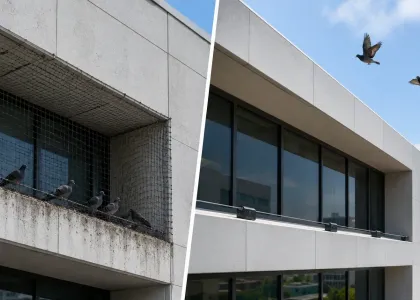
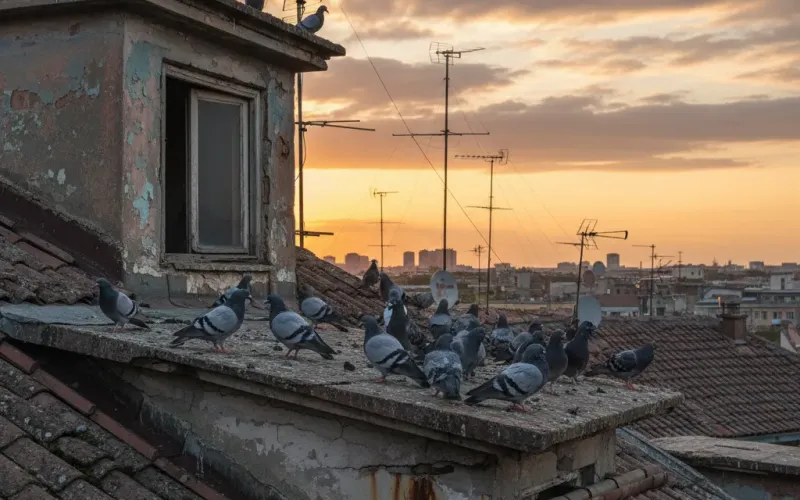
Pigeons keep coming back because buildings can meet several needs at once. A roof edge, ledge, sign frame, beam, HVAC area, or covered corner can give pigeons a safe place to land, rest, stay warm, and watch for food.
Roosting memory also plays a major role. Once pigeons learn that a building is safe and useful, they may return to the same surfaces repeatedly. If food is nearby, shelter is available, and nesting gaps remain open, the building becomes part of their daily routine.
Nesting habits can make the problem worse. If pigeons successfully nest on or near a structure, they may return during future nesting cycles. Cleanup can remove droppings and debris, but it does not erase the reason pigeons selected the site.
Why Your Building Attracts Pigeons
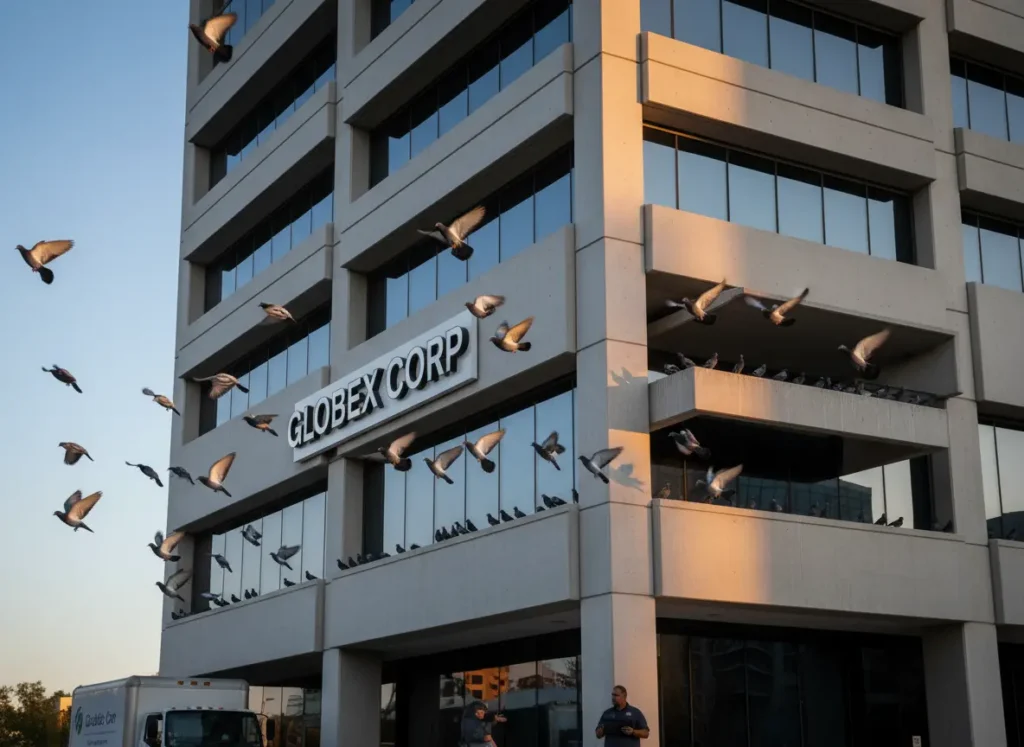
High Perches Make Buildings Safe for Pigeons
From their perspective, your building is the perfect lookout tower. They feel protected when they perch on:
- Roof edges
- Signage frames
- Beams and rafters
- Parapets
If nothing disturbs them, they treat these places as routine landing spots. Commercial property teams can also review Symterra’s approach for commercial and retail facilities where pigeon activity can affect rooftops, signage, customer areas, parking areas, and maintenance costs.
Lack of Deterrents Allows Pigeons to Return
Pigeons test environments every day. If there is no consistent deterrent or if the system has weak zones, they sense it immediately. Once they realize they are unbothered, they form a long-term habit of returning.
Food Sources Keep Pigeons Coming Back
Food Availability Creates Daily Pigeon Activity
Pigeons remember where food appears regularly. They return to places with:
- Open dumpsters
- Loading dock crumbs
- Nearby food courts
- Outdoor dining areas
Even small spills or residues are enough to establish a routine. Facilities with loading docks, dumpsters, storage areas, and equipment zones can also review Symterra’s solutions for industrial and warehouse bird control.
How People Accidentally Attract Pigeons
In busy commercial areas, pigeons quickly learn that humans drop food or leave scraps behind. For them, your building becomes a consistent “safe bet” for an easy meal. Urban pigeon guidance also recommends reducing accidental feeding by controlling food scraps, open waste, and other reliable food sources around buildings.
Buildings Give Pigeons Shelter and Warmth
Warm Building Surfaces Attract Pigeons
Your building creates microclimates pigeons love:
- Warm metal
- Heat from HVAC units
- Covered corners shielded from wind and rain
Shelter plus warmth equals an ideal nesting environment.
Small Gaps Create Pigeon Nesting Spots
Pigeons do not need big openings. They settle into:
- Voids behind signs
- Gaps under equipment
- Ledgers with overhead cover
- Recessed architectural features
Once a pigeon nests successfully, expect them back every season.
Pigeon Homing Instincts Make Them Return
Pigeons Remember Safe Buildings
Pigeons are incredible navigators. Once they claim a location as safe and resource-rich, they lock it in permanently. Research on homing pigeons shows that pigeons have a strong spatial navigation system, which helps explain why familiar safe locations can become difficult habits to break.
Pigeon Nesting Habits Repeat Over Time
If they raise young on your building, the next generation repeats the same habit. This is why pigeon problems often feel “never-ending.”
Why Inconsistent Bird Deterrents Fail
Pigeons Actively Look for Weak Spots
They immediately test:
- Inactive zones
- Low-voltage areas
- Damaged sections
- Areas without coverage
If they find a weak spot, they exploit it and return.
Temporary Pigeon Control Does Not Last
Short-term methods like decoys, sprays, or noise distract them briefly. But pigeons adapt fast and resume the same routine once the effect fades. This is why facilities need bird deterrents that work long-term instead of tools that only interrupt pigeon activity for a short period.
How Behavior-Based Bird Deterrence Reduces Pigeon Recurrence
Behavior-based bird deterrence reduces pigeon recurrence by changing how pigeons experience the building. Instead of only moving pigeons away temporarily, the goal is to make preferred landing, roosting, and nesting zones feel unreliable every time pigeons test them.
Learn more about how Symterra’s bird deterrent system works to support behavior-based prevention across commercial structures.
This matters because pigeons learn from repeated outcomes. If they return and find safe ledges, sheltered gaps, food access, or weak deterrent zones, the habit continues. If the structure consistently feels unusable, pigeons are more likely to break the routine and move elsewhere.
Long-Term Prevention
Stop the Conditions That Bring Pigeons Back
Pigeon problems continue when the same safe landing, roosting, feeding, and nesting areas remain available. Symterra helps commercial properties identify those weak zones and build a deterrent plan designed to reduce repeat pigeon activity at the source.
Request a Site AssessmentHow to Stop Pigeons From Coming Back
Pigeons keep coming back because your building offers safety, food, shelter, and predictable conditions. Their memory and homing instincts make the problem persistent. To break this cycle, the deterrent system must stay active and consistent across every zone. Some facilities consider bird netting for pigeon control but netting only works when it is installed correctly, maintained consistently, and matched to the building’s layout.
Symterra Pulse helps achieve this by monitoring electrical deterrent lines in real time. It detects weak areas, identifies voltage drops, and alerts teams before pigeons can take advantage of gaps. With continuous visibility, facilities maintain full deterrent strength and stop pigeons from reestablishing themselves. For properties that need a non-lethal bird deterrent system, Symterra Pulse helps reduce repeat bird activity without relying on harmful contact methods. For more background on system performance, review Symterra’s efficacy study.
For properties with heavy pigeon droppings, public health guidance notes that pigeon-related diseases can be associated with breathing dust created when droppings are disturbed during cleanup.
How Commercial Buildings Can Reduce Repeat Pigeon Activity
- Identify the ledges, roof edges, signs, HVAC areas, and gaps pigeons use most.
- Remove food sources around dumpsters, loading docks, outdoor dining areas, and waste zones.
- Clean droppings and nesting debris safely so old activity does not continue building up.
- Close small nesting gaps where possible.
- Add consistent deterrent coverage across preferred landing and roosting zones.
- Monitor weak areas so pigeons cannot take advantage of inactive or damaged deterrent zones.
Stop Repeat Pigeon Activity
Keep pigeons from coming back to the same site
Symterra Pulse helps commercial properties maintain consistent bird deterrent coverage by monitoring system performance and identifying weak areas before pigeons return.
Explore Symterra PulseFrequently Asked Questions
Why do pigeons keep returning to the same building? Pigeons return because buildings consistently provide what they need: safe high perches, nearby food, shelter from weather, and warmth from HVAC units and heated surfaces. Once a pigeon identifies a property as resource-rich and unthreatening, their homing instinct locks that location in permanently.
Do pigeons remember nesting locations? Yes. Pigeons have strong long-term spatial memory and will return to the same nesting sites season after season. If they successfully raised young on your building, the next generation repeats the same behavior. This is why pigeon problems compound over time rather than resolving on their own.
Why do pigeons come back even after deterrents are installed? Pigeons actively test deterrent systems for weak zones, inactive areas, and voltage drops. If a deterrent has gaps in coverage or fails partially, pigeons find those spots and resume the habit. Inconsistent or temporary deterrence does not change long-term behavior. It only delays it.
Do decoys or noise stop pigeons long-term? Not long-term. Pigeons adapt quickly to visual decoys, reflective surfaces, and audio disturbances. Once they realize the threat is not real or consistent, they resume normal behavior. These methods disrupt pigeons temporarily but do not break the return cycle.
What stops pigeons permanently? A deterrent that stays active across every zone without gaps. Pigeons exploit any weak point they find. The Symterra Pulse system monitors deterrent line voltage in real time, detects drops before pigeons can take advantage, and maintains full coverage continuously. Because it works by disrupting magnetoreception rather than scaring birds, pigeons cannot adapt to it the way they adapt to physical or visual deterrents.