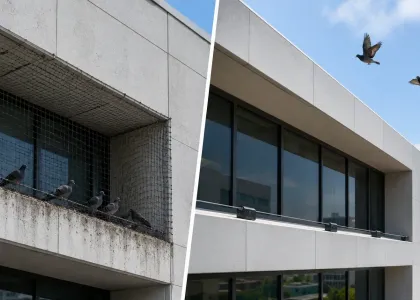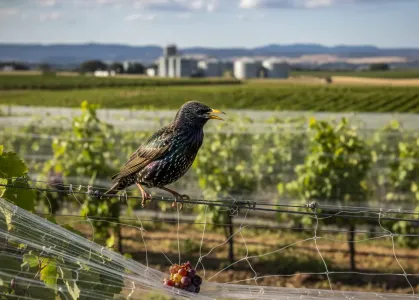
Facilities manage many types of operational risk. Equipment failures, safety hazards, environmental exposure, and compliance issues all require preventive strategies. Bird activity belongs in this same category. When birds repeatedly occupy structures, they introduce risks that affect safety, infrastructure integrity, and operational stability.
Long-term bird deterrence works as a risk mitigation strategy because it prevents these issues before they develop into larger operational problems.
Quick Answer
Why is bird deterrence a risk mitigation strategy?
Bird deterrence is a risk mitigation strategy because it prevents safety, structural, operational, and compliance problems before they grow into larger disruptions. When birds are stopped from roosting and nesting, facilities reduce unexpected cleanup, damage, access issues, and preventable risk exposure.
Bird Activity Creates Multiple Risk Categories
Safety Risk
Bird droppings on walkways, ramps, and ladders create slip hazards. Nesting debris near electrical equipment increases fire exposure.
Structural Risk
Acidic droppings accelerate corrosion on metal components and degrade coatings on concrete and steel structures.
Operational Risk
Nests and debris interfere with equipment access, maintenance work, and routine inspections.
Compliance Risk
In regulated industries, bird contamination can trigger sanitation violations and regulatory scrutiny.
Reactive Control Leaves Risk Unmanaged
Cleanup Addresses Symptoms
Removing droppings or nests reduces visible impact but does not change the conditions that attract birds.
Recurring Occupation Restarts the Cycle
Without preventive deterrence, birds return repeatedly, recreating the same hazards.
Prevention Reduces Risk Exposure
Deterrence Stops Roosting and Nesting
When birds cannot establish territory on a structure, hazards tied to droppings and debris decrease significantly.
Consistent Coverage Prevents Relocation
Effective deterrence protects all high-risk zones so birds cannot shift to nearby surfaces.
Risk Mitigation Improves Operational Stability
Fewer Safety Incidents
Reducing bird activity lowers the likelihood of slips, falls, and equipment contamination.
Reduced Maintenance Disruption
Maintenance teams spend less time responding to bird-related issues and more time performing scheduled work.
Better Budget Predictability
When bird activity declines, unexpected cleanup and repair costs decrease.
Risk Strategies Require Ongoing Visibility
Preventive Systems Need Monitoring
Risk mitigation works only when deterrent systems remain active and effective.
Early Detection Prevents Reoccupation
Identifying weak zones quickly helps prevent birds from reclaiming territory.
Prevention Strengthens Risk Management
Bird activity introduces safety, structural, operational, and compliance risks across many types of facilities. Long-term deterrence reduces these risks by preventing birds from establishing territory in the first place.
Symterra Pulse supports this risk mitigation approach by providing real-time visibility into deterrent system performance. It helps facilities detect inactive zones and system faults before birds return. With verified deterrence in place, bird control becomes part of a proactive risk management strategy rather than a reactive maintenance task.
Frequently Asked Questions
Why is bird deterrence considered a risk mitigation strategy?
Bird deterrence is a risk mitigation strategy because it helps prevent hazards before they turn into larger operational problems. When birds repeatedly occupy a structure, they create safety, structural, operational, and compliance risks. Long-term deterrence reduces those risks by stopping roosting and nesting before damage and disruption build up.
What types of risk does bird activity create for facilities?
Bird activity creates several types of risk across a facility. Droppings can create slip hazards, nesting debris can increase fire exposure, and corrosion from acidic waste can damage structural materials. In some industries, bird contamination can also trigger compliance concerns and sanitation issues.
How do birds create safety risks on commercial or industrial properties?
Birds create safety risks by leaving droppings on walkways, ramps, ladders, and other access points. These surfaces become more slippery and dangerous for workers, vendors, or maintenance teams. Nesting debris near electrical systems can also raise the risk of fire or equipment-related incidents.