
Why Government Buildings Keep Losing the Bird Problem (And What Finally Fixes It)
Government and municipal buildings face bird problems that go beyond maintenance, they create inspection failures, public health liabilities, and contract compliance risks. Symterra’s electromagnetic bird deterrent system provides a permanent, non-disruptive solution that holds up under public scrutiny and doesn’t require repeated service visits or restricted chemical use.
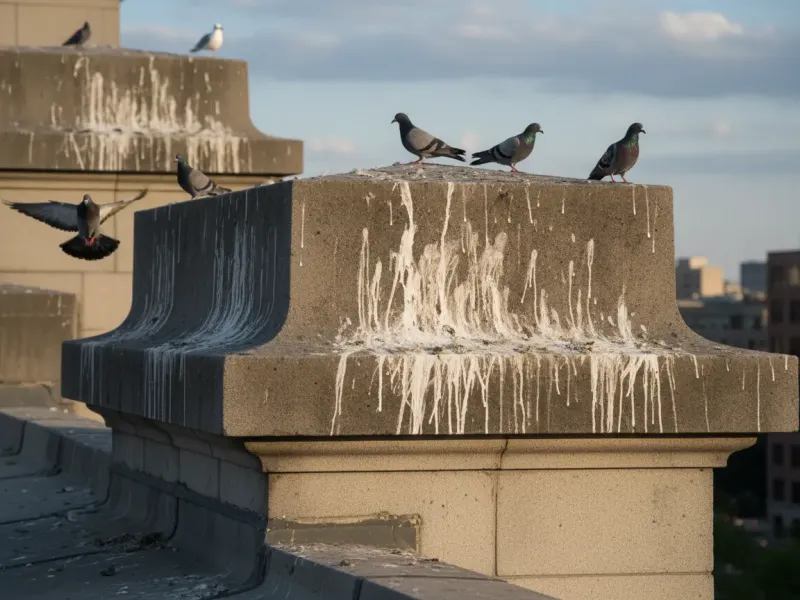
Rooflines, Parapets, and Building Ledges
Why birds target this
-
Elevated surfaces provide safety and visibility
-
Flat ledges allow easy, repeated perching
-
Heat retention attracts resting birds
Why temporary fixes fail
-
Spikes and gels degrade from weather exposure
-
Long ledges leave untreated gaps
-
Birds relocate along the structure
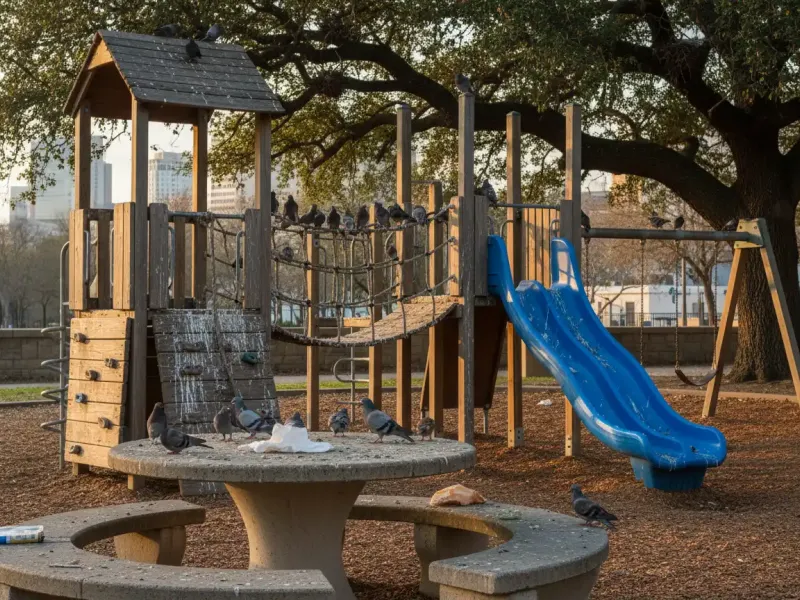
Courtyards, Playgrounds, and Outdoor Gathering Areas
Why birds target this
-
Open spaces with minimal overhead threats
-
Food scraps and litter attract birds
-
Shade and nearby structures provide shelter
Why temporary fixes fail
-
Visual deterrents lose effectiveness quickly
-
Cleaning removes droppings, not birds
-
Birds return during low-activity hours
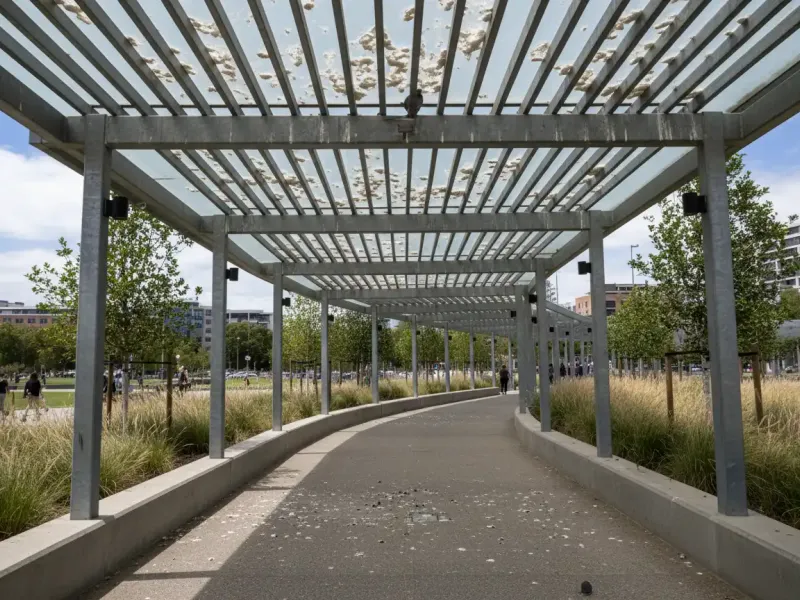
Covered Walkways, Overhangs, and Entryways
Why birds target this
-
Shelter from wind and rain
-
Structural beams offer roosting support
-
Predictable foot traffic patterns
Why temporary fixes fail
-
Netting sags or tears
-
Sound deterrents disrupt occupants
-
Birds shift to adjacent entrances
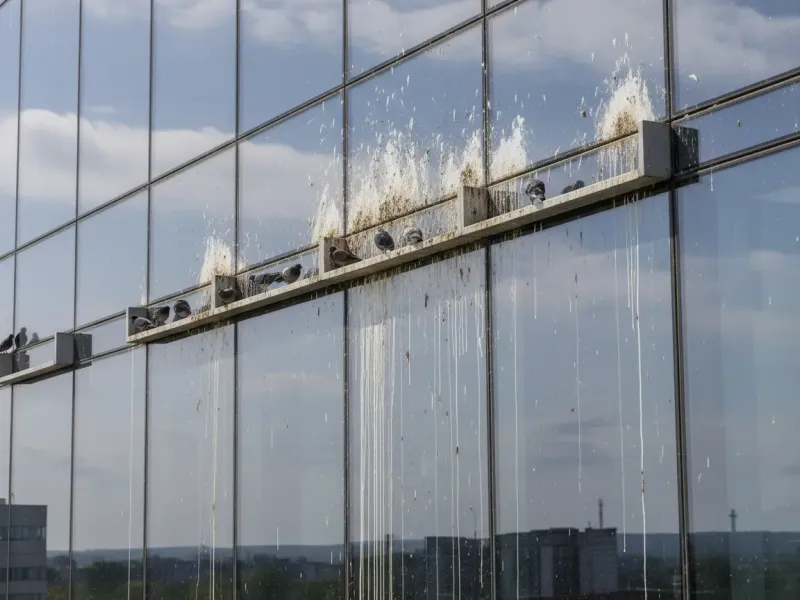
Windows, Glass Walls, and Facades
Why birds target this
-
Reflective glass mimics open sky
-
Large uninterrupted surfaces confuse flight paths
-
Interior lighting attracts birds
Why temporary fixes fail
-
Decals and films fade or peel
-
Partial coverage leaves collision zones
-
Birds continue striking untreated glass
Rooftop Equipment and HVAC Areas
Why birds target this
-
Warm air exhaust attracts roosting
-
Flat equipment surfaces allow easy landing
-
Low disturbance between maintenance visits
Why temporary fixes fail
-
Covers restrict airflow
-
Spikes interfere with servicing
-
Birds move to adjacent equipment
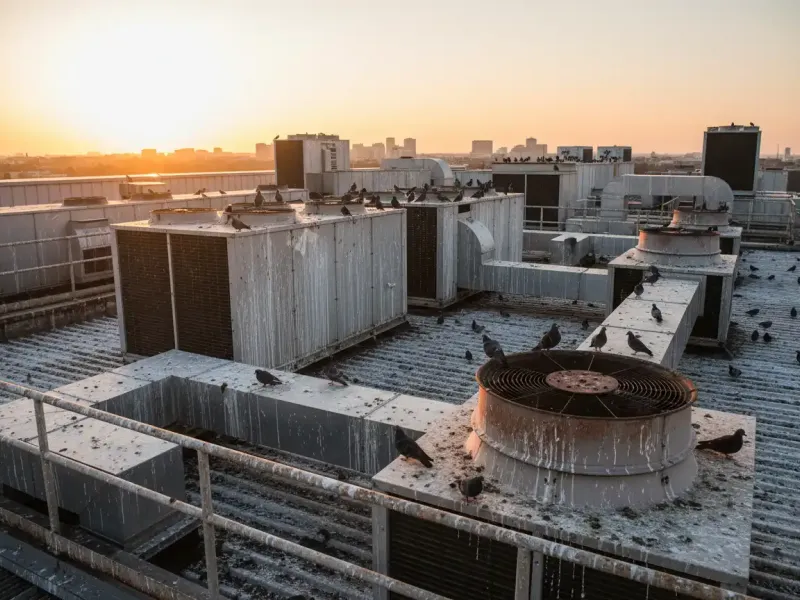

Bird perching on buildings, playgrounds, and other structures can lead to equipment damage and operational inefficiencies. Symterra bird deterrent systems use electromagnetic waves to create an inhospitable environment for birds. This non-lethal method effectively deters birds from landing and perching on key areas, helping maintain the functionality and cleanliness of educational buildings, government facilities, and public spaces
-
 Protects equipment functionality
 -
Reduces maintenance costs
-
Prevents damage to infrastructure

Bird droppings are not only unsightly but also pose serious health risks due to the bacteria and fungi they contain. In institutional and government settings, droppings can contaminate outdoor spaces, create slip-and-fall hazards, and increase cleaning costs. Symterra systems significantly reduce the presence of birds, minimizing the accumulation of droppings. This ensures cleaner, safer, and more hygienic environments for students, staff, and the public.
-
Maintains cleanliness and hygiene
-
Reduces health risks and contamination
-
Lowers cleaning and maintenance costs

Bird collisions with windows and glass structures in schools and government buildings can result in injury or death for the birds and damage to the property. Symterra systems emit signals that alert birds to these obstacles, helping them navigate safely around the facility. This reduces the risk of collisions, preserving both the bird population and the integrity of the buildings.
-
Protects bird populations
-
Reduces property damage
-
Enhances facility safety
-
Birds establish habitual roosting zones
-
Blocking one area shifts activity elsewhere
-
Physical deterrents create safety and access issues
-
Outdoor exposure accelerates wear
-
Ongoing cleaning does not prevent return
Built for Public Spaces. Compliant by Design.
Government and institutional facilities operate under strict standards for public safety and environmental responsibility. Symterra meets those requirements without compromise.
No pesticides or toxic chemicals. No harm to protected bird species. No noise disruption to occupied buildings. No physical hazards for students, staff, or visitors. Safe for continuous operation in high-traffic public spaces.
Symterra Pulse uses electromagnetic technology, not poisons, traps, or lethal methods. It deters birds by influencing their natural response to the treated area without harming them. That makes it suitable for responsible wildlife management standards and facilities where chemical or lethal methods are restricted or prohibited.
For facility managers navigating procurement requirements, Symterra provides documentation and support throughout the approval process.
Bird Control That Meets Government Facility Requirements
Federal and municipal facilities often face restrictions on chemical use, physical alterations to historic structures, and vendor contracting requirements. Symterra’s system requires no chemicals, no structural penetration, and operates continuously without scheduled service visits making it compatible with GSA and municipal maintenance standards.
Why Choose Symterra?
Symterra bird deterrent systems offer a robust solution for institutional and government facilities facing challenges with bird perching, droppings, debris, and collisions. By leveraging cutting-edge technology to create an inhospitable environment for birds, Symterra ensures your facilities remain clean, safe, and operational.
This innovative approach not only addresses immediate concerns but also provides long-term benefits, making Symterra an essential investment for facility managers and government operators seeking to protect their assets and enhance the environment for students, staff, and the public.


Advanced Technology
Utilizes electromagnetic waves.
Non-Lethal
Bird deterrent method designed to discourage birds without harming them.
Comprehensive Solution
Addresses perching, droppings, debris, and collisions.
Long-Term Benefits
Reduces maintenance costs and protects infrastructure.
Common Questions About Bird Control for Government and Institutional Facilities
Q: Is Symterra safe for use around children in schools?
A: Yes. Symterra Pulse uses low-level electromagnetic pulses that affect bird physiology only. It emits no audible noise, no chemicals, and no physical hazards. It operates continuously in occupied spaces including schools, playgrounds, and covered walkways without disrupting students or staff.
Q: Does bird control require permits for government buildings?
A: Requirements vary by jurisdiction and facility type. Lethal methods and certain chemical deterrents typically require permits or are restricted outright on public property. Symterra’s non-lethal, chemical-free system generally avoids those restrictions. We recommend confirming local requirements with your facilities manager. Symterra can provide product documentation to support any approval process.
Q: What is the most effective bird deterrent for public facilities?
A: Effectiveness depends on coverage and permanence. Spikes and netting address one surface at a time and degrade over time. Sound deterrents disrupt occupants and birds adapt to them. Symterra Pulse creates a field-based deterrent zone that birds cannot adapt to, covering multiple surfaces and zones simultaneously. It is the only electromagnetic bird deterrent with a peer-reviewed efficacy study from the University of Arizona.
Q: How does Symterra compare to bird spikes for institutional use?
A: Bird spikes block specific ledges but leave every other surface unprotected. On large government buildings with complex architecture, multiple ledges, rooflines, courtyards, and entryways, full spike coverage is expensive, labor-intensive, and visually degrading for public-facing structures. Symterra installs with minimal hardware, maintains the building’s appearance, and deters birds across the entire protected zone, not just the spots where spikes were placed.