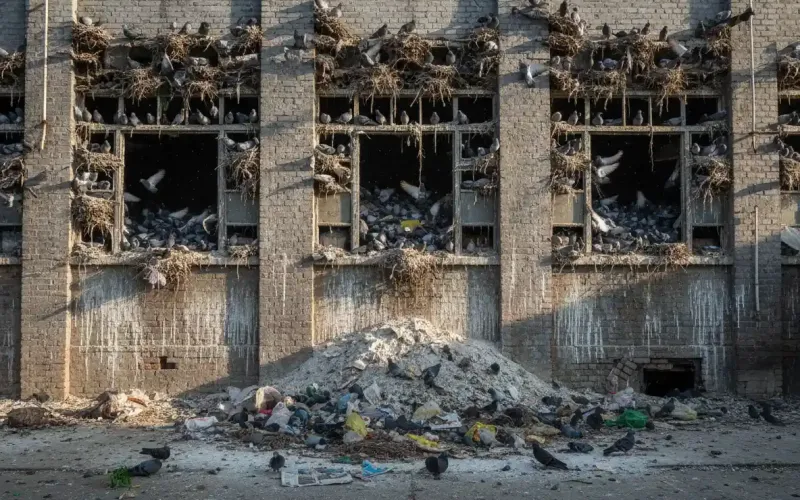
Emergency bird incidents rarely happen without warning. They are the result of repeated activity that builds up over time. Nests grow larger, droppings accumulate, and debris spreads into critical areas. Then a trigger event forces immediate action.
Long-term deterrence reduces these emergencies by preventing the conditions that lead to them.
What Counts as an Emergency Bird Incident
Blocked Access Points
Nesting material can obstruct ladders, walkways, or equipment access, making areas unsafe or unusable.
Sudden Safety Hazards
Heavy droppings on ramps and platforms create immediate slip risks that require urgent cleanup.
Fire Risk From Nesting Debris
Nests near lighting, wiring, or mechanical systems can create ignition risks that demand immediate response.
How Emergencies Develop Over Time
Gradual Accumulation Goes Unnoticed
Bird activity often increases slowly. Small nests and light debris may not trigger immediate concern.
Threshold Events Trigger Urgency
A blocked drain, equipment interference, or safety complaint can quickly turn ongoing activity into an emergency situation.
Reactive Control Leads to More Emergencies
Problems Are Addressed Too Late
By the time maintenance teams respond, the issue has already escalated.
Temporary Fixes Reset the Cycle
Removing nests or cleaning surfaces without prevention allows birds to return and rebuild, leading to future emergencies.
Long-Term Deterrence Prevents Escalation
Stops Nest Formation Early
When birds cannot establish roosting or nesting areas, the buildup that leads to emergencies never begins.
Reduces Accumulation of Droppings and Debris
Without ongoing activity, surfaces remain clean and safe, reducing the likelihood of sudden hazards.
Operational Benefits of Fewer Emergencies
Stable Maintenance Schedules
Maintenance teams can focus on planned work instead of responding to urgent bird-related issues.
Lower Safety Risk
Reducing emergency incidents decreases exposure to slips, falls, and fire hazards.
Improved Resource Allocation
Labor, equipment, and time are used more efficiently when emergencies are minimized.
Preventing Emergencies Requires Continuous Deterrence
Emergency bird incidents are the result of unmanaged, recurring activity. Long-term deterrence prevents these events by eliminating the buildup that leads to sudden risks and disruptions.
Symterra Pulse supports this approach by providing real-time visibility into deterrent system performance. It helps identify weak zones and system issues before birds can reestablish activity and create emergency conditions. With verified deterrence in place, facilities reduce urgent incidents and maintain stable operations.