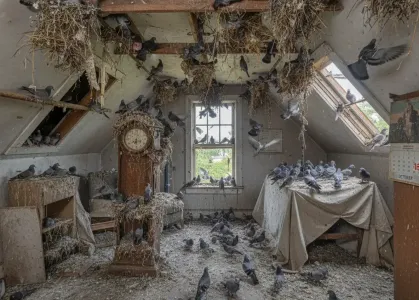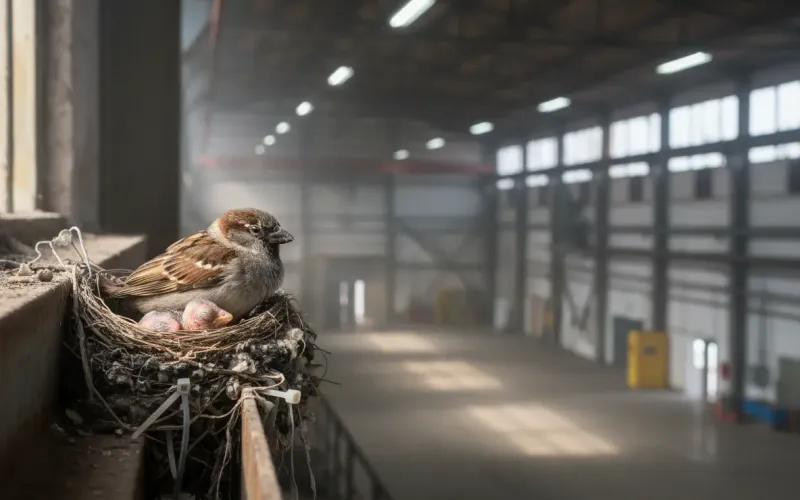
Facility planning is built on predictability. Preventive maintenance schedules, capital improvements, staffing plans, and safety audits are structured months in advance. Recurrent bird nesting undermines that predictability. What appears to be a minor nuisance quietly reshapes priorities, budgets, and timelines.
When nesting repeats season after season, planning becomes reactive instead of strategic.
Nesting Creates Unplanned Work Cycles
Emergency Removal Disrupts Schedules
Active nests often require immediate attention, especially near HVAC systems, electrical units, or high-traffic areas. Crews are reassigned from planned tasks to urgent removal.
Cleaning Frequency Increases Without Notice
Droppings below nesting areas demand repeated cleanup. These tasks rarely appear in annual plans but slowly consume labor hours.
Maintenance Priorities Shift Away From Long-Term Goals
Preventive Work Gets Delayed
When bird issues spike, inspections, sealant renewal, corrosion control, and asset preservation tasks move down the list.
Reactive Tasks Crowd Out Capital Planning
Time spent addressing repeat nesting reduces focus on long-term infrastructure improvements.
Budget Forecasting Becomes Unstable
Variable Labor Costs Rise
Lift rentals, specialized cleaning, contractor visits, and overtime hours become recurring but unpredictable expenses.
Small Repairs Accumulate
Corrosion, clogged drains, damaged insulation, and fire risk mitigation add incremental costs across departments.
Safety and Compliance Reviews Increase
Slip and Fire Risk Monitoring Expands
Nest-related debris and droppings increase inspection frequency. Risk assessments become more complex.
Documentation Burden Grows
Incident reviews and corrective action reports add administrative workload that was not originally planned.
Multi-Year Planning Suffers
Deferred Repairs Become Larger Projects
Unchecked nesting damage accelerates structural wear. What could have been minor preventive maintenance turns into restoration work.
Planning Cycles Shorten
Instead of looking ahead five to ten years, facility managers focus on the next cleanup or removal task.
Why Recurrence Is the Real Problem
One Nest Is Not the Issue
The disruption comes from repetition. Birds rebuild quickly and return to familiar structures.
Inconsistent Deterrence Invites Retesting
When deterrent systems weaken or fail in specific zones, birds reclaim territory and restart the cycle.
Planning Stability Requires Continuous Prevention
Recurrent bird nesting disrupts facility planning because it creates unpredictable tasks, shifting priorities, and unstable budgets. Long-term planning depends on eliminating repeat behavior, not reacting to it.
Symterra Pulse helps restore planning stability by providing real-time visibility into deterrent system performance. It identifies weak zones and system faults before birds reestablish nests. With consistent and verified deterrence, facilities reduce recurring disruptions and maintain focus on long-term operational goals.