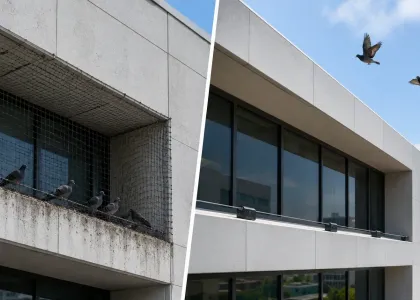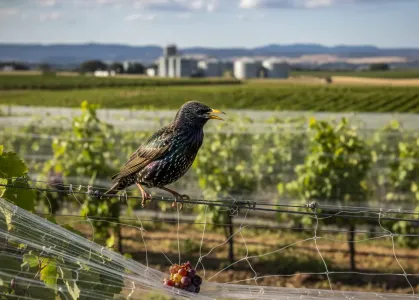
Static bird deterrents often work at first. Birds hesitate, circle, or leave temporarily. Then, weeks or months later, the birds are back as if nothing was ever installed. This is not a failure by chance. It is a predictable outcome seen repeatedly on utility towers, signal infrastructure, and transmission systems, driven by how birds learn, adapt, and evaluate risk.
Quick Answer
Why do static bird deterrents lose effectiveness?
Static bird deterrents lose effectiveness because birds learn when spikes, decoys, reflective tape, sound devices, or netting are predictable, harmless, or easy to avoid. Once birds adapt, they may return to the same area, land around gaps, or move to nearby untreated surfaces. Long-term bird control works better when deterrence changes bird behavior across the full site.
Why do birds adapt to deterrents faster than most people expect?
How does familiarity cause deterrents to lose their effect?
What feels threatening at first becomes familiar. Once birds recognize that a deterrent never escalates or changes, it no longer signals danger.
Why does a predictable deterrent always fail eventually?
Fixed Position Means Fixed Expectation
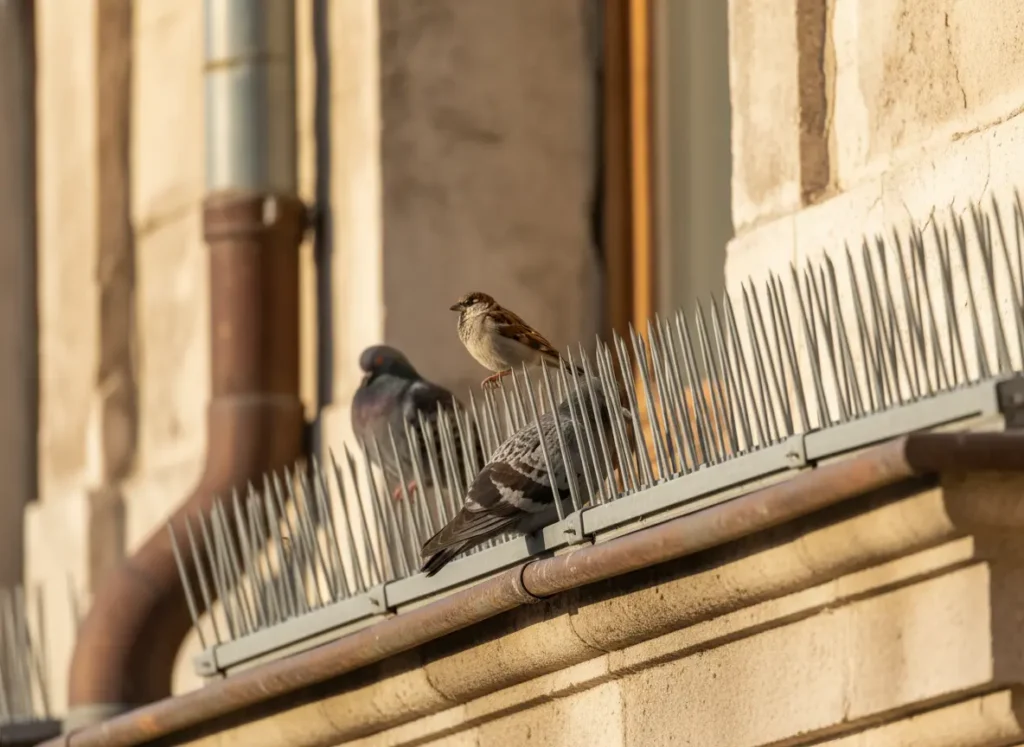
Spikes, decoys, reflective objects, and stationary devices never change location or response. Birds map these features into their environment and learn where and how to perch around them.
Bird spikes still have a place in some sites, but facility teams should compare bird spikes vs electromagnetic deterrents before choosing a long-term system for recurring bird pressure.
Habituation Spreads Through the Flock
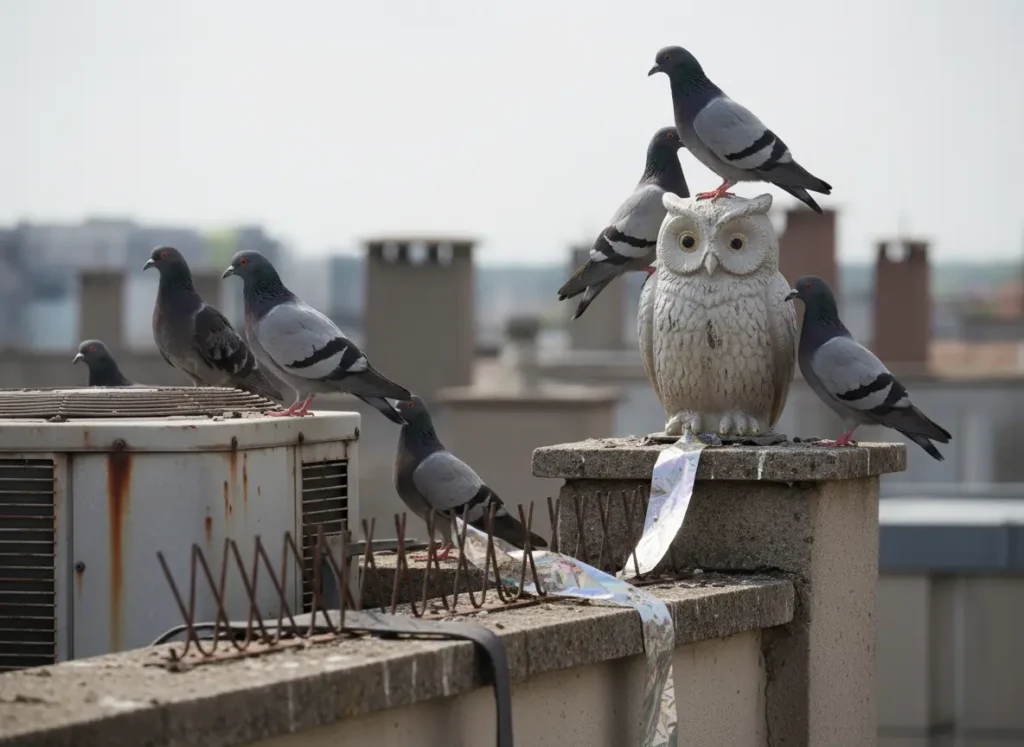
One Bird Learns, Others Follow
Birds observe each other closely. Once one bird lands safely near a static deterrent, others copy the behavior. This accelerates failure across the site.
Learned Behavior Becomes Routine
After habituation sets in, birds treat the deterrent as part of the structure rather than a threat.
Why do static bird control systems fail against adaptive bird behavior?
Territory Remains Comfortable
Static deterrents do not remove warmth, shelter, or stability. Birds still gain the same benefits from the structure.
No Negative Feedback Loop
Without direct sensory feedback during landing or roosting, birds have no reason to abandon the site.
Long-term success depends on behavior-based bird deterrent technology that changes how birds experience the protected area instead of relying on fear or surprise.
Environmental Wear Makes Static Deterrents Worse
Weather Reduces Effectiveness
Sun, wind, rain, and debris degrade static deterrents over time. What was visible or reflective at installation fades quickly.
For more detail on netting limitations, review Symterra’s guide on bird netting for commercial properties.
Why Static Deterrents Create Repeat Maintenance
Static deterrents often create repeat maintenance because they depend on physical condition, placement, visibility, and coverage. Once spikes bend, netting sags, reflective devices fade, sound units repeat the same pattern, or decoys stay in one position, birds begin testing the protected area again.
For commercial facilities, this creates a cycle of repair, cleanup, replacement, and reinspection. The deterrent may still be present, but birds have learned where it is weak or where it can be avoided.
This is why static deterrents can become a maintenance dependency instead of a long-term prevention strategy. The system may need constant adjustment just to keep birds from reclaiming the same surfaces.
Signs Your Static Bird Deterrents Are Failing
Static deterrents usually fail in stages. At first, birds may avoid the area. Then they begin testing edges, nearby structures, or gaps. Once birds confirm the deterrent does not create real discomfort or risk, they return.
Watch for these signs:
- Birds perch near spikes, decoys, tape, or sound devices
- Droppings return after a short period of improvement
- Birds gather on nearby untreated ledges, beams, or rooflines
- Nesting material appears around protected zones
- Reflective devices fade, stop moving, or become dirty
- Netting sags, tears, or collects debris
- Maintenance teams keep fixing the same deterrent issues
- Bird activity shifts instead of disappearing
When these signs appear, the issue is no longer just product failure. It means birds have adapted to the plan.
Maintenance Gaps Create Safe Zones
Once parts break, shift, or fall away, birds exploit the openings immediately.
| Static deterrent | Why it loses effectiveness | Better long-term approach |
|---|---|---|
| Bird spikes | Birds land around gaps or build nests nearby | Cover full landing and roosting zones |
| Fake owls | Birds learn they do not move or pose real risk | Use deterrence tied to actual bird behavior |
| Reflective tape | Fades, stops moving, and becomes familiar | Avoid relying only on visual fear |
| Sound devices | Birds adapt to repeated sounds | Use silent deterrence for active facilities |
| Netting | Tears, sags, blocks access, and needs upkeep | Reduce reliance on fragile barriers |
| Partial coverage | Birds move to untreated nearby areas | Protect the full activity zone |
Why Common Static Bird Deterrents Lose Effectiveness
| Static Deterrent | Why It Stops Working | Better Long-Term Approach |
|---|---|---|
| Bird spikes | Birds land around gaps or build nests nearby | Cover full landing and roosting zones |
| Fake owls | Birds learn they do not move or pose real risk | Use deterrence tied to actual bird behavior |
| Reflective tape | Fades, stops moving, and becomes familiar | Avoid relying only on visual fear |
| Sound devices | Birds adapt to repeated sounds | Use silent deterrence for active facilities |
| Netting | Tears, sags, blocks access, and needs upkeep | Reduce reliance on fragile barriers |
| Partial coverage | Birds move to untreated nearby areas | Protect the full activity zone |
For a broader comparison of traditional bird control methods, review do bird deterrents work and how different deterrents perform over time.
Long-Term Bird Control
Static Deterrents Not Working Anymore?
If birds keep returning after spikes, decoys, tape, sound devices, or netting, Symterra can help evaluate your site and recommend a behavior-based bird deterrent strategy built for long-term performance.
Request a Site RecommendationWhy Dynamic, Behavior-Based Systems Perform Better
Symterra’s approach is supported by the University of Arizona efficacy study, which helps show how electromagnetic deterrence affects bird behavior in protected zones.
Why Commercial Facilities Need More Than Static Deterrents
Commercial properties often have too many bird activity zones for static deterrents to solve the full problem. Birds may test rooftops, ledges, signs, beams, loading docks, HVAC units, lighting fixtures, vents, and equipment platforms until they find a comfortable place to land.
Static tools often treat one visible problem area. The real issue is the bird’s behavior across the whole site.
A stronger commercial bird control plan should help facility teams:
- Reduce repeat bird activity
- Limit cleanup and repair cycles
- Protect equipment access
- Reduce nesting pressure
- Identify weak zones before birds return
- Maintain deterrent performance over time
This gives teams a better path than replacing the same spikes, tape, decoys, or netting every season.
Why Behavior-Based Deterrence Works Better for Recurring Bird Problems
Behavior-based deterrence works better for recurring bird problems because it changes how birds experience the protected space. Instead of relying on fear, surprise, or a fixed barrier, the goal is to make landing, roosting, and nesting feel unreliable over time.
This matters because birds learn from repeated outcomes. If a bird can land safely near a spike, decoy, tape strip, sound device, or gap in netting, the site can remain usable. If the protected zone consistently creates a reason to leave, birds are less likely to keep testing it.
For commercial properties, behavior-based deterrence helps address the full activity pattern, not just one visible perch or nesting area.
See how Symterra Pulse supports long-term bird control by changing how birds experience protected landing and roosting zones.
Feedback Changes Decision-Making
Systems that respond during landing disrupt comfort instantly. Birds associate the surface with instability rather than safety.
Consistency Prevents Adaptation
When deterrence remains active across all zones without gaps, birds stop testing and move on.
What bird deterrents work long term on communication towers and utility infrastructure?
Long-term deterrence on towers and infrastructure requires a system that produces consistent negative feedback at the point of landing, not a visual or audio signal birds can learn to discount. Static deterrents are especially vulnerable on tower structures because birds have extended observation time, minimal human disruption, and clear sight lines to assess whether a threat is real. Behavior-based systems like Symterra Pulse are designed for this environment: they create a sensory response during landing that birds cannot habituate to, maintaining effectiveness without the predictable decline seen with conventional deterrents.
What is the difference between bird displacement and permanent bird deterrence?
Displacement moves birds temporarily they leave when disturbed and return when conditions stabilize. Permanent deterrence changes how birds evaluate the site so they stop returning entirely. Displacement is the typical outcome of reactive or static deterrents. Permanent deterrence requires consistent negative feedback across all zones with no gaps that allow birds to re-confirm the structure as usable territory.
Stop repeating the same bird deterrent failures
If birds keep returning after spikes, decoys, netting, or sound devices, Symterra can help evaluate your site and recommend a long-term deterrent plan based on how birds actually behave.
Schedule a ConsultationTo replace repeat static deterrent failures with a long-term bird control plan, contact Symterra for a site recommendation.
Long-Term Success Depends on Awareness, Not Guesswork
Static bird deterrents fail because birds learn they are predictable, harmless, and avoidable. Over time, familiarity replaces fear. Lasting control requires systems that stay active, responsive, and consistent across the entire structure.
Symterra Pulse supports this by providing real-time insight into deterrent system performance. It identifies weak zones, voltage drops, and faults that turn active deterrents into static ones. With continuous visibility, utility and signal tower operators prevent adaptation and maintain effective bird avoidance instead of repeating the same failures every season.