Quick Answer
What is the best bird deterrent by building type?
The best bird deterrent depends on how birds use the building. Warehouses often need broad coverage near docks, beams, and equipment. Rooftops need protection around parapets, HVAC units, and ledges. Parking garages need full-structure coverage across beams, stairwells, ramps, and drains. Food facilities need prevention that supports sanitation, while signs and billboards need targeted deterrence around elevated frames and lighting areas.
Every building has its own bird challenge. Office roofs, solar panels, and industrial sites each attract different species, and what works in one place often fails in another. The key is not just choosing a deterrent, but choosing one that lasts, and that is where Symterra Pulse sets a new standard.
Bird Deterrent Options by Building Type
Different buildings attract birds for different reasons. The best bird deterrent should match the structure, access points, and areas where birds land, roost, or nest.
| Building type | Common bird pressure | Best deterrent strategy |
|---|---|---|
| Warehouses and industrial facilities | Birds use docks, beams, rafters, rooflines, and equipment zones | Full-coverage deterrence across access points, roof edges, and high-use structural zones |
| Commercial rooftops | Birds gather near parapets, HVAC units, drains, solar panels, and ledges | Behavior-based deterrence planned around roof layout and maintenance access |
| Parking garages | Birds use beams, stairwells, ramps, ledges, drains, and low-disturbance levels | Full-structure coverage that prevents birds from shifting to untreated levels |
| Food facilities | Birds create contamination, sanitation, and compliance risks near loading, waste, vents, and roof areas | Prevention that reduces bird activity before droppings and debris build up |
| Signs and billboards | Birds perch on frames, lighting arms, letters, rear panels, and supports | Targeted deterrence around elevated landing points and service access areas |
| Retail and commercial buildings | Birds affect entrances, signs, awnings, customer walkways, and roof edges | Discreet deterrence around customer-facing and high-visibility areas |
| Institutional and government sites | Birds affect walkways, courtyards, rooftops, service areas, and public access points | Non-lethal prevention that supports safety, access, and maintenance planning |
Best Bird Deterrent for Warehouses
Warehouses need bird deterrents that can cover large areas without creating constant maintenance issues. Birds may enter through docks, settle on beams, use rooflines, or move near equipment and storage zones. If only one entrance or rafter area is protected, birds can shift deeper into the structure or move to another access point.
For larger operations, review Symterra’s approach to industrial and warehouse bird control.
The best strategy for warehouses is broad, behavior-based coverage that accounts for loading docks, roof edges, beams, equipment areas, and low-disturbance zones. This helps reduce droppings, product contamination, cleanup costs, and repeated service calls.
Best Bird Deterrent for Commercial Rooftops
Commercial rooftops often attract birds because they provide height, warmth, shelter, equipment access points, and low human disturbance. Birds may use parapets, HVAC units, drains, solar panels, ledges, signs, and roof edges.
The best rooftop deterrent strategy should protect the areas birds actually use, not only the most visible ledge. Rooftop bird control should also account for maintenance access, drainage, equipment protection, and recurring droppings near walkways or service zones.
Best Bird Deterrent for Parking Garages
Parking garages need bird deterrents that cover more than one beam or ledge. Birds can move between levels, stairwells, ramps, lighting areas, drains, ceiling joints, and quiet corners. A deterrent that only covers one nesting zone may simply push birds to another part of the garage.
You can also review how bird issues in parking garages increase maintenance costs.
The best strategy is full-structure prevention that reduces shifting activity. Parking garage bird control should focus on pedestrian routes, vehicle areas, drainage points, stairwells, lighting, and low-disturbance zones where birds can reestablish activity.
Best Bird Deterrent for Food Facilities
Food facilities need bird deterrents that support sanitation and compliance. Birds can create risk near loading docks, waste areas, vents, roof edges, drains, food handling zones, and equipment access points. Droppings, nesting debris, and feathers can become recurring sanitation concerns if birds keep returning.
For sanitation-sensitive sites, review Symterra’s guide on preventing bird contamination in food plants.
The best deterrent strategy for food facilities focuses on prevention before contamination builds up. A site-specific plan should reduce bird access to high-risk areas while supporting cleaning schedules, inspections, and facility standards.
Best Bird Deterrent for Signs and Billboards
Signs and billboards attract birds because they offer height, stable frames, lighting arms, rear panels, and low-disturbance surfaces. Bird activity can affect visibility, lighting, service access, technician safety, and brand appearance.
For elevated sign structures, review Symterra’s solutions for signs and billboards.
The best deterrent strategy should protect frames, letters, lighting areas, rear sign panels, supports, and access points. For billboard operators and commercial signs, targeted coverage helps reduce repeated service calls, cleanup, and downtime.
Electromagnetic systems like Symterra Pulse offer long-term protection because birds cannot adapt to the field and the system requires minimal maintenance.
They work in small areas, but they require maintenance and birds often adapt or find new landing zones around them.
Yes. It interacts with birds’ natural navigation behavior and gently redirects them without harm, sound, or chemicals.
1. Traditional Physical Barriers
Bird Spikes and Anti-Roosting Wire
Bird spikes and anti-roosting wire are among the oldest deterrents on the market. They physically block birds from landing on ledges or rooftops. While they can be effective for small areas, they are often aesthetic concerns and require regular maintenance. Birds sometimes even build nests between the spikes.
For modern buildings or OSHA compliant commercial bird control systems, these options are often temporary fixes rather than permanent solutions.
Bird Netting and Exclusion Netting
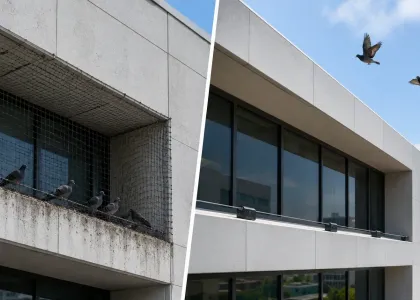
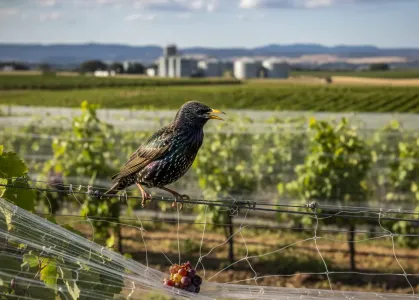
Bird netting or exclusion netting can seal off open areas such as rafters or HVAC units, keeping birds out entirely. However, these nets degrade over time and can trap birds if not maintained properly. In sensitive or high-visibility environments, netting may not align with safety or architectural standards.
Bird Slope Panels
Bird slope panels provide a clean, angled surface that prevents roosting without spikes. While more aesthetic than netting or spikes, panels only protect specific ledges and do not address open or complex structures such as flat roofs or solar panel systems.
2. Electrical Deterrents: The Step Toward Smarter Control
Electric Bird Track and Shock Track Systems
Shock track bird deterrents deliver a mild pulse when birds land, teaching them to avoid the surface. These systems are discreet and effective on flat roof bird protection or commercial rooftops. However, most rely on exposed wiring and require consistent monitoring to maintain performance.
This is where Symterra Pulse improves the equation. Instead of using exposed wiring, Pulse’s electromagnetic field technology creates a safe, invisible barrier that birds cannot adapt to. There is no need for direct contact, no visible tracks, and no harm to birds, only reliable deterrence that blends seamlessly into your structure.
3. Visual and Sensory Bird Scarers
Reflective and Optical Deterrents
Reflective bird tape, holographic bird gels, and optical gels rely on light to create discomfort for birds. They are useful for small-scale or temporary setups, but most birds quickly adapt once they realize there is no actual threat.
Predator Kites and Bird Balloons
Predator kites, bird balloons, and bird scarers create motion and simulate predators. They work best in open, low-rise areas, but wind and weather conditions limit their consistency.
Laser Bird Deterrents
Laser bird deterrents project beams that disorient birds in enclosed or shaded spaces. They are popular in industrial bird control systems, but their effectiveness fades outdoors or in bright light.
Compared to all of these, Symterra Pulse provides 24-hour protection, unaffected by light, weather, or noise. Its electromagnetic deterrent field operates continuously and safely, offering low maintenance bird deterrents that perform reliably in real-world conditions.
4. Sound-Based Systems
Ultrasonic bird repellers, sonic deterrents, and audible bird scare devices emit high-frequency or distress sounds. These can work in large open spaces, but they often disturb nearby people and wildlife.
Motion-activated bird deterrents or solar-powered bird repellents use similar sensory triggers but still rely on birds reacting to sound or sight, something they quickly learn to ignore.
Symterra Pulse, on the other hand, does not rely on sound, light, or chemicals. Birds cannot adapt to the system’s electromagnetic field, making it one of the only non-lethal bird control technologies proven to deliver consistent protection over time.
5. Non-Lethal and Long-Term Bird Control
Many property owners are shifting to non-lethal bird control methods that protect the environment and their reputation. Traditional deterrents can harm birds or damage buildings when installed incorrectly.
Symterra Pulse takes a science-backed, do-no-harm approach. Its technology safely interacts with birds’ natural navigation systems, gently redirecting them away from your property without trapping, shocking, or injuring them.
It is effective for pigeon deterrents on rooftops, bird control for HVAC units, and bird control for solar panels, making it the ideal fit for modern, eco-conscious buildings.
6. Matching the Deterrent to Your Building Type
Different buildings demand different bird control strategies. The right system depends on your structure, environment, and maintenance needs.
Office Buildings
Office Buildings often rely on bird spikes or slope panels to protect ledges and signage. While these provide partial protection, they can alter the look of your façade and require frequent cleaning. Symterra Pulse, however, integrates seamlessly with architectural features, offering discreet and continuous protection without affecting aesthetics.
Warehouses and Factories
Warehouses and Factories usually turn to exclusion netting or laser deterrents to keep birds away from rafters and large open bays. Although these methods help initially, they often degrade or lose effectiveness over time. Symterra Pulse delivers a full-coverage electromagnetic field that shields large industrial spaces efficiently, without the upkeep that netting requires.
Commercial Rooftops
Commercial Rooftops commonly use shock tracks or wire systems to stop pigeons from nesting. These require regular inspections and may not cover uneven surfaces. Symterra Pulse offers an upgraded approach with low-profile emitters that provide uniform coverage and long-term reliability across flat roofs and parapets.
Food Processing Facilities
Food Processing Facilities tend to favor exclusion netting for hygiene compliance. However, netting can trap dust and debris, creating new sanitation issues. The Pulse system can be installed with sealed, hygienic components that maintain strict cleanliness standards while ensuring total bird deterrence.
Solar Panel Installations
Solar Panel Installations are particularly vulnerable to nesting and droppings underneath panels. Traditional wire systems often interfere with airflow or reduce energy efficiency. Symterra Pulse’s low-profile layout eliminates bird activity without contact, preserving both performance and appearance.
Historic Properties
Finally, Historic and Aesthetic Properties require a discreet, non-invasive solution. Visual deterrents or optical gels may work temporarily but can damage surfaces or disrupt the property’s appearance. Symterra Pulse can be hidden along existing architectural lines, keeping protection invisible while maintaining the site’s historic integrity.
No matter the property type, Symterra Pulse adapts to your environment, providing non-lethal, low-maintenance, and building-safe bird control that performs without affecting the look of your property.
Common Building Mistakes That Lead to Deterrent Failure
Even good deterrents fail when installed without expert planning. The most common mistakes include:
- Leaving “micro gaps” where birds can still nest
- Protecting only ledges while ignoring HVAC, parapets, or concealed flat zones
- Installing systems in the wrong orientation
- Mixing deterrents that work against each other
- Using deterrents that alter wind flow or heat distribution
- Failing to consider species behavior (pigeons vs. starlings vs. grackles)
Symterra Pulse avoids these problems because the electromagnetic field provides a continuous zone of protection, covering complex surfaces without needing dozens of incompatible devices.
Choose Deterrents Based on Site Behavior, Not Just Bird Species
Bird species matters, but site behavior matters more. The right deterrent should be chosen based on where birds land, where they roost, where they nest, how they enter the property, and which areas they keep retesting.
Two buildings with the same bird species may need different deterrent plans. A pigeon problem on a rooftop is different from a pigeon problem inside a warehouse, under solar panels, near a loading dock, or on a billboard frame. The building layout, food access, shelter, maintenance routes, and untreated gaps all influence whether a deterrent will work.
Facility managers should start with a site inspection and behavior map before choosing a product. This helps avoid short-term fixes that only move birds from one surface to another.
Facility-Specific Bird Control
Need the Right Bird Deterrent for Your Building?
Symterra can help evaluate your building type, bird pressure, access points, maintenance needs, and high-risk zones to recommend a deterrent strategy built around your facility, not a one-size-fits-all product.
Request a Facility-Specific PlanThe Best Deterrent Matches the Building Not the Trend
The right bird deterrent depends on structure, exposure, and long-term maintenance, not popularity or price. Systems fail when they only cover ledges, rely on scare tactics, or require constant upkeep. Effective bird control works continuously across complex surfaces and adapts to how birds behave in real environments. When deterrents align with building design and operational needs, prevention lasts and compliance becomes easier.
Why the Future of Bird Control Is Symterra Pulse
Most deterrents rely on fear, sound, or physical barriers, and birds eventually adapt. Symterra Pulse is different. It creates a field that birds instinctively avoid, without causing harm or disruption.
It requires minimal maintenance, integrates with almost any structure, and complies with OSHA and environmental standards. The result is a professional bird deterrent system that delivers lasting protection for commercial, industrial, and residential properties alike.
A Smarter Way Forward
If you are considering bird spikes, bird netting, or other physical deterrents, remember that these methods have limits. For a solution that is non-lethal, low-maintenance, and built to last, Symterra Pulse offers the next evolution in building-safe bird repellents.
Let us help you choose the system that fits your property, your structure, and your goals.
Contact Symterra today to take the first step toward a cleaner, safer, and bird-free environment.
Need the Right Fit for Your Property?
Request a bird deterrent recommendation for your site
Symterra helps building owners and facility managers identify the right bird control setup based on building type, bird pressure, coverage areas, and long-term maintenance needs.
Request a Site RecommendationFrequently Asked Questions
How do I choose the right bird deterrent for my building type?
Choosing the right bird deterrent depends on your building structure, exposure, and maintenance capacity. Different environments attract different bird behaviors, so one solution does not fit all. The goal is to match the deterrent to how birds interact with your specific structure.
What is the most effective long-term bird deterrent for buildings?
The most effective long-term deterrent is one that works continuously and does not rely on fragile materials or scare tactics. Systems that influence bird behavior tend to last longer than those that only block or react. Consistency across all high-risk areas is key to long-term success.
Do physical deterrents like spikes and nets still work?
Physical deterrents can work in small or controlled areas, but they often require ongoing maintenance. They degrade over time and may leave gaps that birds can exploit. In many cases, they act as short-term fixes rather than permanent solutions.
Why do birds adapt to traditional deterrents?
Birds adapt because many deterrents are predictable and do not pose a real threat. Once birds realize they can safely land or nest, they ignore the system. This is why visual, sound-based, and static solutions lose effectiveness over time.