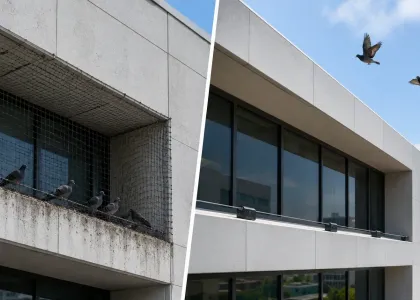
Compliance management relies on documentation, risk reduction, and consistent standards. Bird activity complicates all three.
Droppings, nesting debris, and contamination create safety, sanitation, and fire hazards that trigger inspections, corrective actions, and reporting requirements.
Non-lethal bird control simplifies compliance by preventing these risks before they appear.
Quick Answer
How does non-lethal bird control simplify compliance management?
Non-lethal bird control simplifies compliance management by reducing contamination, safety hazards, and repeat corrective actions before they become violations. When bird activity is prevented at the source, facilities deal with fewer sanitation issues, fewer incident reports, and less reactive documentation.
Compliance Risk / Prevention Table
| Bird-related compliance risk | How non-lethal bird control helps |
|---|---|
| Droppings near work areas | Reduces contamination before it creates sanitation or safety findings. |
| Nesting debris near equipment | Helps prevent recurring fire, airflow, drainage, or access issues. |
| Slip hazards on walkways | Reduces repeat droppings in areas employees or visitors use. |
| Repeat cleanup records | Moves facilities away from incident-based documentation. |
| Wildlife protection concerns | Supports prevention without relying on harmful removal methods. |
| Audit readiness gaps | Helps create more stable site conditions for inspections and reviews. |
| Corrective action cycles | Reduces recurring issues that create more reporting and follow-up work. |
Reduce Bird-Related Compliance Risk
If bird activity is creating sanitation, safety, documentation, or inspection problems at your facility, Symterra can help assess the site and recommend a non-lethal bird control strategy built around long-term prevention.
Request a Site RecommendationWhy Bird Activity Creates Compliance Risk
Sanitation Violations Caused by Droppings and Nesting Debris
In food processing, healthcare, and industrial environments, bird droppings and nesting material can lead to failed inspections or citations.
Workplace Safety Hazards That Trigger Regulatory Exposure
Slip hazards from droppings and fire risks from nesting near electrical equipment increase exposure under occupational safety regulations.
Wildlife Protection Laws and Improper Bird Control Methods
Improper removal or harmful control methods may conflict with wildlife protection standards. Facilities must manage bird activity without violating regulations.
Public-sector and regulated sites can also review Symterra’s solutions for institutional and government facilities where bird control must support safety, documentation, and compliance expectations.
Why Reactive Cleanup Makes Compliance Harder
Repeat Bird Activity Triggers More Inspections
Recurring bird issues often trigger follow-up inspections and documentation reviews.
Corrective Actions Increase Reporting Burden
Each incident requires reporting, tracking, and verification that the problem has been resolved.
Incident-Based Records Create Inconsistent Documentation
Without preventive systems, compliance teams rely on incident-based records instead of consistent prevention data.
Compliance Problems Increase When Birds Keep Returning
Recurring bird activity creates a compliance problem because the same risk areas keep producing new cleanup records, inspection concerns, and corrective actions. For facilities with sanitation, safety, or operational standards, repeated bird issues can turn into a documentation burden fast.
This matters for food processing sites, healthcare facilities, warehouses, logistics centers, manufacturing sites, retail properties, and industrial buildings. If birds keep returning to rooftops, ledges, loading areas, drains, HVAC zones, or equipment access points, the compliance team stays stuck in response mode instead of prevention mode.
For larger sites, review how Symterra supports industrial and warehouse bird control where recurring bird activity can affect equipment areas, loading zones, maintenance planning, and compliance records.
How Non-Lethal Bird Control Supports Compliance
Preventive Risk Reduction Before Violations Occur
Non-lethal deterrents reduce contamination and safety hazards before inspections occur. This lowers the chance of citations and corrective actions.
Learn more about how Symterra’s bird deterrent system works to support prevention before bird activity becomes a compliance issue.
Ethical Bird Management That Aligns With Regulations
Non-harmful deterrent systems align with wildlife protection standards and reduce legal exposure tied to improper removal methods.
Consistent Site Conditions Simplify Audit Readiness
Stable deterrent coverage creates predictable sanitation and safety conditions, simplifying audit preparation.
Why Documentation and Verification Matter
Preventive Controls Strengthen Compliance Records
Compliance frameworks value proactive controls. Documented deterrent systems demonstrate risk mitigation.
Fewer Bird Incidents Mean Less Reporting
When birds stop nesting and roosting, related safety and sanitation incidents decrease.
Lower Administrative Burden for Compliance Teams
Fewer repeat violations mean less paperwork, fewer investigations, and more stable compliance cycles.
Compliance Gets Easier When Prevention Is Verified
Compliance management becomes complicated when facilities stay in response mode. Non-lethal bird control shifts the focus from cleanup to prevention, helping reduce inspection findings and regulatory risk.
Symterra Pulse supports compliance efforts by providing real-time visibility into deterrent system performance. It helps facilities verify that protection remains active and identify weaknesses before birds create sanitation or safety issues. With documented, continuous deterrence, compliance management becomes more predictable and less reactive.
For more background on system performance, review Symterra’s efficacy study.
Need a better way to manage bird-related compliance risk? Request a Symterra site recommendation to reduce recurring contamination, safety hazards, corrective actions, and documentation burden.
Frequently Asked Questions About Bird Control and Compliance
Why does bird activity create compliance issues?
Bird activity introduces contamination, safety hazards, and fire risks that fall under multiple regulatory standards. Droppings and nesting debris can trigger sanitation violations, while blocked access or slippery surfaces raise workplace safety concerns. These issues often lead to inspections, citations, and corrective actions.
How does non-lethal bird control simplify compliance management?
Non-lethal bird control simplifies compliance by preventing risks before they require documentation or correction. When birds cannot roost or nest, facilities face fewer violations, inspections, and reports. This keeps compliance processes more stable and easier to manage.
What industries face the highest bird-related compliance risk?
Industries with strict sanitation and safety standards face the highest exposure. This includes food processing, healthcare, manufacturing, and logistics facilities. In these environments, even minor contamination or hazards can lead to serious regulatory consequences.
Why is reactive cleanup not enough for compliance?
Reactive cleanup only addresses problems after they occur, which means the violation has already been recorded. Each incident requires documentation, corrective action, and follow-up verification. This creates more administrative work and increases the risk of repeat findings.
What compliance records can bird activity create?
Bird activity can create cleanup records, inspection notes, incident reports, corrective actions, maintenance documentation, sanitation findings, and follow-up verification records. When bird problems repeat, compliance teams may spend more time documenting the same recurring risk.
Why is prevention better for compliance than reactive cleanup?
Prevention is better for compliance because it reduces the chance that bird-related contamination, safety hazards, or nesting debris become recorded incidents. Reactive cleanup only responds after the issue already exists, while prevention helps stabilize site conditions before inspections, audits, or safety reviews.
{ "@context": "https://schema.org", "@type": "BlogPosting", "headline": "Why Non-Lethal Bird Control Simplifies Compliance Management", "description": "Learn how non-lethal bird control helps reduce bird-related contamination, safety hazards, corrective actions, inspections, and compliance documentation.", "url": "https://www.gosymterra.com/why-humane-bird-control-simplifies-compliance-management/", "author": { "@type": "Organization", "name": "Symterra" }, "publisher": { "@type": "Organization", "name": "Symterra" }, "mainEntityOfPage": { "@type": "WebPage", "@id": "https://www.gosymterra.com/why-humane-bird-control-simplifies-compliance-management/" } }