Table of Contents
Bird problems often trigger quick responses. Nests get removed, droppings are cleaned, and temporary deterrents are placed. For a short period, the situation improves. Then the birds return and the cycle repeats.
This pattern happens because reactive bird control addresses visible symptoms instead of the conditions that attract birds in the first place. Without changing how birds experience the structure, the underlying cause remains.
Quick Answer: Reactive bird control fails because it removes visible problems like nests, droppings, or debris without changing the conditions that attract birds back. Long-term bird prevention requires changing how birds experience the structure so landing, roosting, and nesting no longer feel stable or usable.
Reactive vs Root Cause Bird Control Table
| Control approach | What it does | Why it falls short or works |
|---|---|---|
| Nest removal | Clears nesting material from the site | Birds may rebuild if the structure still feels safe. |
| Dropping cleanup | Restores appearance temporarily | It does not change landing or roosting conditions. |
| Occasional scare tactics | Creates short-term disturbance | Birds adapt when the pressure is predictable. |
| Partial deterrent coverage | Treats only selected areas | Birds can shift to untreated landing zones. |
| Root cause prevention | Changes the bird’s experience of the site | Supports long-term avoidance by making the structure unusable. |
| Verified deterrent coverage | Helps identify inactive or weak zones | Reduces the chance that birds reestablish activity. |
Stop Repeating the Same Bird Control Cycle
If birds keep returning after cleanup, nest removal, sprays, or short-term deterrents, Symterra can help assess the site and recommend a behavior-based prevention strategy built around the root cause.
Request a Site RecommendationReactive Control Targets Visible Evidence, Not the Cause
Nest Removal Only Resets the Site
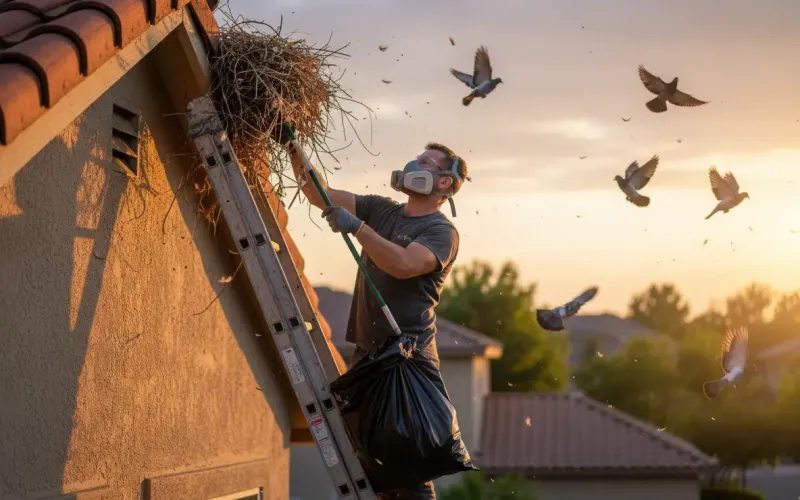
Removing nests clears the structure temporarily, but birds rebuild quickly when the location still offers shelter and stability.
Cleaning Improves Appearance but Leaves Conditions Intact
Droppings may disappear after cleaning, but the beams, ledges, and equipment that provided comfortable perching remain unchanged.
Why Birds Keep Returning to the Same Structures
Built Environments Offer Natural Roosting Advantages
High elevation, wind protection, and stable landing surfaces attract birds to buildings, towers, garages, and industrial facilities.
Low-Disturbance Areas Encourage Repeat Settlement
Areas with limited daily disturbance signal safety. Birds return repeatedly when they learn these patterns.
Why Temporary Disturbance Does Not Change Bird Behavior
Birds Retest Familiar Sites After Cleanup or Removal
Even after removal or cleanup, birds return to evaluate whether conditions have changed. If the landing experience remains the same, occupation resumes.
Predictable Interventions Lose Effect Over Time
When deterrent actions occur only occasionally, birds adapt and wait for the disturbance to pass.
Reactive Control Creates Ongoing Maintenance Cycles
Labor and Cleanup Costs Keep Returning
Facilities schedule nest removal and cleaning multiple times each year because the root attraction remains.
Damage Continues to Build Over Time
Droppings accelerate corrosion, clog drainage, and contaminate surfaces. Repairs increase as bird activity continues.
Why Commercial Sites Need Root Cause Bird Prevention
Commercial sites need root cause bird prevention because repeated bird activity creates recurring costs across maintenance, cleaning, safety, asset protection, and operations. If the same birds keep returning to rooftops, ledges, signs, warehouses, loading zones, parking structures, or equipment areas, the facility is not dealing with a one-time pest issue. It is dealing with an environment that birds still recognize as usable.
Commercial property teams can also review Symterra’s approach for commercial and retail facilities where recurring bird activity can affect customer areas, rooftops, signage, and maintenance costs.
Root cause prevention focuses on changing that environment. Instead of cleaning the same surfaces again and again, commercial facilities need consistent coverage that makes the structure unreliable for landing, roosting, and nesting.
Root Cause Bird Control Requires Behavioral Change
Landing Conditions Must Feel Consistently Unusable
Birds abandon structures only when landing consistently produces discomfort or instability.
Learn more about how Symterra’s bird deterrent system works to support behavior-based prevention at the source.
Full Coverage Prevents Birds From Retesting the Site
When deterrence remains active across all zones, birds stop evaluating the site as viable territory.
Long-Term Bird Control Starts by Changing the Conditions
Reactive bird control treats the results of bird activity rather than the conditions that allow it. As long as structures remain comfortable for roosting and nesting, birds will continue to return.
Symterra Pulse supports long-term prevention by providing real-time visibility into deterrent system performance. It helps facilities identify inactive zones and system faults before birds reestablish activity. With verified deterrence in place, buildings shift from repeated cleanup cycles to sustained prevention.
See how Symterra Pulse helps facilities maintain visibility into deterrent performance before birds reestablish activity.
For more background on system performance, review Symterra’s efficacy study.
Ready to move beyond reactive bird control? Request a Symterra site recommendation to address the conditions that keep attracting birds back.
Frequently Asked Questions About Reactive Bird Control
The most effective deterrents change how birds physically experience a surface. Spikes, tension wire systems, electric track deterrents, and audio systems all make landing uncomfortable or unpredictable. The key is consistent coverage, because birds will simply shift to an untreated zone if any area is left unaddressed.
Birds are most repelled by strong scents like methyl anthranilate (a grape-derived compound used in commercial repellent sprays), peppermint oil, and cinnamon. Smell-based deterrents are short-lived outdoors and rarely solve a roosting problem on their own, as wind and rain dissipate them quickly.
Baking soda is sometimes suggested as a surface deterrent because birds dislike the texture on their feet. It has minimal real-world effectiveness outdoors, as it washes away quickly and does not change the underlying appeal of the roosting site.
Aluminum foil can briefly startle birds due to light reflection and rustling noise. It is a common DIY method for gardens but is not a reliable long-term solution for commercial or industrial facilities, as birds habituate to it within days once they learn it poses no real threat.
Birds come back after nest removal because the structure may still provide the same shelter, height, stability, and landing access that attracted them before. Removing the nest resets the visible problem, but it does not change the conditions that made the site useful to birds.
The root cause of recurring bird problems is usually an environment that still feels safe and usable for landing, roosting, or nesting. Long-term prevention requires changing the bird’s experience of the site instead of only removing droppings, nests, or debris.