Quick Answer: How Do You Know If a Commercial Building Has a Bird Problem?
A commercial building has a bird problem when birds return to the same ledges, rooftops, vents, signs, loading areas, or walkways. Common signs include droppings, nesting debris, feathers, stains, blocked drains, bird noise, and repeated sightings in the same areas.
Early Warning Signs Facility Managers Should Not Ignore
Facility managers should act when bird activity becomes repeated, visible, or tied to specific building areas. One bird sighting may not mean there is a full issue, but repeated activity around the same roofline, ledge, sign, dock, or equipment zone shows that birds are forming a routine.
Early warning signs matter because bird problems rarely stay isolated. Droppings spread across walkways, nesting debris blocks drains, and birds often move from exterior perches into covered or interior spaces.
The best time to address a bird problem is before cleanup, complaints, or equipment issues become recurring maintenance tasks.
Commercial Building Bird Problem Signs and Risks
| Warning Sign | What It Means | Facility Risk | Recommended Action |
|---|---|---|---|
| Repeated Bird Sightings | Birds are returning to the same safe areas. | Roosting and nesting may become established. | Inspect ledges, rooflines, signs, and dock areas. |
| Droppings on Walkways | Birds are perching above public or staff areas. | Slip risk, cleanup cost, and poor building appearance. | Identify overhead perches and reduce return activity. |
| Nesting Debris | Birds are building or maintaining nests. | Blocked drains, roof issues, and equipment access problems. | Check vents, gutters, HVAC areas, rafters, and roof edges. |
| Stains and Corrosion | Droppings are accumulating over time. | Surface damage, tenant complaints, and higher repair costs. | Document affected areas and plan deterrent coverage. |
| Birds Inside the Building | Birds have found entry points. | Contamination, disruption, and safety concerns. | Inspect doors, vents, dock openings, and roof gaps. |
Seeing Bird Activity Around Your Building?
Symterra helps facility managers identify bird problem areas and plan deterrent coverage for rooftops, ledges, signs, loading docks, walkways, and equipment zones.
Request a Site AssessmentWhy Early Bird Problem Detection Matters
Bird activity usually starts small. A few droppings, repeated birds on the same ledge, or loose nesting debris may not look urgent at first.
The problem is repetition.
When birds return to the same areas every day, they begin creating patterns around rooftops, loading docks, signage, HVAC units, and walkways. These patterns lead to more droppings, more nesting, more contamination, and higher maintenance costs.
Early detection helps facility teams stop the issue before it becomes a safety, sanitation, or structural problem.
Bird problems often start unnoticed. Small patterns turn into contamination, structural wear, and safety risks. Early detection helps prevent long-term damage. These are the most common signs your building is becoming an active site for bird activity.
Early Bird Infestation Signs on Commercial Buildings
Commercial buildings in Hong Kong often face bird activity around rooftops, ledges, signage, air-conditioning units, and dense service areas where shelter and food sources are nearby. Early warning signs include repeated bird sightings at the same spots, small droppings before heavy staining appears, loose feathers near entrances, and nesting debris around vents or rooftop equipment. Facility teams should check these areas during morning and evening activity peaks because birds usually return to safe locations on a routine schedule. Catching these signs early helps prevent blocked drainage, contamination, corrosion, and tenant complaints before the issue becomes harder to control.
Visible Bird Activity Around the Building
Repeated Bird Sightings on Roofs, Ledges, and Signage
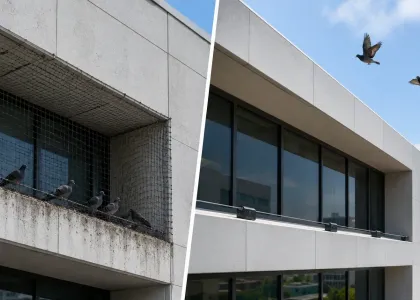
If birds gather on the same roof edges, beams, parapets, or signs and billboards, the location is becoming a regular perch. Repetitive patterns indicate the area feels safe and may soon host nests.
For larger properties with repeated activity across multiple areas, read our guide on bird control at scale.
Feathers and Nesting Debris Near Entrances
Loose feathers, nesting fragments, and scattered debris often fall from active perching or nesting zones above.
Bird Droppings and Contamination Warning Signs
Droppings on Walkways, Loading Docks, and Equipment
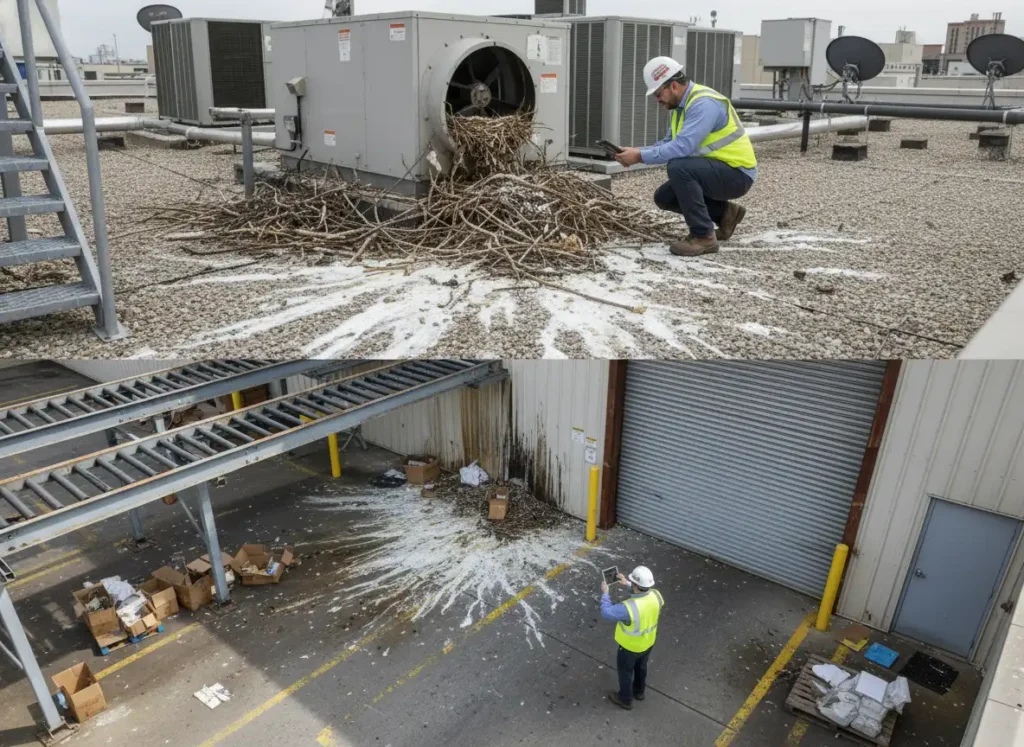
Droppings on walkways, loading docks, windowsills, and outdoor equipment show consistent activity. Droppings also cause corrosion and create health hazards.
Staining and Corrosion From Bird Droppings
Bird droppings contain acids that damage paint, roofing, metals, and building materials. Early stains usually appear before corrosion worsens.
Early Signs of Bird Nesting Activity
Nesting Material in Gaps, Vents, and Corners
Twigs, insulation, feathers, and debris in tight spaces indicate early nest building. Birds favor sheltered areas.
Common Bird Nesting Spots on Buildings
- Vents
- Rafters
- Under solar panels
- Signage structures
- Rooftop equipment clusters
If nesting already affects your roofline, drains, or equipment zones, learn how bird nesting increases maintenance costs.
Scratching and Chirping in Rafters or Mechanical Spaces
Scratching, chirping, or flapping inside ceilings or wall gaps means active nesting. Sounds usually increase at sunrise and sunset.
Structural and Operational Damage from Birds
Blocked Drains and Gutters From Bird Nests
Bird nests clog drains and gutters, leading to standing water, leaks, and extra stress on roof structures.
Damage to Insulation, Packaging, and Stored Materials
If soft materials appear shredded, birds may be collecting them for nesting. This is common in rooftops, warehouses, and loading docks.
Birds Entering Interior Spaces
Birds Inside Warehouses or Commercial Areas
Birds inside warehouses or commercial areas indicate unprotected entry points. This significantly increases contamination and safety risks.
Employee, Tenant, and Customer Complaints
Odors, droppings, slipping hazards, or visible bird activity often trigger complaints. These signals mean the issue is already advancing.
Strengthen Bird Problem Detection With Intelligent Monitoring
Early recognition is the best way to prevent bird problems from escalating. Even with deterrents installed, buildings remain at risk when performance drops or weak zones go unnoticed.
Symterra Pulse supports early detection by monitoring electrical deterrent lines in real time. It identifies faults, weak voltage areas, and disruptions before birds can return. With continuous performance tracking, facilities keep deterrent systems strong and maintain long-term protection.
Frequently Asked Questions About Building Bird Problems
What are the first signs of a bird problem on a building?
The first signs are repeated bird sightings, droppings in the same areas, feathers near entrances, nesting debris around roof edges, and stains on ledges or walkways.
When should a property manager take bird activity seriously?
A property manager should take bird activity seriously when birds return to the same location repeatedly. Repeat activity means the building has become a safe roosting or nesting site.
Where do birds usually nest on commercial buildings?
Birds often nest near vents, rafters, roof edges, signage, HVAC equipment, gutters, and covered loading areas.
Why are bird droppings a problem for buildings?
Bird droppings create slip risks, damage surfaces, accelerate corrosion, and increase cleanup needs. Heavy buildup also affects tenant perception and facility safety.
How do you stop birds from returning to the same building?
You stop birds from returning by removing the conditions that make the site feel safe. Long-term deterrence works better than repeated cleanup because it targets the behavior, not only the mess.
What are early signs of a bird problem on a commercial building?
Early signs include repeated bird sightings, droppings in the same areas, feathers, nesting debris, stains, bird noise, and blocked drains or gutters.
Why should facility managers address bird problems early?
Facility managers should address bird problems early because small signs can turn into recurring cleanup, surface damage, blocked drainage, tenant complaints, and safety risks.
When should a building request a bird control assessment?
A building should request a bird control assessment when birds return to the same areas, droppings keep appearing, nests are forming, or bird activity affects walkways, rooftops, equipment, loading docks, or customer-facing areas.
Seeing early signs of bird activity?
If your building already shows droppings, nesting debris, or repeat bird activity, Symterra can help you stop the pattern before it becomes a larger maintenance and safety issue.
Get expert help