Parking garages are long-life assets designed to withstand constant vehicle load, weather exposure, and daily use. What they are not designed for is ongoing bird activity. When birds repeatedly roost and nest in garages, the impact shows up slowly through maintenance budgets, safety incidents, and structural wear. These issues rarely appear as one-time events. They compound year after year.
Quick Answer
Why do parking garages have recurring bird issues?
Parking garages have recurring bird issues because beams, ramps, stairwells, open sides, quiet levels, ledges, and sheltered corners give birds safe places to roost and nest. Cleanup and partial deterrents often fail because birds can move between levels or return to untreated zones. Long-term prevention requires consistent deterrent coverage across the full garage structure.
Why Parking Garages Become Persistent Bird Sites
| Recurring bird issue | Long-term maintenance impact |
|---|---|
| Droppings on ramps and walkways | Increases slip risk and repeated cleanup needs |
| Birds roosting on beams | Creates ongoing waste buildup across parking levels |
| Nesting debris near drains | Can clog drainage and increase water damage risks |
| Birds moving between levels | Makes partial deterrents less effective |
| Droppings on vehicles | Increases tenant complaints and property management issues |
| Nesting near lights or conduit | Adds fire and electrical maintenance concerns |
| Repeated cleanup cycles | Turns bird activity into a recurring operating cost |
Structural Design Favors Roosting
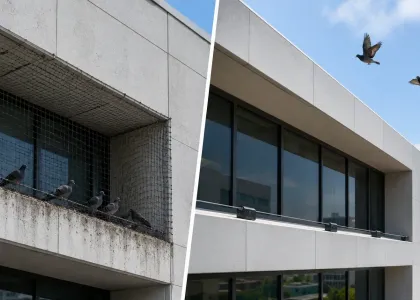
Parking garages feature horizontal beams, exposed ceilings, and sheltered corners. These elements create ideal roosting zones that stay protected from wind and rain.
Predictable Quiet Periods
Garages experience long periods of low activity overnight and during off-peak hours. Birds learn these patterns and use garages as reliable resting sites.
Easy Access With Few Barriers
Open sides and large entry ramps allow birds to enter freely. Once inside, there is little to discourage movement between levels.
How Birds in Parking Lots Extend Problems Into Garage Structures
Bird activity often starts in open parking lots before moving into garages. Food scraps, trash bins, and light poles attract birds to outdoor areas, where they establish regular feeding and resting patterns. Once these patterns form, birds transition into nearby garages for shelter, especially during bad weather or quiet hours. This connection between outdoor lots and indoor structures makes it harder to control bird activity if both areas are not managed together.
How Recurring Bird Activity Affects Maintenance Over Time
Escalating Cleaning Requirements
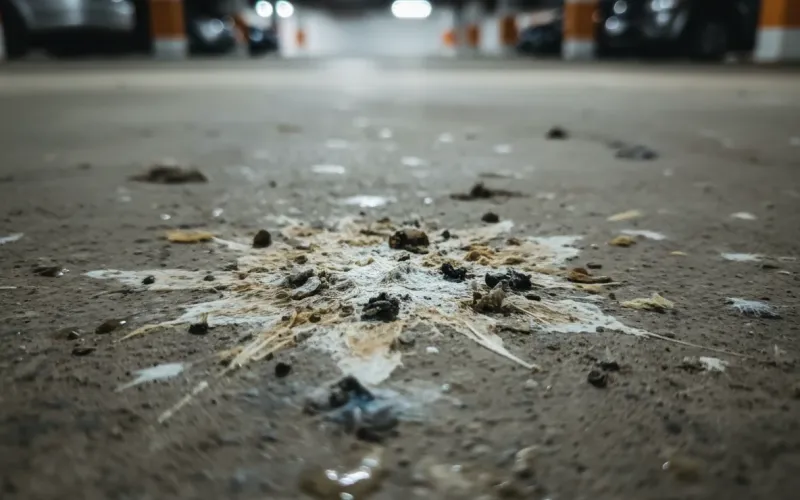
Droppings accumulate on driving lanes, pedestrian paths, stairwells, and elevators. What starts as occasional cleanup becomes scheduled, repeated labor.
Accelerated Surface Degradation
Bird droppings are acidic. Over time, they damage sealants, concrete coatings, paint, signage, and lighting housings. This shortens the lifespan of finishes and increases repair frequency.
Drainage and Water Management Issues
Nesting debris clogs drains and scuppers. Standing water follows, increasing slip risk and accelerating freeze-thaw and corrosion damage.
Parking Garage Bird Problems and Long-Term Impact
| Bird-Related Issue | Garage Risk | Long-Term Impact |
|---|---|---|
| Droppings on ramps and walkways | Slip and fall exposure | More claims, cleanup, and safety checks |
| Droppings on vehicles | Paint staining and tenant complaints | Lower tenant satisfaction |
| Nesting debris in drains | Blocked scuppers and standing water | Corrosion, water damage, and repair costs |
| Birds roosting on beams | Repeat buildup under structural areas | Scheduled cleanup becomes routine |
| Nests near lighting or conduit | Fire and access concerns | Delayed maintenance work |
| Birds relocating between levels | Problem shifts instead of stopping | Repeat service calls across the structure |
Need to reduce bird problems in your parking garage?
Symterra helps parking garage owners reduce bird pressure around beams, ramps, ceilings, lighting areas, drains, and sheltered corners with a long-term deterrent strategy.
Request a Site RecommendationTo reduce recurring bird problems across your parking structure, contact Symterra for a site recommendation.
Safety and Liability Pressures
Slip and Fall Exposure
Wet droppings reduce traction on ramps and walkways. Even a single incident can trigger claims, investigations, and corrective work.
For more detail on exposure and safety concerns, review Symterra’s guide on safety and health risks of bird droppings.
Fire Risk Near Electrical Infrastructure
Nesting material near lighting fixtures, junction boxes, or conduit adds combustible load to areas that already generate heat.
Vehicle Damage Complaints
Bird droppings stain and etch vehicle finishes. Persistent complaints affect tenant satisfaction and property reputation.
Why Short-Term Fixes Do Not Work in Garages
Why Partial Coverage Fails in Parking Garages
Partial coverage often fails in parking garages because birds can easily move between beams, levels, stairwells, ramps, drains, lighting areas, and sheltered corners. A deterrent installed in one area may only push birds to another part of the same structure.
This creates a frustrating maintenance cycle. Crews clean one level, then bird activity appears on another. A barrier blocks one beam, then birds move to a nearby ledge. A short-term scare device disrupts activity briefly, then birds return during quiet hours.
Parking garages need a full-structure strategy because bird behavior is not limited to one visible nesting area. Long-term prevention should account for how birds move through the garage and where they are likely to resettle.
Birds Relocate Within the Same Structure
Partial deterrence causes birds to move from one level to another instead of leaving the garage entirely.
Static Deterrents Lose Effect
Visual and sound-based tools become predictable. Birds adapt and resume use of preferred zones.
Maintenance Timing Is Always Reactive
Cleanup and nest removal occur after damage appears. By then, birds have already reinforced their behavior.
The Compounding Cost of Inaction
Maintenance Budgets Inflate Quietly
Recurring labor, lift rentals, inspections, and repairs become normalized line items instead of exceptions.
Deferred Repairs Become Capital Projects
Unchecked corrosion and water damage lead to larger restoration work that could have been avoided.
Signs Bird Activity Is Becoming a Costly Garage Problem
Bird activity becomes expensive when cleanup, repairs, and complaints repeat every month. At that point, the issue is no longer cosmetic. It starts affecting maintenance budgets, tenant experience, safety planning, and asset protection.
Watch for these signs:
- Droppings keep returning on the same ramps, stairs, walkways, or parking stalls
- Tenants or visitors complain about vehicle stains
- Nesting material appears near drains, lights, conduit, or ceiling beams
- Water pools after drains or scuppers clog
- Cleaning crews need extra service visits
- Birds move from one garage level to another
- Slip-risk areas need repeated washing or warning signs
- Maintenance teams keep treating symptoms instead of preventing return behavior
When these signs appear, the garage needs a long-term deterrent plan.
Why Parking Garage Owners Need Prevention-Based Bird Control
Parking garage owners need prevention-based bird control because recurring bird activity affects more than appearance. It increases cleaning labor, tenant complaints, slip risks, drainage issues, corrosion, and maintenance planning.
A stronger bird control plan should help garage teams:
- Reduce repeat droppings on ramps and walkways
- Protect vehicles from staining
- Keep drains and scuppers clear
- Reduce nesting near lighting and conduit
- Limit slip and fall exposure
- Lower recurring cleanup costs
- Protect the garage as a long-term asset
Short-term cleanup removes the mess. Prevention-based deterrence helps stop the repeat cycle. Big difference, less mop drama.
Long-Term Prevention Planning for Parking Garages
Long-term bird prevention in parking garages starts with understanding bird movement across the full structure. Facility teams should identify the levels, beams, ramps, stairwells, drains, lights, and low-disturbance areas birds use most often.
A prevention plan should also consider maintenance access. Parking garages need deterrence that supports inspections, cleaning schedules, drainage work, lighting service, and tenant access without creating new maintenance obstacles.
The goal is to reduce repeat bird activity before droppings, nesting debris, slip risks, vehicle complaints, and repair costs become routine budget items.
For broader property applications, review Symterra’s solutions for commercial and retail facilities.
Long-Term Garage Performance Depends on Consistent Deterrence
Recurring bird issues in parking garages are not cosmetic problems. They are long-term maintenance drivers tied to predictable bird behavior and inconsistent deterrence. Solving them requires continuous coverage across every level and beam.
Symterra Pulse supports this approach by monitoring deterrent system performance in real time. It identifies weak zones and faults that allow birds to resettle within garages. With ongoing visibility, facilities reduce repeat maintenance, improve safety outcomes, and protect parking structures as long-term assets.
Learn more about Symterra Pulse and how it supports long-term bird deterrence for commercial structures.
Parking Garage Bird Control
Stop Recurring Bird Issues in Parking Garages
If birds keep returning to beams, ramps, stairwells, drains, lighting areas, or quiet levels, Symterra can help assess the structure and recommend a long-term deterrent strategy built around parking garage layout and bird behavior.
Request a Parking Garage Bird Control Plan