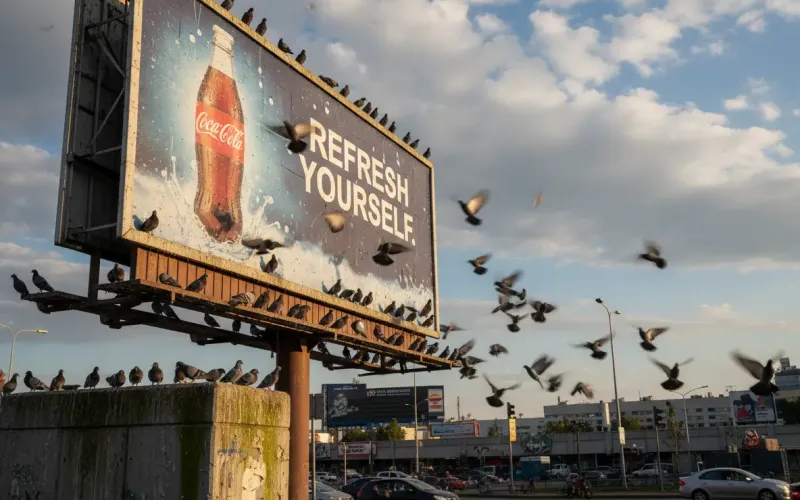
Billboards stand tall, remain exposed, and often sit in quiet locations above ground activity. These characteristics make them attractive roosting and nesting sites for birds. When infestations develop, the problem rarely stays isolated. Instead, billboard operators experience repeated service calls, maintenance disruptions, and equipment downtime.
What begins as occasional cleanup can quickly evolve into an ongoing operational issue.
Quick Answer
Why do billboard bird infestations lead to repeated service calls and downtime?
Billboard bird infestations lead to repeated service calls and downtime because nests, droppings, and debris keep returning to elevated, low-disturbance structures. This forces crews to handle cleanup, nest removal, safety issues, and equipment-related delays before they can complete scheduled maintenance.
Reduce Billboard Bird Service Calls and Downtime
If birds keep returning to billboard frames, lighting arms, sign panels, catwalks, or access ladders, Symterra can help assess the structure and recommend a long-term deterrent strategy built around billboard layout and bird behavior.
Request a Site RecommendationBillboard Bird Infestation Cost Table
| Billboard bird problem | Service or downtime impact |
|---|---|
| Nests behind sign panels | Crews must remove nesting material before completing repairs or panel work. |
| Droppings on ladders and catwalks | Technicians may need cleanup before safe access. |
| Debris near lighting fixtures | Lighting performance can decline and inspection time increases. |
| Birds returning between visits | The same cleanup and removal tasks repeat during future service calls. |
| Partial deterrent coverage | Birds may shift to untreated beams, arms, or rear sign areas. |
| Safety risks for technicians | Slippery access points and contaminated work zones can delay maintenance. |
| Delayed panel or lighting work | Advertising operations may be slowed by bird-related cleanup and repair tasks. |
Billboard Structures Naturally Attract Birds
Elevated Perching Locations
Birds prefer high vantage points where they can observe surroundings and avoid predators. Billboard frames, lighting arms, and support structures provide ideal perching surfaces.
Shelter Behind Sign Panels
The rear side of billboard panels often creates wind protection. These sheltered areas allow birds to rest and build nests.
Limited Human Presence
Unlike ground-level facilities, billboards are rarely accessed except for advertising changes or repairs. Birds quickly recognize these low-disturbance patterns.
Infestations Increase Service Call Frequency
Nest Removal Requests
Maintenance teams receive repeated calls to remove nests that accumulate behind sign panels or along structural beams.
Dropping Cleanup
Droppings build up on lighting fixtures, catwalks, and access ladders. Technicians must clean these areas before performing other work.
Electrical and Lighting Systems Become Affected
Obstructed Lighting Fixtures
Nesting material and droppings can reduce the performance of billboard lighting systems, affecting nighttime visibility.
Increased Inspection and Repair
Electrical components near nesting zones require additional inspection to address debris buildup and potential fire hazards.
Technician Safety and Work Delays
Hazardous Access Conditions
Droppings on ladders, catwalks, and platforms create slip risks for technicians performing routine maintenance.
Extended Work Times
Technicians must clear nests and debris before addressing the primary maintenance issue, increasing service duration.
Recurring Bird Activity Creates Operational Downtime
Repeat Site Visits
If deterrence is inconsistent, birds return between service intervals. Crews face the same infestation during future visits.
Delayed Advertising Operations
Maintenance delays can slow panel changes, lighting repairs, and inspection schedules.
Why Billboard Bird Prevention Needs Full-Structure Coverage
Billboard bird prevention needs full-structure coverage because birds can move between frames, lighting arms, catwalks, rear sign panels, access ladders, and support beams. If only the most visible area is treated, birds may shift to another protected or low-disturbance section of the structure.
Billboard operators can also review Symterra’s solutions for signs and billboards where recurring bird activity can affect lighting, access, structure maintenance, and advertising operations.
For billboard operators, this creates repeat service calls, cleanup delays, safety concerns, and equipment access problems. A long-term deterrent strategy should account for the full structure, not only the first place birds are noticed.
Prevention Reduces Service Disruptions
Consistent Deterrence Prevents Nesting
When birds cannot establish roosting areas on billboard structures, service calls related to infestation decline.
Learn more about how Symterra’s bird deterrent system works to support consistent, behavior-based prevention across hard-to-access structures.
Maintenance Work Becomes Predictable
Technicians can focus on scheduled repairs and upgrades without unexpected cleanup tasks.
Stable Billboard Operations Require Preventive Control
Bird infestations on billboard structures lead to repeated service calls, safety risks, and operational downtime. Without consistent prevention, maintenance teams remain stuck in a cycle of cleanup and removal.
Symterra Pulse helps billboard operators maintain reliable deterrence by providing real-time visibility into system performance. It identifies inactive zones and system faults before birds establish new nesting areas. With verified deterrence in place, billboard maintenance becomes more efficient and operational disruptions decrease.
See how Symterra Pulse helps operators identify inactive zones and system faults before birds establish new nesting areas.
For more background on system performance, review Symterra’s efficacy study.
Need to reduce bird-related billboard downtime? Request a Symterra site recommendation to reduce repeated service calls, cleanup delays, and technician access issues.
Frequently Asked Questions
Why do bird infestations cause repeated billboard service calls?
Bird infestations cause repeated billboard service calls because nests, droppings, and debris keep building up in hard-to-reach areas. Maintenance teams return again and again to remove nests, clean access points, and address related equipment issues.
How do birds affect billboard lighting and electrical systems?
Birds affect billboard lighting and electrical systems by covering fixtures with droppings, blocking components with nesting material, and increasing contamination around sensitive equipment. This can reduce lighting performance and create extra repair work.
Why are billboards so attractive to birds?
Billboards attract birds because they provide height, shelter, and low human activity. Frames, lighting arms, and the rear side of sign panels create stable places for roosting and nesting.
How can billboard operators reduce recurring bird-related downtime?
Billboard operators reduce recurring downtime by using a deterrence strategy that prevents birds from settling on the structure in the first place. Long-term prevention reduces repeat cleanup, lowers service call frequency, and helps keep maintenance schedules on track.
What parts of a billboard attract birds most?
Birds often target billboard frames, lighting arms, rear sign panels, support beams, catwalks, access ladders, and other elevated low-disturbance areas. These areas provide height, shelter, stability, and limited human activity.
Why do bird problems return between billboard service visits?
Bird problems return between billboard service visits when the structure still provides usable roosting or nesting areas. If deterrence is incomplete or inconsistent, birds may return to the same protected areas before the next scheduled maintenance visit.