Table of Contents
- Quick Answer
- Why Bird Activity Should Be Part of Facility Risk Management
- How Bird Activity Creates Operational Risk
- How Birds Disrupt Facility Operations
- Why Bird Infestations Are More Than a Pest Problem
- A Risk-Based Approach to Bird Control
- How to Create a Bird Infestation Risk Assessment Plan
- Integrating Bird Control Into Facility Operations
- Bird Infestation Risks Require Ongoing Oversight
- Facility Risk Prevention Strategy
- Frequently Asked Questions
Quick Answer
Why is bird activity an operational risk?
Bird activity becomes an operational risk when birds affect safety, sanitation, equipment, workflows, or compliance. Droppings create slip hazards, nests block drains and vents, debris affects electrical areas, and contamination increases liability. Facility teams should treat bird activity as a managed risk, not only a pest issue.
Birds are often dismissed as a nuisance in industrial facilities. Droppings get cleaned, nests get removed, and the issue is labeled a pest problem. In reality, bird infestation affects operations the same way equipment failures, safety hazards, and environmental risks do. When birds interact with facility systems and workflows, the impact is operational.
Why Bird Activity Should Be Part of Facility Risk Management
Birds Affect Critical Building Systems
Birds do not stay in isolated areas of a facility. They land on rooftops, electrical units, HVAC systems, loading docks, and walkways. These are operational zones, not cosmetic ones.
Small Bird Problems Create Bigger Operational Risks
A single nest can block a drain. Droppings can create slip hazards. Nesting debris near wiring can raise fire risk. What looks minor can trigger shutdowns, incidents, or compliance issues.
Why Bird Problems Affect Safety, Maintenance, Compliance, and Cost
Bird problems become operational risks when they affect the systems, surfaces, and workflows that keep a facility running. Droppings on walkways can increase slip risk. Nests near drains, vents, HVAC units, and electrical areas can create maintenance problems. Bird debris around sensitive areas can also create sanitation and compliance concerns.
The cost is not limited to cleanup. Facilities may also deal with repeated service calls, damaged equipment, delayed work, blocked access areas, and documentation issues during inspections. When bird activity keeps returning, the facility is no longer dealing with a one-time pest issue. It is managing an ongoing operational exposure.
That is why bird control should be included in routine risk assessments, maintenance planning, and site protection strategies.
Pest Issue vs Operational Risk Comparison
| Category | Birds Treated as a Pest Issue | Bird Activity Treated as Operational Risk |
|---|---|---|
| Primary focus | Remove birds after they appear | Prevent recurring bird pressure before it affects operations |
| Response style | Reactive cleanup and removal | Risk-based planning, prevention, monitoring, and documentation |
| Safety impact | Addressed after droppings or debris are visible | Managed before slip hazards, blocked access, or injury risks increase |
| Maintenance impact | Handled through repeated cleaning or repairs | Reduced through long-term deterrence and site-level prevention |
| Compliance impact | Usually considered only after an inspection issue | Included in sanitation, documentation, and audit-readiness planning |
| Cost impact | Recurring cleanup and emergency response costs continue | Long-term costs are reduced by preventing repeat activity |
Request a Risk-Focused Bird Control Assessment
Recurring bird activity can affect safety, maintenance, compliance, and facility costs. Symterra can help assess high-risk zones and recommend a bird control strategy built around operational risk prevention.
Request a Risk AssessmentHow Bird Activity Creates Operational Risk
Bird-Related Safety Risks
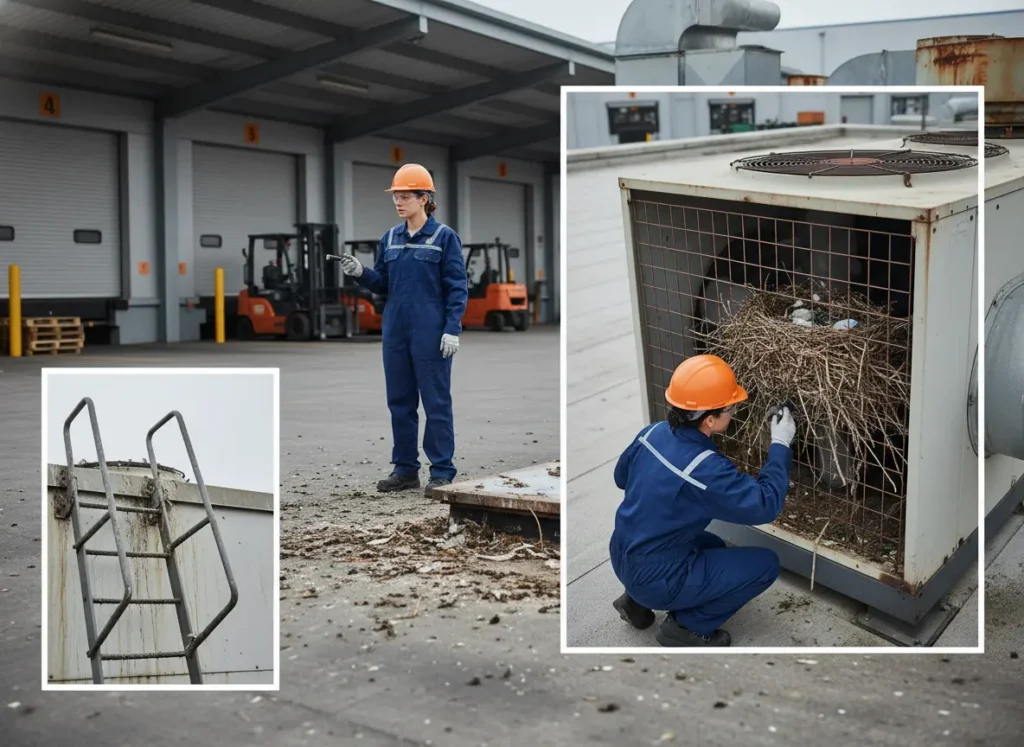
Bird droppings reduce traction on walkways, ramps, and stairs. Nesting debris increases fire load near electrical and lighting systems. These risks expose facilities to injury claims and investigations.
Bird-Related Compliance Risks
Food plants, healthcare facilities, and industrial sites operate under strict sanitation standards. Bird contamination can lead to failed inspections, citations, or forced shutdowns. For larger sites, bird control for industrial facilities can support risk planning across rooftops, loading docks, HVAC units, and exterior structures.
For facilities with strict sanitation needs, bird activity should be reviewed alongside other commercial property risks.
Bird-Related Asset and Infrastructure Risks
Droppings accelerate corrosion. Nests clog drains and damage insulation. Equipment lifespan shortens when bird activity goes unchecked.
For more detail on long-term building damage, review how bird nesting increases maintenance costs.
How Birds Disrupt Facility Operations
Birds inside warehouses, docks, or garages interrupt normal operations. Crews pause work, deliveries slow down, and schedules change.
For large sites, bird control at scale helps teams manage repeat activity across multiple zones instead of reacting one area at a time.
Why Bird Infestations Are More Than a Pest Problem
Reactive Bird Control Creates Ongoing Risk
Traditional pest responses focus on removal after the fact. By the time action is taken, operational impact has already occurred.
Cleaning Bird Droppings Does Not Eliminate Risk
Cleaning restores appearance but leaves the conditions that allowed birds to return. Risk exposure remains.
A Risk-Based Approach to Bird Control
Prevent Bird Problems Before They Become Incidents
Operational risks are managed before incidents happen. Bird control follows the same logic. Deterrence must exist before birds settle. A commercial bird control system can help facility teams reduce repeat bird pressure before it turns into a safety, maintenance, or compliance problem.
Consistent Deterrence Reduces Facility Risk
Risk management values reliability. Bird control works only when deterrence stays active across all zones without gaps.
Monitoring Bird Deterrents Improves Risk Management
Operational systems are monitored. Bird deterrent systems should be too. Unknown performance equals unmanaged risk.
How to Create a Bird Infestation Risk Assessment Plan
A risk assessment framework for bird infestation should identify where birds gather, what systems they affect, and how much damage or liability each zone can create. Facility managers should review rooftops, docks, walkways, HVAC areas, electrical equipment, and drainage systems, then rank each area by safety risk, compliance exposure, asset damage, and operational disruption. High-risk zones need continuous deterrence, routine inspection, and clear documentation so teams can act before bird activity becomes an incident. This approach turns bird control from reactive cleanup into structured risk management.
| Risk Area | What to Check | Why It Matters |
|---|---|---|
| Safety | Droppings on walkways, ramps, stairs, and docks | Reduces slip and injury risk |
| Compliance | Contamination near food, healthcare, or public areas | Reduces inspection and citation risk |
| Asset Protection | Droppings, nests, clogged drains, HVAC areas | Prevents corrosion and equipment damage |
| Operations | Bird activity near loading docks, warehouses, and service areas | Reduces work delays and cleanup interruptions |
| Documentation | Inspection notes, photos, recurring problem zones | Helps teams track risk before it escalates |
Integrating Bird Control Into Facility Operations
Include Bird Activity in Routine Facility Risk Assessments
Rooftops, garages, docks, HVAC zones, and electrical infrastructure should be evaluated like any other operational risk area.
Bird Infestation Risk Assessment for Historic Buildings
A risk assessment framework for bird infestation on historic buildings focuses on identifying exposure, evaluating impact, and prioritizing protection without damaging sensitive structures. Key risk areas include rooftops, ledges, drainage systems, and architectural features where birds tend to roost and nest. Each zone should be assessed for safety risk, structural impact from droppings and corrosion, and compliance concerns tied to preservation standards. Unlike industrial sites, historic properties require non-invasive, continuous deterrence that protects materials while reducing repeat exposure. The goal is to prevent nesting before it starts, maintain consistent coverage across all vulnerable areas, and monitor system performance to avoid gaps that allow birds to return.
Plan for Continuous Bird Deterrence Coverage
Bird behavior does not follow maintenance cycles. Operational control requires continuous protection.
Facility Risk Prevention Strategy
Make Bird Control Part of Your Facility Risk Management Program
Bird activity should not sit outside your risk management plan. If birds affect your roof, docks, HVAC units, walkways, or electrical areas, your building needs prevention, monitoring, and documentation.
A risk-focused bird control plan helps facility teams move from reactive cleanup to prevention, monitoring, and long-term site protection.
Symterra helps facility teams reduce bird-related risk through long-term deterrence and real-time system visibility.
Schedule a Bird Risk AssessmentBird Infestation Risks Require Ongoing Oversight
When bird activity is treated as a pest issue, facilities stay stuck in cleanup mode. When it is treated as an operational risk, prevention becomes the priority and disruption drops sharply. Teams can also use the bird deterrent cost calculator to estimate how recurring cleanup, access issues, and maintenance needs affect long-term facility costs.
Symterra Pulse supports this shift by providing real-time visibility into deterrent system performance. It identifies weak zones and system faults before birds create safety, compliance, or asset risks. With verified deterrence, bird control becomes part of operational risk management rather than a recurring nuisance.
Frequently Asked Questions
Why should facility managers treat bird activity as a risk issue?
Facility managers should treat bird activity as a risk issue because birds affect safety, compliance, assets, and daily operations. The impact goes beyond appearance.
What areas should be checked during a bird infestation risk assessment?
Teams should check rooftops, gutters, ledges, HVAC units, electrical areas, loading docks, walkways, signage, and covered structural spaces.
How does bird activity create liability?
Bird activity creates liability through slip hazards, contamination, sanitation issues, property damage, and maintenance delays. These risks increase when problems are ignored or poorly documented.
Why is cleanup not enough to reduce bird risk?
Cleanup removes visible droppings and debris, but it does not stop birds from returning. Risk remains when the same areas stay attractive for roosting or nesting.
How often should commercial buildings inspect for bird activity?
High-risk commercial buildings should inspect bird activity during routine facility checks, especially around rooftops, docks, drains, HVAC zones, and public walkways.