Infrastructure inspections follow strict timelines. Parking structures, bridges, towers, industrial facilities, and commercial buildings all require regular evaluation to ensure structural safety and regulatory compliance. These inspections are planned months in advance.
Bird nesting can quietly disrupt these timelines. When nests form in key areas of a structure, inspection teams face delays, access challenges, and additional coordination before work can continue.
Quick Answer: How does bird nesting delay infrastructure inspections?
Bird nesting delays infrastructure inspections by blocking access to beams, ledges, platforms, equipment, and structural components. Inspection teams may need to pause work, assess nests, follow wildlife protection requirements, reschedule crews, and delay maintenance planning. Without prevention, the same nesting sites can disrupt future inspection cycles.
Nesting Often Occurs in Critical Structural Zones
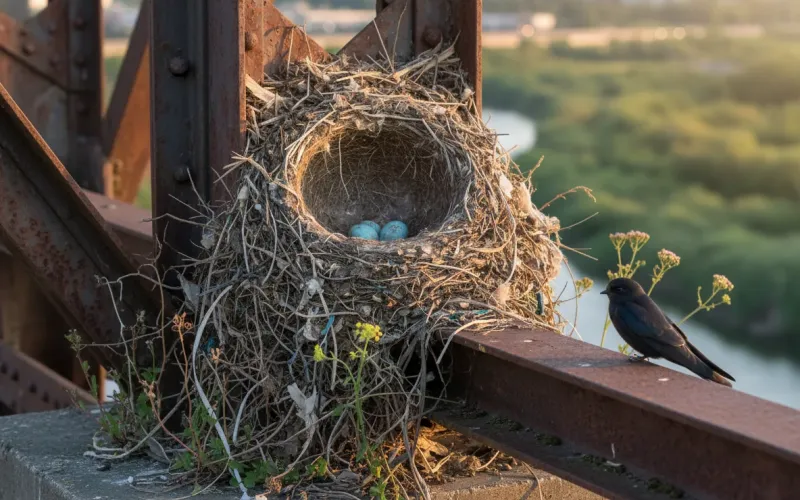
Beams, Ledges, and Support Members
Birds prefer stable surfaces that provide shelter and elevation. Structural beams and ledges offer ideal nesting locations.
Mechanical and Equipment Clusters
HVAC units, lighting systems, and electrical components provide warmth and protection from wind, making them attractive nesting areas.
How Bird Nesting Affects Infrastructure Inspections
| Nesting Location | Inspection Problem | Business Impact |
|---|---|---|
| Structural beams | Blocks access to key support areas | Delayed structural evaluation |
| Ledges and platforms | Limits safe inspection access | Rescheduled crew visits |
| HVAC and mechanical units | Restricts equipment inspection | Maintenance delays |
| Electrical components | Creates safety and access concerns | Added coordination before work |
| Bridges, towers, and rooflines | Increases access complexity | Higher inspection costs |
| Repeat nesting zones | Creates recurring inspection obstacles | Ongoing schedule disruption |
Need to keep infrastructure inspections on schedule?
Symterra helps infrastructure owners reduce nesting pressure around beams, ledges, towers, rooftops, equipment zones, and access points with a prevention-focused bird deterrent strategy.
Request a Site RecommendationInspections Cannot Proceed Without Nest Assessment
Access Restrictions
Inspection teams may not be able to safely reach certain structural elements if nests block ladders, platforms, or access points.
Wildlife Protection Considerations
In some cases, inspectors must pause work if nests contain eggs or protected species. This requires additional documentation and coordination.
Signs Bird Nesting May Delay Your Next Inspection
Bird nesting becomes a scheduling risk when it appears near inspection routes, access points, or structural components. Facility teams should not wait until the inspection date to identify nesting issues. By then, crews may need to pause, document the condition, and reschedule work.
Watch for these warning signs:
- Nesting material near beams, ledges, rafters, or platforms
- Birds repeatedly entering the same structural zones
- Droppings near ladders, lifts, walkways, or access hatches
- Nests near HVAC units, lighting systems, or electrical components
- Birds gathering around bridges, towers, rooftops, or parking structures
- Maintenance teams reporting blocked access
- Previous inspections delayed by the same bird activity
When these signs appear, the site needs prevention before inspection work begins.
Inspection Delays Affect Maintenance Planning
Rescheduling Field Teams
When inspections are postponed, crews must return later, increasing labor costs and logistical complexity.
Maintenance Work Gets Pushed Back
Inspection findings often trigger repairs or preventive maintenance. Delays in inspection postpone these follow-up tasks.
Recurring Nesting Repeats the Disruption
Seasonal Return Patterns
Birds frequently return to the same nesting sites year after year. Structures that previously hosted nests often see repeated activity.
Repeated Inspection Obstacles
Without consistent deterrence, inspection teams may encounter the same nesting issues during future inspection cycles.
Why Infrastructure Owners Need Bird Control Before Inspection Season
Infrastructure inspections are easier to manage when bird control happens before crews arrive. Once birds nest near structural components, inspection teams may face access restrictions, safety issues, added documentation, and scheduling delays.
This matters for properties such as:
- Parking structures
- Bridges
- Utility towers
- Signal towers
- Power transmission structures
- Industrial facilities
- Commercial buildings
- Rooftop mechanical areas
A prevention-first bird control plan helps owners keep inspection routes clear, reduce last-minute delays, and avoid repeated disruptions during future inspection cycles.
Preventing Nesting Protects Inspection Schedules
Clear Access to Structural Components
When birds cannot establish nests, inspectors can access beams, platforms, and equipment without interruption.
Predictable Inspection Timelines
Consistent deterrence helps infrastructure owners maintain planned inspection schedules and regulatory compliance.
Prevent nesting before it delays your next inspection
If bird nesting keeps blocking inspection access or forcing crews to reschedule, Symterra can help evaluate your site and recommend a prevention-focused deterrent plan.
Schedule a ConsultationReliable Inspections Require Consistent Prevention
Bird nesting disrupts inspection timelines by blocking access, triggering wildlife considerations, and forcing rescheduled site visits. Over time, these disruptions complicate maintenance planning and increase operational costs.
Symterra Pulse helps infrastructure owners maintain consistent deterrence by providing real-time visibility into system performance. It identifies weak zones before birds establish nests that could interfere with inspections. With verified deterrence in place, inspection teams can work safely and according to schedule.
Keep inspection schedules on track
If bird nesting is delaying inspections, Symterra can help you prevent repeat access issues before they disrupt your next maintenance cycle.
Talk to Symterra