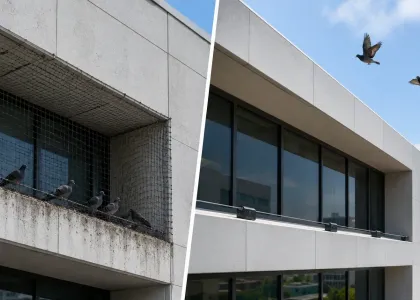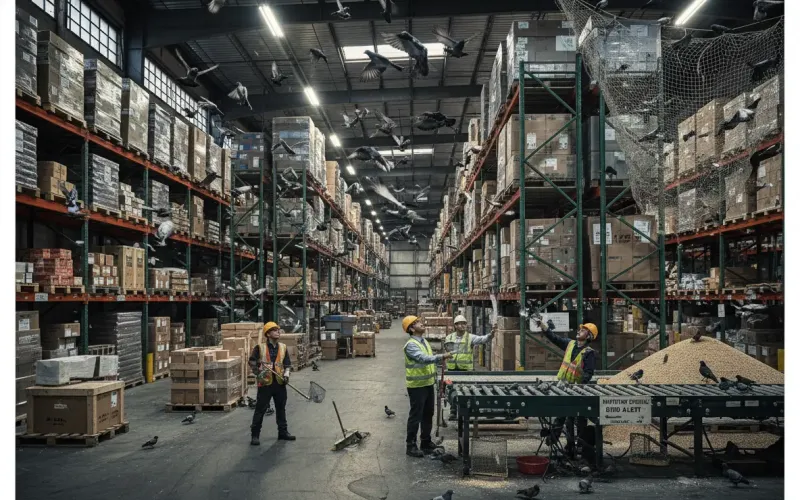
Warehouses store high volumes of products, materials, and equipment. When birds enter these spaces, they bring risks that directly affect inventory safety and operational efficiency. Even a small flock can create contamination, structural issues, and avoidable financial losses. Understanding how birds cause damage inside warehouses helps facilities prevent problems before they spread.
Quick Answer
How do birds damage warehouse inventory?
Birds damage warehouse inventory through droppings, feathers, nesting debris, packaging damage, product contamination, equipment interference, fire hazards, and recurring cleanup delays. Inventory risk increases when birds roost in rafters, beams, pallet racks, vents, loading areas, or high storage zones where contamination can spread before workers notice the problem.
Warehouse Inventory Damage Table
| Bird-related issue | Warehouse inventory impact |
|---|---|
| Droppings on boxes and pallets | Contaminates packaging and may force quarantine, disposal, or rework. |
| Feathers and nesting debris | Spreads debris into storage zones, open packaging, and product areas. |
| Birds in rafters and beams | Allows contamination to fall onto inventory from above. |
| Pecking and tearing | Damages cardboard, shrink wrap, foam, labels, and product packaging. |
| Nesting in pallet racks | Creates hidden contamination near stored goods and picking areas. |
| Debris in conveyors or machinery | Causes jams, shutdowns, overheating, and delayed fulfillment. |
| Activity near food or perishables | Raises spoilage, sanitation, recall, and quality control risks. |
| Repeat roosting inside the facility | Turns bird damage into an ongoing inventory loss and maintenance issue. |
Warehouse Inventory Protection
Reduce Bird Damage to Warehouse Inventory
If birds are contaminating inventory, damaging packaging, nesting in rafters, or disrupting warehouse operations, Symterra can help assess the site and recommend a long-term deterrent strategy built around warehouse layout and bird behavior.
Request a Warehouse Bird Assessment1. Contamination From Droppings
Bird droppings are one of the most common sources of inventory loss. They contain bacteria, fungi, and corrosive acids that damage packaging and products. When droppings land on boxes, pallets, or food-grade materials, the contamination often forces disposal or quarantine.
Droppings also create slip hazards and can compromise quality control during inspections.
2. Nesting Material Inside Storage Areas
Birds collect twigs, debris, insulation, and trash to build nests. When they nest inside racking systems, pallet racks, or ventilation gaps, this material spreads into storage zones. Nesting debris can contaminate open packaging, interfere with moving equipment, and increase fire risk.
Loose nesting material also jams conveyors and automated sorting systems.
3. Damage to Packaging and Containers
Birds peck at cardboard, foam, plastic, and shrink wrap when searching for shelter or food. Even small holes can compromise product integrity, reduce shelf life, or void manufacturer standards. For sensitive items or food products, this damage leads to immediate disposal.
Why Warehouse Inventory Damage Spreads Quickly
Bird damage spreads quickly in warehouses because contamination often starts above the inventory. Birds that perch on rafters, beams, lighting, ductwork, or pallet racks can drop feathers, nesting debris, and waste onto boxes, pallets, labels, shrink wrap, and product surfaces below.
The problem can also move through normal warehouse activity. Forklifts, conveyors, airflow, picking routes, and pallet movement can spread contaminated debris from one zone to another. A small bird problem near one storage area can become a larger inventory control issue if it reaches active fulfillment or food storage zones.
For warehouse teams, early prevention is critical. Once contamination affects stored goods, the cost may include product quarantine, disposal, cleanup, documentation, delayed shipments, and customer complaints.
4. Interference With Machinery and Equipment
Birds often perch on beams, rafters, and lighting structures. Feathers, droppings, and nesting debris fall into machinery such as:
- Conveyor systems
- Sorting equipment
- Motor housings
- Forklift compartments
- Fans and cooling units
This buildup causes malfunctions, overheating, and unexpected shutdowns.
5. Spoiled Food and Perishable Items
For warehouses storing food, ingredients, or raw materials, birds are a serious contamination threat. Droppings, feathers, and pathogens spread quickly when birds enter food storage zones. Even minimal activity can trigger a complete product recall.
For sanitation-sensitive facilities, review Symterra’s guide on preventing bird contamination in food plants.
6. Increased Fire Hazards
Dry nesting material, feathers, and debris accumulate around electrical components and lighting fixtures. These materials ignite easily, especially near heat sources. Fire risk grows when birds nest in high rafters or hidden mechanical spaces.
You can also review how bird nesting near electrical units increases fire risks.
7. Structural Wear Over Time
Droppings are highly acidic. When they accumulate on steel beams, roofing panels, walkways, or HVAC units, corrosion forms. Over time, this shortens the lifespan of mechanical systems and requires expensive repairs.
Long-Term Bird Prevention for Warehouses
Long-term warehouse bird prevention should focus on stopping birds before they reach inventory, equipment, and storage zones. This means identifying where birds enter, land, roost, nest, and return after temporary fixes.
Warehouses often need protection around loading docks, open doors, rooflines, rafters, beams, vents, lighting, pallet racks, conveyors, HVAC areas, and high storage zones. If only one area is addressed, birds may shift to another part of the facility and continue creating contamination risk.
A stronger prevention plan combines sanitation, access control, inspection, and consistent deterrent coverage across the areas birds keep using. The goal is to reduce bird activity at the source before it becomes an inventory loss, safety issue, or operations problem.
For larger warehouse and industrial sites, review Symterra’s approach to industrial and warehouse bird control.
Protecting Inventory With Better System Monitoring
Birds damage warehouse inventory through contamination, structural wear, equipment interference, and nesting debris. The risk grows when deterrent systems fail or weaken in specific zones. Warehouses need consistent, reliable coverage across all high-risk areas.
This is where Symterra Pulse helps. It monitors electrical deterrent lines in real time, detects weak spots, and alerts teams before birds enter or nest. With continuous performance tracking, facilities keep deterrent systems active and prevent inventory loss from the start.
For more detail on behavior-based prevention, review how Symterra’s bird deterrent system works.
To reduce bird-related inventory damage in your warehouse, contact Symterra for a site recommendation.
Long-Term Warehouse Protection
Protect Warehouse Inventory Before Bird Damage Spreads
Bird damage becomes expensive when droppings, feathers, nesting debris, packaging damage, machinery issues, and contamination spread across storage areas. Symterra helps warehouses reduce recurring bird activity with long-term behavior-based deterrence.
Request a Site RecommendationFrequently Asked Questions About Bird Damage to Warehouse Inventory
How do birds damage warehouse inventory?
Birds damage warehouse inventory through droppings, feathers, nesting debris, packaging damage, product contamination, equipment interference, fire hazards, and recurring cleanup delays.
Why are bird droppings dangerous for warehouse inventory?
Bird droppings can contaminate boxes, pallets, labels, shrink wrap, food-grade materials, and product surfaces. In some cases, affected inventory may need to be quarantined, cleaned, discarded, or documented for quality control.
What warehouse areas are most at risk for bird damage?
High-risk areas include loading docks, rafters, beams, lighting, vents, pallet racks, conveyors, HVAC areas, food storage zones, high shelving, and open doorways.
Why is cleanup alone not enough to protect warehouse inventory?
Cleanup removes visible contamination, but it does not stop birds from entering, roosting, nesting, or dropping debris over inventory again. Long-term prevention is needed to reduce repeat activity.
When should a warehouse request a bird control assessment?
A warehouse should request a bird control assessment when birds repeatedly enter the facility, contaminate inventory, damage packaging, nest in rafters, interfere with equipment, or increase cleanup and safety risks.