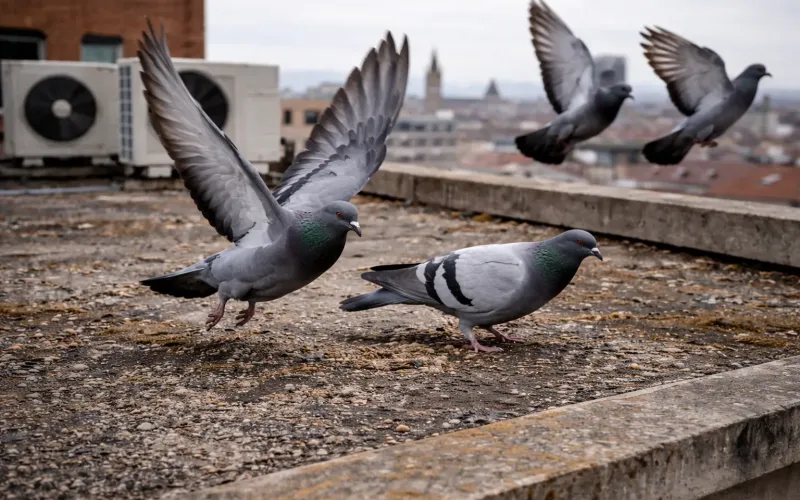
Liability exposure rarely comes from one dramatic event. It builds from repeated risks left unmanaged. Bird activity creates ongoing hazards that increase the likelihood of injury claims, property damage disputes, compliance violations, and insurance scrutiny. Humane deterrence reduces liability by preventing those hazards at the source.
Bird Activity Creates Predictable Liability Risks
Slip and Fall Incidents
Bird droppings reduce traction on walkways, ramps, stairwells, and loading docks. A single fall can trigger medical claims, legal review, and insurance reporting.
Fire and Electrical Hazards
Nesting material near lighting, wiring, and mechanical systems increases fire risk. Property damage claims from preventable ignition events carry significant financial consequences.
Contamination Claims
In food plants, healthcare facilities, or logistics hubs, bird contamination can lead to product loss, recalls, and third-party liability disputes.
Repeated Cleanup Does Not Reduce Legal Exposure
Reactive Action Signals Ongoing Risk
If bird-related incidents repeat, it becomes clear the hazard is known. Known hazards that remain unresolved increase legal vulnerability.
Documentation Alone Is Not Prevention
Incident reports and corrective actions demonstrate response, but they do not eliminate the root condition. Courts and insurers focus on whether preventive measures were in place.
Humane Deterrence Targets the Root Cause
Removing the Hazard Before It Forms
Humane deterrents stop birds from roosting and nesting. Without nesting and droppings, slip hazards, contamination, and fire risks decline sharply.
Consistent Deterrence Breaks Repeat Patterns
When birds abandon a site, the cycle of risk resets. The absence of recurring incidents lowers exposure over time.
Long-Term Prevention Strengthens Defensibility
Demonstrable Risk Mitigation
Facilities that implement preventive deterrent systems show proactive hazard management. This strengthens their position in liability disputes.
Reduced Incident Frequency
Lower incident frequency means fewer claims, fewer investigations, and improved insurance profile stability.
Stable Operating Conditions
Predictable site conditions reduce surprises that lead to emergency responses and legal scrutiny.
Liability Reduction Is a Multi-Year Outcome
Compounded Protection Over Time
Each year without bird-related incidents improves a facility’s risk history.
Long-Term Strategy Outperforms Short-Term Fixes
Temporary deterrents may reduce visibility, but only consistent prevention reduces documented risk trends.
Liability Exposure Drops When Risk Is Prevented, Not Managed
Liability exposure decreases when hazards stop forming. Humane deterrence reduces risk by eliminating the conditions that cause slip incidents, fire hazards, contamination events, and structural damage. The key is maintaining consistent performance across every protected zone.
Symterra Pulse supports this long-term protection by providing real-time visibility into deterrent system performance. It identifies weak zones and system faults before birds can reestablish activity. With verified prevention in place, facilities reduce recurring hazards and lower liability exposure year after year.