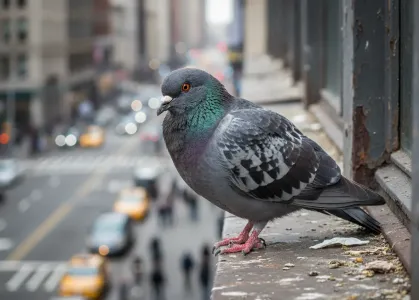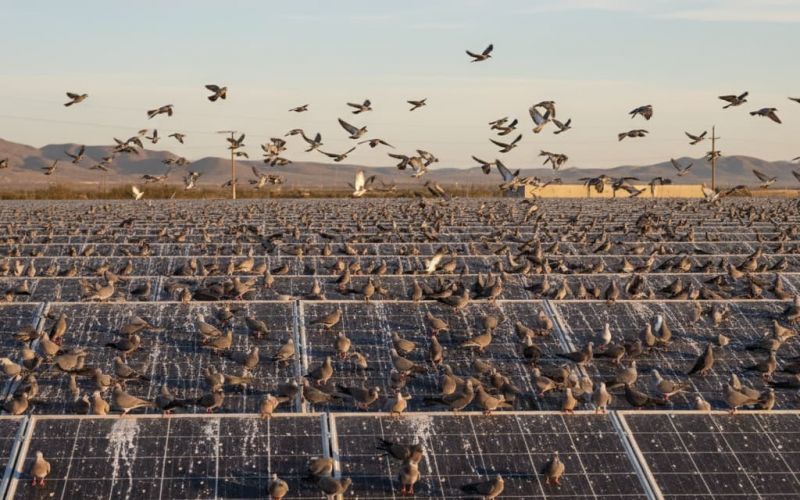
Solar panel bird proofing is a common concern for property owners with rooftop or ground-mounted solar systems. Birds often nest under panels, damage wiring, block airflow, and leave corrosive droppings that reduce system performance.
This page explains how solar panel bird proofing works, what methods exist, and which approaches scale best for long-term protection.
Why Birds Nest Under Solar Panels
Solar panels create a warm, shaded cavity between the panel and the roof. Birds look for shelter, safety from predators, and stable surfaces for nesting. Solar arrays meet all three conditions.
Common problems caused by birds under solar panels include:
- Nesting debris trapped beneath panels
- Corrosion of wiring and metal frames
- Blocked airflow that raises panel temperature
- Reduced energy output
- Fire risk from dry nesting material
- Health concerns from droppings and parasites
Once birds settle in, the damage compounds fast.
What Solar Panel Bird Proofing Means
Solar panel bird proofing refers to methods used to stop birds from accessing the space beneath solar panels. The goal is prevention, not removal after damage occurs.
Most bird proofing approaches fall into three categories:
- Physical exclusion
- Visual or sensory deterrents
- System-level deterrent solutions
Each works differently and fits different environments.
Physical Solar Panel Bird Proofing Methods
Physical exclusion blocks birds from entering the gap beneath panels.
Common physical options include:
- Solar mesh installed along panel edges
- Clip-mounted wire barriers
- Netting for large solar fields
- Spikes placed on nearby ledges
These methods create a physical barrier between birds and nesting areas. They rely on proper installation and routine inspection to stay effective.
Limitations of Physical Solar Bird Proofing
Physical barriers stop access but introduce tradeoffs.
Common issues include:
- Installation time and labor cost
- Ongoing inspection and repair
- Gaps forming over time
- Debris buildup behind mesh
- Scalability challenges on large arrays
Physical proofing protects entry points but does not address why birds return to the structure.
Visual and Sensory Deterrents for Solar Panels
Some sites use visual or scent-based deterrents as secondary protection.
Examples include:
- Predator decoys
- Reflective materials
- Scent deterrent pouches
These methods rely on sensory disruption. Birds often adapt after repeated exposure, especially in urban or high-pressure environments.
Solar Panel Bird Proofing for Commercial Sites
Large installations face higher stakes.
Warehouses, solar farms, manufacturing plants, and commercial rooftops require solutions that:
- Cover wide surface areas
- Operate continuously
- Avoid manual repositioning
- Maintain system efficiency
- Reduce long-term maintenance cost
At scale, frequent inspections and repairs increase operational overhead.
A Long-Term Alternative to Solar Panel Mesh
For sites where physical barriers introduce maintenance or access issues, system-based deterrents offer another path.
Symterra Pulse protects solar panels by creating a continuous, non-visual deterrent field across the structure. The system does not rely on mesh, spikes, or netting and does not interfere with airflow or panel output.
The focus stays on prevention rather than ongoing repairs.
Signs Your Solar Panels Already Have a Bird Problem
Early detection limits damage.
Watch for:
- Droppings along panel edges or gutters
- Nesting material visible beneath panels
- Scratching or cooing sounds from the roof
- Sudden drops in energy output
- Increased insect activity near windows
Multiple signs usually indicate active nesting.
Solar Panels Need Prevention, Not Repeated Repairs
Bird proofing works best when it stops nesting before damage begins. Solutions that rely on mesh, spikes, or visual deterrents often require ongoing inspection and repair, especially as systems age. Long-term protection focuses on keeping birds from settling in the first place while preserving airflow, energy output, and system integrity. When prevention is continuous and low maintenance, solar performance stays consistent and costs stay predictable.
Frequently Asked Questions About Solar Panel Bird Proofing
What is the most effective solar panel bird proofing method?
Effectiveness depends on site size, bird pressure, and maintenance capacity.
Does solar mesh damage panels or void warranties?
Properly installed mesh attaches to panel frames without drilling.
How often does solar bird proofing need inspection?
Physical barriers require routine checks to maintain coverage.
Why do birds return after proofing?
Birds return when gaps form or when deterrents lose effectiveness.
Is there a maintenance-free option for solar panel bird proofing?
System-based deterrents reduce manual upkeep on large installations.