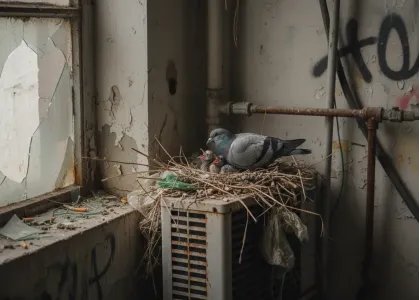
Bird problems often start unnoticed. Small patterns turn into contamination, structural wear, and safety risks. Early detection helps prevent long-term damage. These are the most common signs your building is becoming an active site for bird activity.
Visible Bird Activity Around the Building
Frequent Bird Sightings on Roofs and Ledges
If birds gather on the same roof edges, beams, parapets, or signs and billboards, the location is becoming a regular perch. Repetitive patterns indicate the area feels safe and may soon host nests.
Feathers and Debris Near Entrances and Walkways
Loose feathers, nesting fragments, and scattered debris often fall from active perching or nesting zones above.
Clear Signs of Droppings and Contamination
Droppings in High-Traffic Areas
Droppings on walkways, loading docks, windowsills, and outdoor equipment show consistent activity. Droppings also cause corrosion and create health hazards.
Staining and Early Corrosion on Surfaces
Bird droppings contain acids that damage paint, roofing, metals, and building materials. Early stains usually appear before corrosion worsens.
Early Nesting Indicators
Nesting Material in Corners and Gaps
Twigs, insulation, feathers, and debris in tight spaces indicate early nest building. Birds favor sheltered areas.
Common Nesting Spots
- Vents
- Rafters
- Under solar panels
- Signage structures
- Rooftop equipment clusters
Unusual Noises From Rafters or Mechanical Spaces
Scratching, chirping, or flapping inside ceilings or wall gaps means active nesting. Sounds usually increase at sunrise and sunset.
Structural and Operational Damage
Blocked Drains and Gutters
Bird nests clog drains and gutters, leading to standing water, leaks, and extra stress on roof structures.
Damage to Insulation or Stored Materials
If soft materials appear shredded, birds may be collecting them for nesting. This is common in rooftops, warehouses, and loading docks.
Internal Bird Intrusion
Birds Entering Interior Spaces
Birds inside warehouses or commercial areas indicate unprotected entry points. This significantly increases contamination and safety risks.
Employee and Customer Complaints
Odors, droppings, slipping hazards, or visible bird activity often trigger complaints. These signals mean the issue is already advancing.
Strengthen Early Detection With Intelligent Monitoring
Early recognition is the best way to prevent bird problems from escalating. Even with deterrents installed, buildings remain at risk when performance drops or weak zones go unnoticed.
Symterra Pulse supports early detection by monitoring electrical deterrent lines in real time. It identifies faults, weak voltage areas, and disruptions before birds can return. With continuous performance tracking, facilities keep deterrent systems strong and maintain long-term protection.