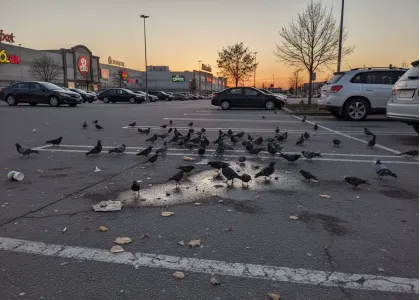
A building gets cleaned. Nests are removed. Surfaces are washed. For a few weeks, everything looks resolved. Then the birds return.
This pattern is common because clearing a building does not change how birds evaluate it. Temporary fixes remove evidence of activity but leave the underlying conditions intact. When the structure still feels safe and usable, birds come back.
“Cleared” Does Not Mean “Unattractive”
Birds Remember Productive Sites
Birds have strong spatial memory. If a building previously offered shelter, height, and stability, they retain that location in their routine.
Removal Does Not Change Comfort
Cleaning droppings and removing nests restores appearance but does not alter the physical features that attracted birds in the first place.
Temporary Fixes Create False Confidence
Short-Term Displacement Is Mistaken for Success
When birds leave after nest removal or disturbance, it may appear that the problem is solved. In reality, birds are waiting for conditions to stabilize.
Gaps Signal Opportunity
If deterrent systems are incomplete or inconsistent, birds quickly identify safe landing zones and resume activity.
Predictable Human Activity Encourages Return
Birds Learn Maintenance Patterns
Birds observe when crews are active and when the site becomes quiet again. Once disturbance ends, they retest the structure.
Quiet Periods Reinforce Territory
Buildings with limited daily disruption allow birds to reestablish perching habits quickly.
Why Adaptation Happens So Quickly
No Negative Feedback During Landing
If birds land comfortably after a “fix,” they confirm the structure is still usable.
Familiar Layout Accelerates Reoccupation
Because the physical structure has not changed, birds return to the exact same beams, ledges, and equipment clusters.
Long-Term Change Requires Behavior Shift
Surface Experience Must Change
For birds to stop returning, landing must feel consistently unstable or uncomfortable.
Every Zone Must Be Protected
Partial deterrence encourages birds to relocate within the same structure rather than abandon it.
Cleared Buildings Stay Cleared Only With Continuous Deterrence
Birds return to cleared buildings because temporary fixes address symptoms, not behavior. Without consistent deterrent coverage, the structure remains attractive territory.
Symterra Pulse supports long-term prevention by monitoring deterrent system performance in real time. It identifies weak zones and inactive areas before birds reclaim them. With verified, uninterrupted coverage, buildings remain protected instead of cycling through repeated clearance and return.