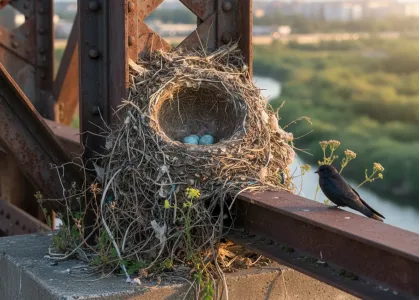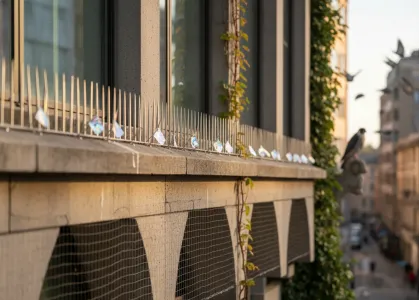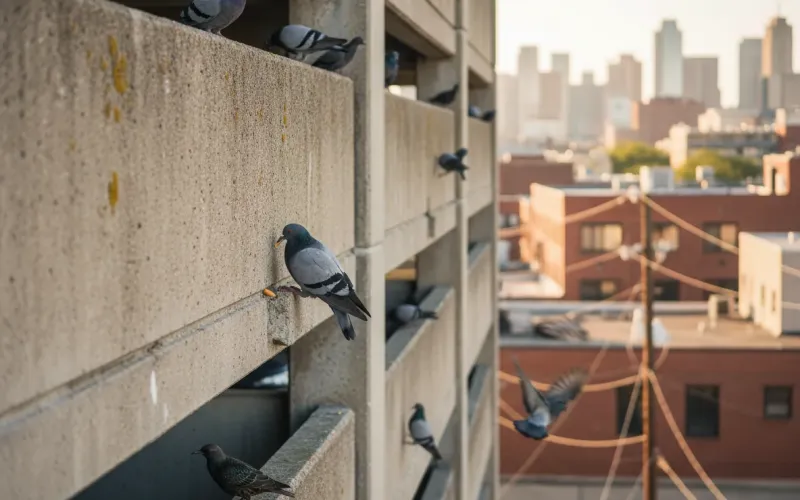
Parking garages seem harmless to birds, but to facility managers, they are one of the hardest places to keep bird-free. Open sides, concrete beams, and low human disturbance create ideal conditions for roosting and nesting. When bird activity becomes routine, maintenance costs rise quietly but steadily. Over time, what starts as a nuisance turns into a structural and safety problem.
Why Parking Garages Attract Birds
Open Access With Built-In Shelter
Most garages are open-air structures. Birds enter easily and find protection from wind, rain, and predators. Beams, ledges, and ceiling joints offer perfect roosting surfaces.
Low Disturbance Zones
Unlike offices or retail spaces, parking garages have long quiet periods. Birds take advantage of early mornings, nights, and low-traffic levels to settle in.
Consistent Return Paths
Once birds establish a routine in a garage, they return daily. The structure becomes part of their territory, not just a temporary stop.
How Bird Activity Drives Maintenance Costs
Constant Cleanup of Droppings
Bird droppings accumulate on:
- Parking stalls
- Walkways
- Stairwells
- Elevators
- Vehicle paths
Regular cleaning becomes a recurring expense instead of an occasional task.
Surface Damage and Corrosion
Droppings contain acids that degrade concrete coatings, metal railings, signage, and lighting fixtures. Over time, this leads to repairs, repainting, and premature replacement.
Clogged Drains and Water Issues
Nesting material blocks floor drains and downspouts. Standing water forms, increasing slip risk and accelerating structural wear.
Safety and Liability Risks
Slip Hazards for Pedestrians
Wet droppings reduce traction on ramps and walkways. This increases fall risk for pedestrians and cyclists.
Vehicle Damage Complaints
Bird droppings stain paint and etch clear coats. Garages with chronic bird activity often receive repeat complaints from drivers.
Fire Risk Near Lighting and Electrical Runs
Nesting debris near lights, junction boxes, or conduit adds combustible material to areas that already generate heat.
Why Temporary Solutions Fail in Garages
Visual and Sound Deterrents Lose Effect
Birds adapt quickly to static deterrents. In garages, predictable patterns teach birds when it is safe to return.
Partial Coverage Creates Safe Zones
Garages are large and complex. When deterrents do not cover every beam or level, birds relocate within the same structure instead of leaving.
Long-Term Impact on Facility Operations
Rising Maintenance Budgets
Labor, cleaning supplies, repairs, and inspections increase year after year when bird issues remain unresolved.
Poor User Experience
Dirty walkways, odors, and visible droppings affect how tenants and visitors perceive the property.
Deferred Repairs Become Major Projects
Small corrosion issues turn into structural restoration when left unchecked.
Reducing Long-Term Costs Starts With Consistent Coverage
Recurring bird issues in parking garages are not just a cleaning problem. They are a maintenance cycle driven by predictable bird behavior and inconsistent deterrence. Breaking that cycle requires systems that remain active across every level and surface.
Symterra Pulse helps facilities maintain consistent deterrent performance by monitoring system health in real time. It identifies weak zones and faults that allow birds to resettle. With continuous visibility, parking garages reduce repeat maintenance, improve safety, and stop bird problems from becoming permanent expenses.