Table of Contents
- Quick Answer
- How Much Does Bird Dropping Cleanup Cost Businesses Each Year?
- Simple Formula to Calculate Annual Bird Damage Costs
- How Birds Damage Roofs, HVAC Systems, and Commercial Structures
- Why Pigeon Damage Costs More on Historic Buildings
- Liability and Safety Risks of Uncontrolled Bird Activity
- How Bird Activity Impacts Operations and Productivity
- Why Temporary Bird Control Increases Long-Term Costs
- Direct vs. Indirect Bird Damage Costs Explained
- Estimate Your Losses With the Bird Damage Cost Calculator
- Reduce Long-Term Bird Damage Costs With Symterra Pulse
- Frequently Asked Questions About Bird Damage Costs
When birds invade your property, the damage is not just a nuisance. It’s expensive. Droppings, nesting, and corrosion silently add up to thousands of dollars each year. Understanding how to calculate these costs helps you take control of your maintenance budget and prevent future losses.
Quick Answer
How do you calculate bird damage costs?
To calculate bird damage costs, add the direct costs of cleanup, repair, equipment access, sanitation, and labor with the indirect costs of downtime, customer complaints, safety risks, compliance concerns, and long-term maintenance. The true cost is not only the price of cleaning droppings. It includes every repeat expense caused by birds returning to the same roofs, signs, loading docks, parking areas, HVAC zones, and customer-facing spaces.
Bird Damage Cost Breakdown Table
| Cost Category | What to Include | Why It Matters |
|---|---|---|
| Cleanup costs | Dropping removal, nest removal, sanitation, pressure washing, labor, supplies, and disposal. | Cleanup often repeats when birds return to the same roosting or nesting areas. |
| Repair costs | Roof repairs, sign cleaning, drain clearing, HVAC maintenance, fixture replacement, and surface restoration. | Bird droppings, debris, and nesting material can damage building systems over time. |
| Access costs | Lifts, ladders, safety equipment, roof access, after-hours labor, and contractor mobilization. | Many bird-related issues happen in high or hard-to-reach areas, which increases service cost. |
| Downtime costs | Interrupted loading dock activity, delayed maintenance, blocked areas, temporary closures, or restricted access. | Bird activity can slow operations when cleanup or repair work interferes with daily use. |
| Safety and liability costs | Slip-risk cleanup, walkway maintenance, employee safety concerns, customer complaints, and incident response. | Droppings in public or employee areas can create safety exposure and reputational risk. |
| Long-term maintenance costs | Repeated inspections, recurring service calls, premature surface wear, blocked drainage, and repeated repairs. | The biggest cost is often the repeat cycle created when bird activity is not prevented. |
Cleanup, Repairs, Downtime, and Long-Term Maintenance Costs
Bird damage costs are often underestimated because many facilities only count the immediate cleanup invoice. That number does not show the full cost of repeated bird activity. If birds return after cleaning, the facility may keep paying for the same problem through labor, equipment access, repairs, safety controls, and operational disruption.
Cleanup Costs
Cleanup costs include droppings removal, nest removal, sanitation, disposal, labor, supplies, and contractor service fees. These costs increase when droppings collect on roofs, walkways, storefronts, loading docks, signs, parking areas, and elevated structures.
Repair Costs
Repair costs can include roof damage, stained signage, blocked drains, worn coatings, damaged lighting, HVAC maintenance, and corrosion on metal fixtures. Bird droppings and nesting debris can hold moisture and accelerate deterioration when the issue repeats over time.
Downtime Costs
Downtime costs happen when bird activity interferes with normal facility use. A loading dock may need to be cleaned before deliveries continue. A walkway may need to be blocked off. A rooftop repair may require extra scheduling, lift equipment, or safety planning. These indirect costs can be harder to see but still affect the operating budget.
Long-Term Maintenance Costs
Long-term maintenance costs build when birds keep returning to the same areas. The facility may need more inspections, more cleaning, more corrective work, and more emergency response. This is why bird damage should be calculated as a recurring facility cost, not just a one-time pest control issue.
Simple Bird Damage Cost Formula
Facility managers can estimate bird damage costs using this simple formula:
Bird Damage Cost = Cleanup + Repairs + Access Equipment + Labor + Downtime + Safety Risk + Long-Term Maintenance
This formula helps teams look beyond visible droppings and calculate the full cost of repeated bird activity. If the same area needs service multiple times per year, prevention may provide stronger long-term value than repeated cleanup.
How Much Does Bird Dropping Cleanup Cost Businesses Each Year?
Bird droppings are more than unsightly. They are acidic enough to corrode paint, metal, and roofing materials. Cleanup often involves pressure washing, janitorial hours, disinfectants, and protective coatings.
As a baseline, a 100,000 sq. ft. property with a medium bird presence costs around $40,000 per year in total damage-related expenses. This includes cleaning, property repairs, and operational disruptions.
If your facility is larger, has multiple open structures, or is located near food sources, your costs can climb even higher.
Simple Formula to Calculate Annual Bird Damage Costs
Use this simple formula to estimate yearly bird damage costs:
Annual Bird Damage Cost = Cleanup Costs + Repair Costs + Safety Costs + Downtime Costs + Deterrent Maintenance Costs + Indirect Costs
This gives facility teams a clearer way to compare the cost of recurring bird activity against the cost of long-term prevention.
How Birds Damage Roofs, HVAC Systems, and Commercial Structures
Birds nesting on ledges, HVAC units, or beams cause long-term structural and mechanical damage. Nesting materials clog drains and vents, increase fire risks, and corrode valuable assets like solar panels and metal fixtures.
Typical expenses may include:
- Roof or paint restoration
- HVAC coil replacement
- Solar panel cleaning and corrosion repair
- Electrical rewiring or insulation replacement
These repairs alone can account for 20 to 40 percent of your total bird-related losses.
Why Pigeon Damage Costs More on Historic Buildings
Repairing pigeon damage on historic buildings often costs more than standard properties due to material sensitivity and restoration requirements. Acidic droppings can damage stone, paint, metal, and decorative surfaces, which require specialized cleaning and preservation methods instead of standard pressure washing. Nesting also leads to clogged drainage, hidden moisture damage, and corrosion in areas that are harder to access and restore. In many cases, repairs involve skilled labor, conservation-approved materials, and compliance with heritage regulations, which increases overall cost. When damage spreads over time, small restoration work can turn into larger structural repairs that significantly impact long-term maintenance budgets.
Liability and Safety Risks of Uncontrolled Bird Activity
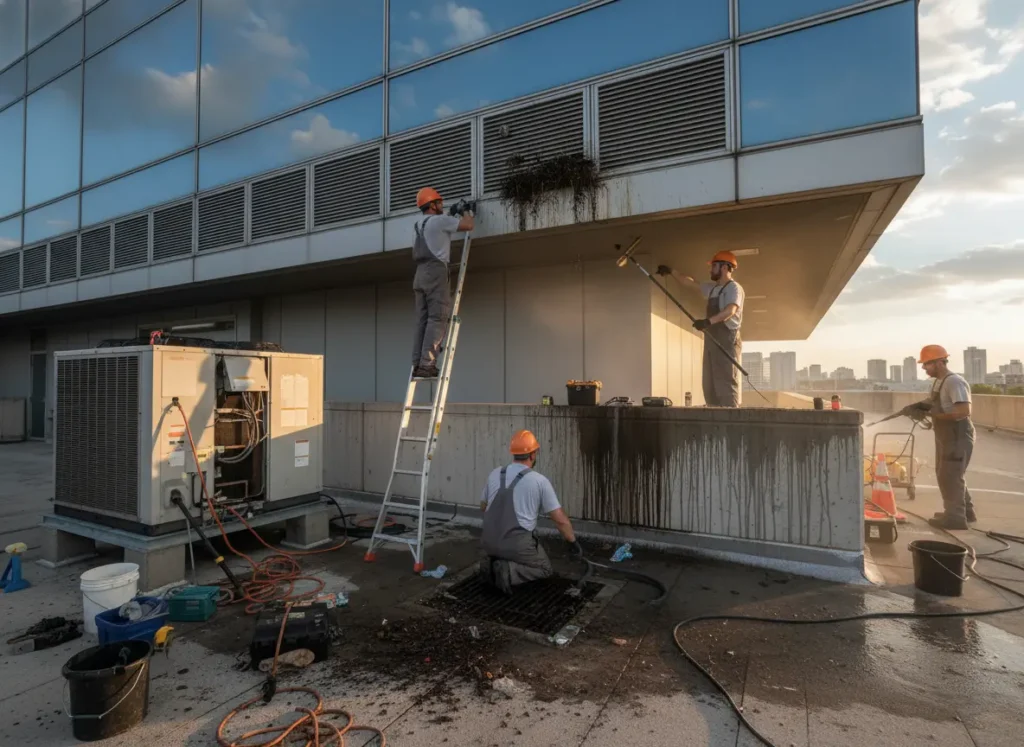
Birds carry over 60 known diseases, and their droppings can make walkways slippery. For warehouses, stores, and industrial facilities, that means added safety hazards and potential liability.
Add to your cost calculation:
- Sanitation and disinfection materials
- Safety equipment and PPE
- Lost work hours during cleanup
- Insurance deductibles from possible incidents
A single slip or contamination event can lead to costly downtime and even legal issues.
How Bird Activity Impacts Operations and Productivity
Bird infestations can slow operations, damage stored goods, or even halt production. If a single loading bay or workspace is unavailable for a day, your lost revenue can quickly surpass cleanup costs.
Estimate your potential downtime in hours per week, then multiply it by your team’s average hourly operational value. Even conservative estimates can show significant yearly losses.
Why Temporary Bird Control Increases Long-Term Costs
Most properties spend additional funds on bird deterrents such as bird spikes, bird netting, repellent sprays, and motion activated lights. Yet, many of these solutions are temporary. Before spending more on short-term fixes, compare bird spikes vs electromagnetic deterrents to understand which option supports lower long-term maintenance.
Regular reinstallation, reapplication, or contractor visits all add to your annual expenses, increasing total costs over time.
| Cost Category | What to Include | Why It Matters |
|---|---|---|
| Cleanup costs | Pressure washing, labor, disinfectants, PPE, waste removal | Shows the recurring cost of visible contamination |
| Repair costs | Paint repair, roof damage, HVAC cleaning, solar panel repair, electrical fixes | Captures the physical damage birds cause over time |
| Safety costs | Slip hazards, sanitation materials, inspections, insurance deductibles | Helps account for liability and workplace risk |
| Downtime costs | Closed work zones, blocked loading areas, delayed operations | Measures lost productivity from bird activity |
| Deterrent maintenance | Reinstallation, contractor visits, repairs, replacement materials | Shows the true cost of temporary bird control |
| Indirect costs | Customer complaints, brand damage, energy inefficiency, reduced asset life | Reveals costs most teams miss during budgeting |
Direct vs. Indirect Bird Damage Costs Explained
Most businesses only calculate the direct cost of dealing with birds, things like cleaning or equipment repair.
But indirect costs can be far more expensive and harder to detect. This is why bird activity should be treated as an operational issue, not only a pest issue. Learn more about how bird activity creates operational risk across facilities.
Direct Costs Most Facilities Track:
- Dropping removal
- Pressure washing
- Paint repair
- HVAC cleaning
- Solar maintenance
- Physical damage to fixtures
Hidden Indirect Costs Most Facilities Miss:
- Lower employee productivity
- Customer complaints and bad reviews
- Energy inefficiency from clogged airflow
- Shortened lifespan of roofing materials
- Regulatory fines or health inspection setbacks
- Brand image decline from visible contamination
Indirect costs often exceed direct expenses by 30–60%, and many businesses never account for them until the damage becomes severe.
Estimate Your Losses With the Bird Damage Cost Calculator
To see what bird activity could be costing your business, use our interactive Bird Damage Cost Calculator. The bird damage cost calculator helps facility teams estimate cleanup, repair, downtime, and prevention costs in one place.
It is calibrated to industry averages. A 100,000 sq. ft. warehouse with medium bird presence costs about $40,000 per year, and the calculator adjusts automatically based on your property size, bird activity, and damage type.
Simply enter your details to get a custom estimate and uncover how much you can save with effective prevention.
Reduce Long-Term Bird Damage Costs With Symterra Pulse
Understanding the true cost of bird damage is only the first step. The smarter solution is to prevent it from happening in the first place. Symterra Pulse uses behavior-based bird deterrent technology to reduce repeated landing, roosting, and nesting activity before damage turns into a larger budget problem.
Symterra Pulse is a science-backed, maintenance-free bird deterrent system that uses safe electromagnetic signals to keep birds away without spikes, nets, or chemicals. It protects your assets, lowers cleaning costs, and preserves your property long-term.
Start with real data, then take real action.
Use the Bird Damage Cost Calculator to measure your losses and discover how Symterra Pulse can help you eliminate them for good.
When Bird Damage Costs Keep Repeating
If cleanup and repairs keep happening in the same areas, the facility may need a prevention-focused approach. Repeated bird activity often affects industrial and warehouse facilities, commercial and retail properties, signs and billboards, loading docks, rooftops, and parking structures.
Symterra helps facilities reduce recurring bird pressure with Symterra Pulse and behavior-based bird control. Facility teams can also use the bird control cost calculator to review potential long-term savings from prevention.
Request a Bird Control Cost Assessment
Recurring bird activity can create cleanup, repair, safety, downtime, and long-term maintenance costs across a facility. A site-specific cost assessment helps identify where birds are creating repeat expenses and where prevention can reduce future costs.
Symterra can help facility teams evaluate high-risk areas and recommend a behavior-based bird control strategy built around long-term cost reduction.
Frequently Asked Questions About Bird Damage Costs
How do you calculate bird damage costs?
You calculate bird damage costs by adding cleanup, repairs, sanitation, downtime, safety risks, deterrent maintenance, and indirect costs. These costs should be reviewed yearly because recurring bird activity often creates repeat expenses. A calculator helps turn scattered maintenance costs into a clearer estimate.
What are the biggest costs caused by bird pests?
The biggest costs usually come from cleanup, roof damage, HVAC damage, blocked drains, corrosion, sanitation, and operational downtime. Indirect costs like customer complaints, lower productivity, and shorter equipment life can also add up fast. Many facilities underestimate these costs because they only count visible cleanup.
Are bird droppings expensive to remove?
Yes. Bird droppings are expensive to remove when they require repeated labor, pressure washing, disinfectants, PPE, and special waste handling. The cost increases when droppings damage paint, concrete, roofing, solar panels, or HVAC equipment. One-time cleanup rarely solves the issue if birds keep returning.
Why should businesses calculate bird pest damage?
Businesses should calculate bird pest damage to understand the real financial impact of recurring bird activity. Without a clear estimate, bird problems often look like small maintenance tasks instead of ongoing asset damage. Cost tracking helps justify long-term prevention before the damage grows.
How does bird control reduce long-term costs?
Bird control reduces long-term costs by preventing birds from repeatedly landing, nesting, and leaving droppings in high-risk areas. This lowers cleanup needs, protects equipment, reduces safety risks, and helps extend the life of building materials. Prevention is usually more cost-effective than repeated cleanup and repair.