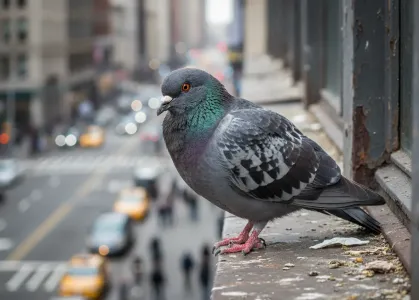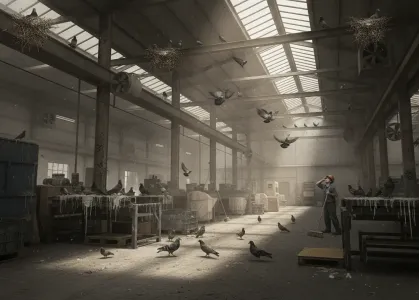
Static bird deterrents often work at first. Birds hesitate, circle, or leave temporarily. Then, weeks or months later, the birds are back as if nothing was ever installed. This is not a failure by chance. It is a predictable outcome driven by how birds learn, adapt, and evaluate risk.
Birds Learn Faster Than Deterrents Change
Repetition Teaches Safety
When birds encounter the same deterrent in the same position every day, they learn what it does and what it does not do. If no real consequence follows, the deterrent loses meaning.
Familiarity Reduces Fear
What feels threatening at first becomes familiar. Once birds recognize that a deterrent never escalates or changes, it no longer signals danger.
Static Systems Create Predictable Environments
Fixed Position Means Fixed Expectation
Spikes, decoys, reflective objects, and stationary devices never change location or response. Birds map these features into their environment and learn where and how to perch around them.
Predictability Encourages Retesting
Birds routinely test known deterrents. If the result is always the same and harmless, they return with confidence.
Habituation Spreads Through the Flock
One Bird Learns, Others Follow
Birds observe each other closely. Once one bird lands safely near a static deterrent, others copy the behavior. This accelerates failure across the site.
Learned Behavior Becomes Routine
After habituation sets in, birds treat the deterrent as part of the structure rather than a threat.
Static Deterrents Do Not Change Territory Value
Territory Remains Comfortable
Static deterrents do not remove warmth, shelter, or stability. Birds still gain the same benefits from the structure.
No Negative Feedback Loop
Without direct sensory feedback during landing or roosting, birds have no reason to abandon the site.
Environmental Wear Makes Static Deterrents Worse
Weather Reduces Effectiveness
Sun, wind, rain, and debris degrade static deterrents over time. What was visible or reflective at installation fades quickly.
Maintenance Gaps Create Safe Zones
Once parts break, shift, or fall away, birds exploit the openings immediately.
Why Dynamic, Behavior-Based Systems Perform Better
Feedback Changes Decision-Making
Systems that respond during landing disrupt comfort instantly. Birds associate the surface with instability rather than safety.
Consistency Prevents Adaptation
When deterrence remains active across all zones without gaps, birds stop testing and move on.
Long-Term Success Depends on Awareness, Not Guesswork
Static bird deterrents fail because birds learn they are predictable, harmless, and avoidable. Over time, familiarity replaces fear. Lasting control requires systems that stay active, responsive, and consistent across the entire structure.
Symterra Pulse supports this by providing real-time insight into deterrent system performance. It identifies weak zones, voltage drops, and faults that turn active deterrents into static ones. With continuous visibility, facilities prevent adaptation and maintain effective bird avoidance instead of repeating the same failures.