
Birds and food processing do not mix.
In this environment, a single bird sighting is not just a nuisance. It is a compliance risk, a contamination risk, and a direct threat to your operation.
If birds enter or settle around your facility, you are dealing with more than cleanup. You are dealing with audit exposure, production disruption, and brand damage.
That is why bird control in food processing plants needs a structured, system-level approach. This is the same principle used by Symterra, where the focus is on prevention, not reaction.
This guide breaks down how to control bird activity in a way that aligns with safety standards and operational efficiency.
Quick Answer
Why is bird control important in food processing plants?
Bird control is important in food processing plants because birds can create contamination, sanitation, compliance, and audit risks. Droppings, feathers, nesting material, debris, and repeat bird activity can affect loading docks, rooftops, vents, waste zones, HVAC areas, receiving areas, and production support spaces. A strong prevention plan should combine sanitation control, entry point protection, targeted exclusion, documentation, and facility-wide behavior-based deterrence.
Why Bird Control Matters in Food Processing Facilities
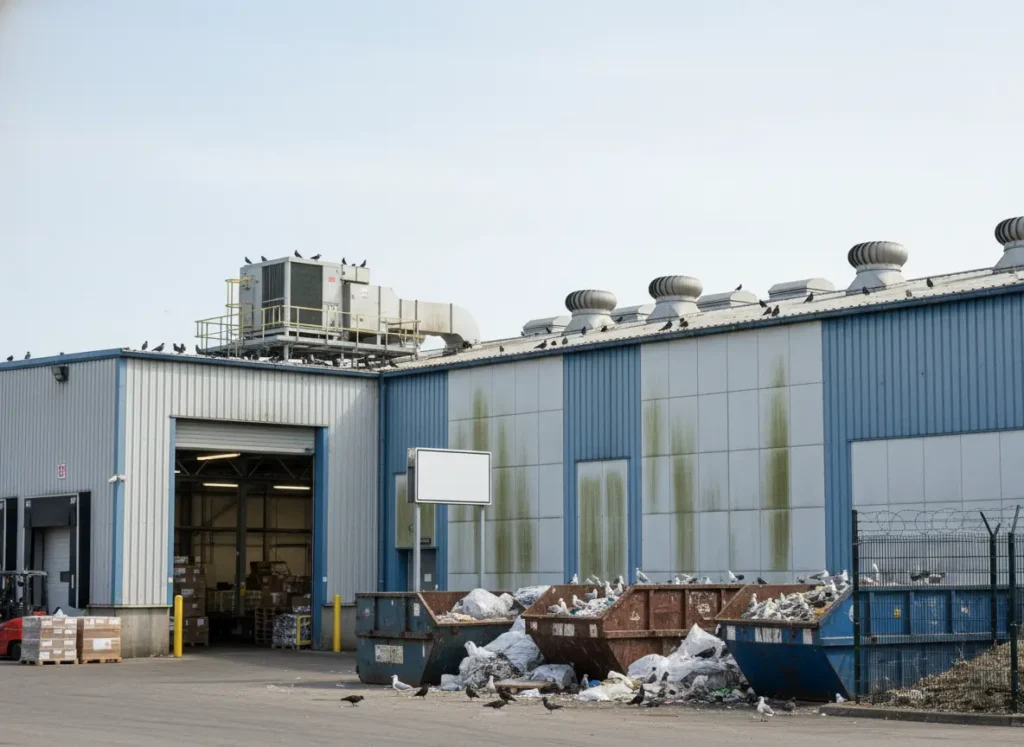
Food processing plants operate under strict hygiene and safety requirements.
Bird activity directly conflicts with those standards.
How Birds Create Food Contamination Risks
- Droppings carry bacteria and pathogens
- Feathers and nesting materials contaminate surfaces
- Airborne particles spread through processing zones
Food Processing Bird Risk and Prevention Table
| Bird Activity | Facility Risk | Prevention Step | Compliance Impact |
|---|---|---|---|
| Birds entering loading docks | Contamination risk near receiving, shipping, and product movement areas. | Use door controls, dock monitoring, air curtains, sanitation checks, and deterrent coverage. | Reduces visible bird activity and supports stronger audit readiness. |
| Nesting near rooflines or vents | Debris, feathers, and nesting material can collect near ventilation or exterior equipment areas. | Inspect rooflines, seal gaps, screen openings, and monitor HVAC zones. | Supports sanitation records and facility maintenance documentation. |
| Droppings near walkways or support areas | Slip hazards, sanitation concerns, odor, and cleanup delays. | Clean safely, document findings, and prevent birds from returning to the same areas. | Helps reduce repeat findings and customer or employee safety concerns. |
| Birds near waste handling zones | Food residue and disposal areas can attract recurring bird activity. | Secure waste containers, remove residue quickly, and inspect disposal zones daily. | Improves sanitation control and lowers attraction pressure. |
| Recurring bird activity across multiple zones | Ongoing cleanup, operational disruption, audit exposure, and repeated maintenance work. | Use a layered prevention strategy with sanitation, exclusion, monitoring, and facility-wide deterrence. | Strengthens long-term compliance and operational risk management. |
Request a Bird Control Recommendation for Your Facility
Bird activity in a food processing plant can create contamination, sanitation, and audit risks fast. Symterra can help review your facility layout, high-risk zones, and recurring bird pressure to recommend a scalable prevention plan.
Request a Facility RecommendationHow Bird Activity Leads to Compliance Violations and Audit Failures
- Fails food safety audits
- Violates sanitation standards
- Triggers regulatory action
How Birds Disrupt Food Processing Operations
- Shutdowns for cleanup or inspection
- Delays in production schedules
- Increased maintenance workload
Bird control is not optional in this environment. It is part of facility risk management.
High-Risk Bird Activity Areas in Food Processing Plants
Food processing plants should pay close attention to areas where bird activity can connect directly to sanitation, receiving, shipping, storage, or audit concerns. These zones often become repeat problem areas because they provide access, shelter, warmth, food residue, water, or low-disturbance spaces.
| Facility Area | Why Birds Are Attracted | Risk to the Facility |
|---|---|---|
| Loading docks | Open doors, deliveries, shade, and food residue create easy access. | Contamination near receiving and shipping areas. |
| Waste handling zones | Food scraps, disposal containers, and residue attract repeat bird activity. | Sanitation issues, odor, and recurring pest pressure. |
| Rooflines and ledges | Height, shelter, and low disturbance make these areas attractive for roosting. | Droppings, nesting debris, and repeated exterior cleanup. |
| Vents and exhaust openings | Small gaps, warmth, and protected openings can collect debris or nesting material. | Sanitation concerns near ventilation and exterior equipment areas. |
| HVAC zones | Warmth, equipment shelter, and roof access can support repeat bird activity. | Maintenance concerns, debris buildup, and audit-readiness issues. |
| Rafters and beams | Interior overhead structures provide hidden roosting and nesting areas. | Droppings or debris above sensitive facility spaces. |
High-Risk Areas in Food Processing Plants
Food processing plants should monitor the areas where birds are most likely to enter, perch, nest, or return after cleanup. These areas usually combine access, shelter, warmth, food residue, or low human disturbance.
- Loading docks: Open doors and frequent deliveries create easy entry points.
- Open bay doors: Birds can enter quickly during active receiving or shipping hours.
- Waste areas: Food residue and disposal zones attract repeat bird activity.
- Rooflines: Elevated edges give birds safe resting and observation points.
- HVAC units: Equipment areas provide warmth, shelter, and nesting opportunities.
- Vents and exhaust openings: Small gaps can allow nesting material, feathers, and debris to collect nearby.
- Rafters and beams: Interior overhead structures can become hidden nesting or roosting areas.
- Exterior ledges and signage: These surfaces often support perching near facility entrances.
- Employee break areas: Food scraps and trash can attract birds close to the building.
- Trash and disposal zones: Poorly sealed containers can create a recurring food source.
What Attracts Birds to Food Processing Facilities?
Facilities unintentionally provide ideal conditions.
- Food byproducts and waste
- Water sources from cleaning processes
- Warmth from equipment and buildings
- Elevated structures for nesting
Even small gaps in sanitation or structural sealing can create long-term bird activity.
Why Traditional Bird Control Methods Fail in Food Processing Plants
Food processing plants require more than basic deterrents.
- Visual scare tools lose effectiveness quickly
- Noise devices disrupt workers and lose impact
- Spikes and netting only protect limited areas
- Manual removal does not stop return behavior
In a facility with constant activity and multiple entry points, partial solutions leave gaps.
Birds move to the next available spot. A non-lethal bird deterrent system helps address return behavior by making the protected area less comfortable for birds to settle around long term.
Why Traditional Deterrents May Not Be Enough for Food Facilities
Food processing plants need more than short-term bird removal. A temporary fix may clear one area, but it does not always stop birds from returning to nearby docks, rooflines, vents, rafters, or waste zones.
Physical barriers can help in specific areas, but they do not always address the full facility. Netting, spikes, and exclusion tools need correct placement, routine inspection, and ongoing maintenance. If coverage is incomplete, birds often shift to the next available surface.
For regulated facilities, repeat bird activity creates more than a maintenance issue. It can affect sanitation schedules, increase cleanup demands, and create audit-readiness concerns. A stronger approach combines sanitation, access control, targeted barriers, and facility-wide deterrence.
Best Bird Control Methods for Food Processing Plants
Effective bird control in processing plants follows a layered system.
Eliminate Food, Water, and Other Bird Attractants
Start with sanitation and waste control.
- Secure all waste containers
- Clean food residue immediately
- Manage water runoff and standing water
- Maintain strict cleaning schedules
If food and water remain accessible, birds will keep returning.
This step is a core part of how Symterra structures long-term control strategies.
Food Processing Bird Control Sanitation Checklist
- Inspect loading docks, rooflines, vents, ledges, and waste areas regularly.
- Keep dock doors closed when they are not actively in use.
- Remove food residue and standing water quickly.
- Secure waste containers and disposal areas.
- Clean droppings safely using proper facility procedures.
- Check HVAC units, vents, and exhaust areas for nesting material.
- Train staff to report bird sightings, droppings, feathers, and nesting signs.
- Document recurring bird activity before inspections or audits.
- Review bird control systems as part of routine facility maintenance.
Seal Entry Points and Prevent Bird Access
Next, remove access.
- Install door seals and air curtains at loading docks
- Cover vents and openings with proper screening
- Repair structural gaps in roofing and walls
- Maintain tight building envelopes
The goal is to stop birds from entering in the first place.
Install Bird Exclusion Systems in High-Risk Areas
Target areas where birds land or nest.
- Netting for overhead structures and rafters
- Spikes for ledges and narrow surfaces
- Exclusion systems for equipment areas
These tools are effective when applied with full coverage.
Implement a Facility-Wide Bird Deterrent Strategy
This is where long-term control happens.
In large facilities, birds move across multiple zones. Blocking one area does not stop overall activity.
A system like Symterra Pulse helps address this.
For food processing plants with recurring bird pressure, a commercial bird control system can help reduce activity across rooftops, loading zones, waste areas, and exterior structures.
Instead of relying only on physical barriers, it creates an environment where birds cannot settle comfortably. This reduces repeat activity across rooftops, loading zones, and surrounding structures.
For processing plants, this type of approach helps maintain control without constant disruption to operations.
Build a Comprehensive Food Processing Bird Control Plan
The most effective facilities combine:
- Sanitation control
- Structural exclusion
- Targeted barriers
- Property-wide deterrence
Each layer reduces a different risk.
Together, they create a controlled environment that birds avoid.
How to Maintain Food Safety Compliance and Audit Readiness
Focus inspection and control efforts on:
- Loading docks and receiving areas
- Waste disposal zones
- Rooflines and HVAC systems
- Interior rafters and ceiling structures
- Exterior ledges and signage
These areas are the most likely to attract and hold bird activity.
How to Stay Audit-Ready During Food Safety Inspections
Food processing plants must stay ready for inspections at all times.
To maintain compliance:
- Document bird control measures
- Schedule regular facility inspections
- Respond to bird activity immediately
- Maintain all deterrent systems
- Train staff to report early signs
Consistency is key. Waiting until an issue becomes visible increases risk.
Food Safety Audit Readiness Checklist for Bird Control
Food processing facilities should be able to show that bird control is handled as part of routine sanitation, facility maintenance, and risk management. Use this checklist to prepare before internal reviews, customer audits, or regulatory inspections.
- Inspect loading docks, rooflines, vents, HVAC areas, rafters, waste zones, and exterior ledges.
- Document all bird sightings, droppings, feathers, nests, and entry point concerns.
- Confirm that doors, dock seals, screens, and openings are properly maintained.
- Review sanitation records for waste areas, receiving zones, and exterior cleanup points.
- Verify that staff know how to report bird activity quickly.
- Check that deterrent systems and exclusion tools are inspected on schedule.
- Track corrective actions after bird activity is reported.
- Review repeat activity zones before they become visible audit issues.
This checklist helps show that the facility is not only reacting to bird activity. It shows that bird prevention is part of the facility’s ongoing food safety process.
Bird Control Documentation Checklist for Food Facilities
Food processing facilities should keep clear records that show bird control is monitored, maintained, and corrected when issues appear. Documentation helps support audit readiness and gives facility teams a clearer picture of recurring risk areas.
| Record Type | What to Include | Why It Matters |
|---|---|---|
| Bird activity logs | Date, location, type of activity, and staff member who reported it. | Shows recurring zones and helps identify patterns before audits. |
| Dropping and nesting findings | Photos, affected areas, cleanup date, and follow-up action. | Creates proof that sanitation risks were addressed. |
| Entry point inspections | Doors, vents, roof gaps, dock seals, screens, and structural openings checked. | Supports prevention by showing access points are monitored. |
| Cleaning and sanitation records | Cleanup schedule, responsible team, affected area, and completion date. | Helps show sanitation control and corrective response. |
| Deterrent system maintenance | Inspection dates, system condition, service notes, and repairs completed. | Confirms bird control tools are maintained instead of ignored after installation. |
| Corrective actions | Problem found, action taken, completion date, and verification step. | Shows auditors that the facility closes the loop after issues are found. |
| Staff training records | Training dates, reporting procedures, and assigned responsibilities. | Shows the team knows how to respond when bird activity appears. |
Bird Control Methods That Fail in Regulated Facilities
Avoid solutions that create more problems than they solve.
- Loud deterrents that disrupt operations
- Temporary fixes without follow-up
- Partial installations that leave gaps
- Reactive cleanup without prevention
These approaches do not meet the demands of regulated facilities.
When Food Processing Bird Control Becomes a Compliance Issue
Bird control becomes a compliance issue when bird activity creates visible sanitation concerns, repeated cleanup needs, or possible exposure near production, receiving, storage, or waste areas.
For food processing plants, the problem is not limited to birds inside the building. Many of the same risk areas also apply to bird control for industrial facilities, especially when birds gather around docks, rooflines, HVAC units, dumpsters, and exterior beams. Birds around loading docks, rooflines, HVAC units, dumpsters, and exterior beams still increase facility risk because these areas connect to daily operations.
A food processing facility should treat bird activity as a priority when it sees:
- Droppings near doors, docks, or walkways
- Nesting around vents, beams, rafters, or roof gaps
- Birds entering during receiving or shipping
- Repeat activity near waste handling areas
- Cleanup work increasing before inspections
- Staff reporting birds in the same areas each week
- Existing deterrents failing to stop return behavior
When these signs appear, the facility needs a prevention plan, not another short-term patch.
When Your Facility Needs a Scalable Bird Control Solution
If your facility experiences:
- Recurring bird activity
- Multiple entry points
- Large structural coverage
- Audit pressure or compliance concerns
You need a system, not a patch. Facility teams can also use the bird control cost calculator to estimate how recurring cleanup, maintenance, and prevention needs may affect long-term costs.
A structured solution from Symterra helps shift bird control from reactive maintenance to proactive risk management.
Long-Term Bird Control for Food Processing Plants Requires Prevention
Bird control in food processing plants is not about quick fixes.
It is about protecting your operation, your compliance status, and your product quality.
The most effective approach is clear:
- Remove what attracts birds
- Block how they enter
- Apply a deterrent that works across the entire facility
- Maintain the system consistently
That is the strategy behind Symterra. Instead of reacting to bird problems after they happen, the focus is on preventing them before they affect your operation.
Food Processing Bird Control Requires Facility-Wide Prevention
Food processing plants need more than one-time cleanup because birds often return to areas that still provide access, shelter, food residue, water, or safe landing zones. A stronger plan connects sanitation, entry point protection, monitoring, and long-term deterrence across the whole site.
Facilities with recurring bird activity can learn more about Symterra Pulse and how behavior-based bird control works. For broader operational environments, Symterra also supports industrial and warehouse facilities, agribusiness facilities, and commercial and retail facilities.
Facility teams can also review the Symterra efficacy study or use the bird control cost calculator to understand how prevention can support long-term facility planning.
Request a Food Processing Facility Bird Control Assessment
Bird activity near loading docks, waste areas, rooflines, vents, HVAC zones, or production support spaces can create contamination, sanitation, and audit-readiness concerns. A site-specific assessment helps identify where birds are returning and which areas need stronger long-term prevention.
Symterra can help food processing facilities evaluate recurring bird pressure and recommend a behavior-based bird control strategy built around contamination-sensitive environments.
Frequently Asked Questions About Bird Control for Food Processing Plants
Why is bird control important in food processing plants?
Bird control is important because birds can create contamination, sanitation, compliance, and audit risks. Droppings, feathers, nesting material, and debris can affect areas around loading docks, rooftops, vents, and waste zones.
How do birds create contamination risks?
Birds can leave droppings, feathers, nesting material, and debris near facility surfaces, equipment areas, entry points, and exterior structures. These issues can increase cleanup needs and sanitation concerns.
What areas attract birds in food processing facilities?
Birds are commonly attracted to loading docks, open doors, rooflines, HVAC units, vents, rafters, exterior ledges, waste areas, and places where food residue or water is available.
How can bird control reduce audit risk?
Bird control helps reduce audit risk by limiting visible bird activity, contamination concerns, droppings, nesting material, and recurring sanitation issues around sensitive facility areas.
What bird deterrent works best for food processing facilities?
The best approach is usually a layered strategy that includes sanitation control, entry point protection, targeted barriers, monitoring, and facility-wide deterrence for recurring bird pressure.
Need bird control that fits food processing standards?
Talk to Symterra about a non-lethal deterrence strategy built for contamination-sensitive environments, operational continuity, and long-term prevention.
Speak with our team