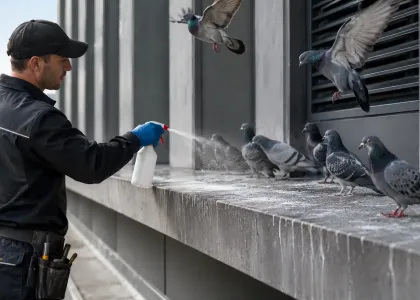
HVAC systems are critical to air quality, temperature control, and regulatory compliance. When birds enter rooftop units, vents, or ductwork, they introduce serious contamination risks. Droppings, feathers, nesting material, and parasites compromise system performance and expose occupants to health hazards. Proper sanitation is essential once contamination is detected.
How Birds Contaminate Commercial HVAC Systems
Bird Droppings And Airborne Biological Contaminants
Bird droppings carry bacteria, fungi, and pathogens. When they enter HVAC components, contaminants spread through air circulation and reach occupied spaces.
Nesting Material Inside Rooftop HVAC Units
Birds use insulation, twigs, feathers, and debris to build nests inside rooftop units and duct openings. This material restricts airflow and traps moisture.
Parasites, Mites, and Insects From Bird Nests
Bird nests attract mites, lice, and insects. These pests migrate into ducts and indoor environments, increasing health and sanitation risks.
Signs HVAC Systems Need Sanitization
Unusual Odors From Contaminated HVAC Systems
Strong or persistent smells often indicate droppings or decomposing nesting material inside the system.
Reduced Airflow and HVAC Efficiency Loss
Blocked coils, fans, or filters reduce airflow and strain equipment.
Feathers and Nesting Debris Near Vents
Feathers, dust, or nesting fragments near diffusers signal internal contamination.
Occupant Complaints About Air Quality
Reports of respiratory irritation, allergies, or unusual dust may point to contaminated air circulation.
How to Sanitize HVAC Systems After Bird Contamination
Step 1: Isolate and Power Down Affected Units
Turn off equipment before inspection to prevent contaminants from spreading further.
Step 2: Remove Nesting Material and Droppings Safely
All nests, debris, and droppings must be removed using proper protective equipment. Materials should be sealed and disposed of according to sanitation guidelines.
Step 3: Clean and Disinfect HVAC Components
Duct interiors, coils, fans, and drain pans require thorough cleaning with approved disinfectants to neutralize pathogens.
Step 4: Replace Contaminated Filters and Insulation
Contaminated filters and insulation should be discarded. Replacement ensures clean airflow and restores system efficiency.
Step 5: Inspect HVAC Seals, Wiring, and Structural Damage
Bird activity often damages seals, insulation, and wiring. Repairs prevent repeat entry.
How to Prevent Future HVAC Bird Contamination
Seal HVAC Entry Points and Gaps
Secure vents, louvers, and gaps around units to block access.
Maintain Rooftop Cleanliness Around HVAC Units
Remove debris and standing water that attract birds.
Install Bird Deterrents Around HVAC Equipment
Deterrents prevent birds from landing, roosting, or nesting near HVAC equipment.
Protect HVAC Systems With Continuous Deterrent Monitoring
Sanitizing HVAC systems after bird contamination is critical for health, compliance, and equipment longevity. But cleaning alone does not stop repeat incidents. Prevention depends on keeping birds away from HVAC zones at all times.
Symterra Pulse supports this by monitoring electrical deterrent systems in real time. It detects weak zones, voltage drops, and system faults before birds return to nest near HVAC equipment. With continuous performance tracking, facilities protect air quality, reduce sanitation risk, and avoid repeated HVAC contamination.