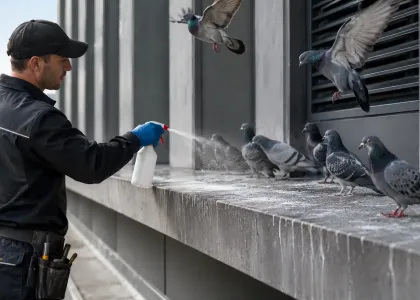
Commercial roof edges and ledges are some of the most common places for recurring bird activity. Facility managers may clean the area, remove droppings, install a short-term deterrent, or block one section, only to see birds return days or weeks later.
This can be frustrating, but it is not random. Birds return to roof edges and ledges because these areas often provide safety, visibility, shelter, and routine. Once birds learn that a commercial building supports their survival needs, they may continue coming back unless the site conditions change.
For commercial properties, recurring bird activity is more than a nuisance. It can affect maintenance costs, roof access, drainage, building appearance, employee safety, customer areas, and long-term facility performance.
Quick Answer
Birds keep returning to commercial roof edges and ledges because these areas provide shelter, security, vantage points, nesting access, and familiar routines. Birds may also return because of imprinting, site memory, and biological cues left behind from previous activity. Long-term bird control requires changing the conditions that make the site feel safe and useful.
Why Birds Keep Returning to Commercial Roof Edges and Ledges
Birds return to commercial buildings when the property offers something valuable. Roof edges and ledges often create ideal resting, nesting, and observation points.
Common reasons include:
| Why Birds Return | What It Means for Commercial Buildings |
| Shelter and security | Roof edges, overhangs, signs, and ledges protect birds from weather and predators |
| Vantage points | Elevated surfaces help birds watch for food, threats, and movement |
| Routine | Birds revisit places that have provided safety or reward before |
| Nesting access | Gaps, ledges, equipment areas, and sheltered corners support nesting behavior |
| Food nearby | Waste areas, outdoor dining, loading docks, and surrounding properties may attract birds |
| Low disturbance | Quiet rooflines and upper ledges often receive less human activity |
The problem is not just where birds land. The real issue is why the location keeps rewarding them.
Why Roof Edges and Ledges Feel Safe to Birds
Commercial roof edges and ledges often provide the kind of shelter birds naturally seek. These areas may protect birds from wind, rain, heat, predators, and ground-level disturbance.
For pigeons, sparrows, starlings, and other nuisance birds, a roof edge can offer a secure place to rest without constant interruption. Ledges beneath overhangs, behind signs, near HVAC equipment, or along parapet walls may feel especially protected.
Birds are more likely to stay when they find:
- Covered or semi-covered spaces
- Warm areas near equipment
- Protected corners with limited human access
- Elevated surfaces away from predators
- Stable landing areas with nearby escape routes
When a ledge or roofline gives birds safety, they may treat it as part of their daily route.
Roof Edges Give Birds Strong Vantage Points
Birds use elevated surfaces to observe their surroundings. Commercial roof edges and ledges give them strong vantage points over parking lots, loading zones, sidewalks, waste areas, and nearby buildings.
From these high positions, birds can monitor:
| Vantage Point Benefit | Why Birds Use It |
| Food access | Birds can spot dropped food, open waste, or feeding activity |
| Predator avoidance | Height gives birds more time to react to threats |
| Traffic patterns | Birds learn when areas are quiet or active |
| Roosting safety | Elevated ledges reduce ground-level risk |
| Movement across sites | Birds can travel between nearby buildings and structures |
This is one reason birds often gather on signs, parapets, roof edges, and billboard structures. These locations help them make quick decisions.
Site Memory and Routine Keep Birds Returning
One of the biggest reasons birds keep returning is imprinting and routine. Once birds associate a commercial building with safety, shelter, food access, or nesting success, they may continue visiting the site repeatedly.
Birds are creatures of habit. If a ledge has been useful before, they may test it again. If they have nested there, rested there, or found food nearby, the location becomes part of their learned pattern.
This is why cleanup alone often fails. Removing droppings may improve appearance, but it does not erase the bird’s learned connection to the site.
Birds may return because:
- The site has been used successfully before.
- Nearby surfaces still provide access.
- Nesting areas remain available.
- Food or water sources still exist nearby.
- Deterrents are temporary or inconsistent.
When birds build a routine around a property, long-term control must interrupt that routine.
Biological Cues May Reinforce Bird Site Attachment
Bird activity can leave behind biological cues that encourage return behavior. Droppings, nesting material, feathers, oils, and scent traces may signal that a location has been used before.
While birds do not rely on scent the same way some mammals do, leftover organic material can still contribute to site familiarity. In some cases, pheromones and other biological cues may reinforce the impression that a roof edge or ledge is a known and usable location.
This is why cleaning matters, but cleaning is only part of the solution. If the structure still offers shelter, visibility, and access, birds may return even after the area looks clean.
A stronger strategy usually includes:
| Action | Purpose |
| Cleanup | Removes droppings, nesting material, and visible contamination |
| Sanitation | Reduces organic residue and recurring site signals |
| Access review | Identifies gaps, ledges, and protected spaces birds are using |
| Behavior-based deterrence | Makes the area feel less stable or comfortable |
| Ongoing coverage | Reduces the chance of birds retesting the site |
The goal is to remove both the physical evidence and the conditions that made the site attractive.
Why Cleaning Bird Droppings Does Not Stop Birds From Returning
Many commercial properties clean roof edges and ledges only after droppings become visible. This helps with appearance and sanitation, but it does not stop the behavior.
Birds may return after cleanup because the building still provides the same advantages. The ledge is still there. The roof edge is still protected. The vantage point still works. The nearby food source may still exist.
Cleanup treats the result of bird activity. Long-term bird control must address the cause.
Why Early Bird Control Prevents Recurring Roof Problems
Early intervention matters because bird problems become harder to control once birds establish a routine. A small amount of activity on a ledge can turn into recurring roosting, nesting, droppings, blocked drains, and repeated cleanup needs.
When facility teams wait too long, birds may become more attached to the site. Nesting behavior can increase, droppings can accumulate, and nearby birds may also begin using the same structure.
Early intervention can help reduce:
| Risk | Why It Matters |
| Site attachment | Birds are easier to discourage before routines become established |
| Nesting activity | Early action can reduce protected nesting behavior |
| Dropping buildup | Less accumulation means lower cleanup and maintenance pressure |
| Roof damage | Droppings, nesting debris, and blocked drains can affect roof performance |
| Safety issues | Early control helps reduce slip hazards and access problems |
| Operational disruption | Facilities avoid repeated reactive cleanup cycles |
The earlier a facility changes the conditions birds rely on, the easier it is to prevent long-term recurrence.
Common Roof Edges and Ledge Areas Birds Use
Birds may return to several roof and ledge areas across a commercial building.
| Roof or Ledge Area | Why Birds Use It |
| Parapet walls | Safe elevated edges with strong visibility |
| HVAC units | Warmth, shelter, and structural cover |
| Gutters and drains | Access to nesting material and water collection |
| Signage | Protected gaps, frames, and hidden resting spaces |
| Roof corners | Low-disturbance areas with wind protection |
| Loading dock rooflines | Food access and sheltered overhead surfaces |
| Billboard supports | Height, visibility, and protected framework |
For industrial and warehouse facilities, birds may also use roof edges near dock doors, vents, skylights, and equipment zones. For signs and billboards, birds often return to frames, lighting arms, and sheltered rear panels.
Why Traditional Bird Deterrents May Fail on Roof Edges
Some commercial buildings use spikes, sprays, decoys, or one-time cleanup services to stop bird activity. These methods can help in limited situations, but they may fail when birds are strongly attached to the site.
Traditional deterrents often fall short when:
- They cover only one small area.
- Birds can move to nearby untreated surfaces.
- The deterrent becomes predictable.
- Food, shelter, or nesting access remains.
- Maintenance is inconsistent.
- The strategy does not address behavior.
Bird control works best when it changes how birds experience the site.
Long-Term Bird Control Requires Changing Site Conditions
To stop birds from returning to roof edges and ledges, the site must become less comfortable, less predictable, and less rewarding.
A long-term strategy should focus on:
| Control Goal | Why It Helps |
| Reduce comfort | Birds are less likely to stay on unstable or undesirable surfaces |
| Interrupt routine | Repeated disruption weakens site attachment |
| Remove attractants | Food, water, and nesting access must be reduced |
| Improve coverage | Birds should not be able to relocate to nearby areas easily |
| Maintain consistency | Long-term pressure helps discourage retesting |
This is where behavior-based bird control becomes important. Instead of simply blocking one ledge, the goal is to influence the bird’s decision-making across the site.
Request a Roof and Ledge Bird Control Recommendation
Birds keep returning to commercial roof edges and ledges because those areas support shelter, security, vantage points, imprinting, routine, and site familiarity. If the building continues to feel safe and useful, birds are likely to come back.
Symterra helps commercial properties evaluate recurring bird activity and identify long-term bird control strategies for rooftops, ledges, industrial and warehouse facilities, signs and billboards, parking structures, retail centers, and other commercial environments.
If birds keep returning after cleanup, sprays, spikes, barriers, or other short-term deterrents, it may be time to look at the problem differently.
Contact Symterra to request a site recommendation and learn how behavior-based bird control can help reduce recurring bird activity across your facility.
Frequently Asked Questions About Birds on Roofs and Ledges
Why do birds keep coming back to the same ledge?
Birds keep coming back to the same ledge because they associate it with safety, shelter, visibility, or nesting access. Once the location becomes part of their routine, they may continue returning unless the site conditions change.
Why do birds like commercial roof edges?
Birds like commercial roof edges because they provide elevation, security, and strong vantage points. Roof edges help birds watch for food, predators, and movement while staying away from ground-level disturbance.
Does cleaning bird droppings stop birds from returning?
Cleaning bird droppings helps with sanitation and appearance, but it does not always stop birds from returning. If the roof edge or ledge still provides shelter and security, birds may come back.
What role does imprinting play in bird activity?
Imprinting and routine can cause birds to revisit places they have used successfully before. If birds have nested, rested, or found safety on a building, they may continue testing that area.
Why is early intervention important for commercial bird control?
Early intervention is important because bird problems become harder to manage once birds establish routines. Acting early can reduce nesting, droppings, roof damage, safety risks, and repeated cleanup costs.