Quick Answer
How do you keep birds off your property?
The best way to keep birds off your porch or property is to remove food sources, clear nesting material where allowed, block access to sheltered areas, reduce comfortable landing spots, and use deterrents that stay consistent over time. Temporary fixes like decoys, sprays, reflective tape, and sound devices may help briefly, but birds often return when the property still gives them shelter, food, warmth, or safe landing zones.
Birds are beautiful to watch in nature, but not so much when they’re roosting on your porch, leaving droppings, and creating messes. A porch is meant to be a welcoming, comfortable space, not a nesting ground. The good news is that there are safe and effective bird deterrents you can use to keep birds away without harming them.
The best way is to remove anything that attracts them. Clear food scraps, wipe surfaces, remove inactive nests, and block gaps where birds try to build again.
Yes. Reflective objects, shiny ornaments, and wind chimes disrupt birds through sight and sound. Predator decoys like owls and hawks also work when rotated often.
Bird spikes block birds from landing on ledges, railings, and beams. Bird netting protects larger open spaces, and porch screens stop birds from entering entirely.
Yes. Baking soda, repellent gels, sprays, and Avian Block pouches reduce bird activity without harming people or pets. They work when applied consistently around problem areas.
They help disrupt bird behavior. Motion lights scare birds when they land, while ultrasonic devices emit sounds that birds hear but humans do not.
DIY deterrents need constant maintenance, and birds adapt over time. For long-term results, solutions like Symterra Pulse use electromagnetic signals to create a safe, invisible barrier that birds avoid naturally.
Bird Prevention Checklist for Your Property
| Bird prevention method | What to do | Why it helps |
|---|---|---|
| Remove food sources | Clean crumbs, pet food, trash, spilled seed, and open waste | Birds return when food is easy to find |
| Clear nesting material where allowed | Remove inactive nests and debris after checking local rules | Old nesting material can encourage repeat activity |
| Block gaps and openings | Seal vents, rafters, beams, porch gaps, and small entry points | Birds look for protected areas to nest |
| Reduce landing spots | Add barriers to ledges, railings, beams, signs, and roof edges | Fewer landing points means fewer places to settle |
| Rotate visual deterrents | Move decoys, reflective strips, and scare devices regularly | Birds adapt to tools that stay the same |
| Inspect problem areas weekly | Check ledges, gutters, signs, rooflines, and corners | Early action prevents repeat nesting |
| Use long-term deterrence | Add a system that discourages landing and roosting behavior | Helps reduce recurring bird pressure |
Bird Deterrent Consultation
Need Birds to Stop Choosing Your Property?
If birds keep returning after basic deterrents, Symterra can help assess your property and recommend a long-term bird deterrent strategy built around landing behavior, shelter points, and repeat activity zones.
Request a Bird Deterrent ConsultationWhat Keeps Birds Away From a Porch Long Term?
Birds stay away from a porch when the space no longer feels safe, stable, or rewarding. Effective deterrence comes from removing food sources, limiting comfortable landing areas, and introducing consistent disruption through light, movement, or surface changes. Single methods rarely work on their own because birds adapt quickly, but combining multiple deterrents creates an environment they avoid. Long-term results depend on consistency, not intensity, which means maintaining a setup that continuously discourages birds from returning
1. Remove What Attracts Birds in the First Place
The first step is simple: clear away food sources. Even small crumbs or pet food can attract birds. Always practice good patio maintenance, sweeping up debris and wiping down surfaces. Also, remove existing nests from rafters and beams (after checking that they are not active), and block nesting areas by sealing gaps or installing mesh where birds might try to build again.
2. Use Visual and Sound Deterrents to Break Their Pattern
Birds rely heavily on sight and sound, which makes visual deterrents effective. Hang reflective objects such as mirrors, foil strips, or even shiny objects like CDs to disorient them. You can also hang reflective ornaments that catch sunlight. Another simple option is to hang a wind chime. Not only does it add charm to your porch, but the movement and sound will discourage birds from settling in.
Predators are another proven tactic. Using predator decoys such as owls, hawks, or even rubber snakes can make birds think twice. Rotate your decoys often so they do not get used to them.
3. Install Physical Barriers to Block Perching and Nesting
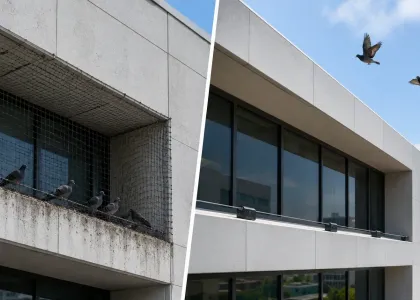
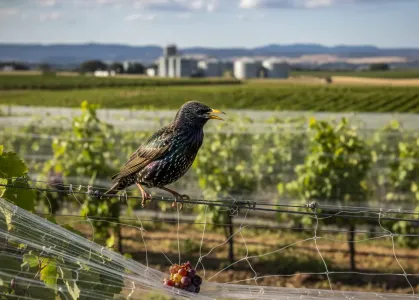
If birds are persistent, consider physical solutions. Bird spikes are an effective way to keep them from perching. Many homeowners install bird spikes along railings, ledges, or beams where birds tend to gather. For larger openings, bird netting works well to block access. If you want a complete solution, you can even enclose the porch with screens to eliminate bird entry entirely.
4. Apply Safe Repellents to Reduce Bird Activity
There are safe chemical-free options like baking soda, which makes surfaces uncomfortable for birds to walk on. For stronger solutions, repellent sprays or gels create unpleasant textures or tastes. Specialized products like Avian Block bird repellent pouches release scents that birds dislike but are safe for humans and pets. Apply these strategically around your porch to reduce bird activity.
5. Use Motion and Light to Disrupt Bird Behavior
Modern deterrents can also leverage technology. A motion activated light can scare off birds when they land, disrupting their comfort. Similarly, ultrasonic deterrents emit sounds only birds can hear. Combining these with reflective surfaces like aluminum foil amplifies the effect by creating sudden flashes of light.
6. Change Habits and Maintain Clear Boundaries
One important rule: don’t feed the birds. It may be tempting, but even occasional feeding encourages them to return. Reinforce boundaries consistently by reapplying repellents, checking barriers, and adjusting your deterrent methods.
7. Combine Multiple Deterrents for the Best Results
There is no single trick that keeps birds off your porch forever. The most reliable approach is to use a combination of methods at the same time. This prevents birds from adapting and makes your porch an uncomfortable place to land or nest.
A simple starter combo:
- Clean the area so no food or nesting material attracts them
- Add visual deterrents like reflective strips or decoys
- Install light physical barriers on beams or ledges
- Place scent-based repellents to reduce bird activity
- Use occasional motion/light devices to break their routine
When these are used together, birds lose interest quickly because the environment keeps changing. They move on to safer, quieter spots, and your porch stays clean.
Why Birds Return After Basic Deterrents
Birds return when the property still gives them what they need: shelter, food, warmth, and safe landing areas. A fake owl, reflective strip, spray, or sound device may interrupt them at first, but most birds test the area again once the deterrent becomes familiar.
This is why basic deterrents often feel like they work for a few days, then suddenly stop. The issue is not always the product. The issue is the bird behavior pattern. If the landing zone, nesting gap, or food source still exists, birds have a reason to come back.
Long-term bird control works better when the property becomes less suitable for repeat landing, roosting, and nesting. That means combining cleanup, access control, landing prevention, and a system designed for ongoing deterrence.
Why Birds Keep Returning After Temporary Fixes
Birds keep returning after temporary fixes because the property still gives them what they need. A fake owl, spray, reflective strip, sound device, or motion light may interrupt bird activity at first, but birds often test the area again once the deterrent becomes familiar.
If food remains nearby, ledges are still available, nesting gaps stay open, or sheltered areas remain comfortable, birds have a reason to come back. This is why temporary deterrents may look successful for a few days and then stop working.
Long-term prevention focuses on the conditions behind the behavior. The goal is to make the property less useful for landing, roosting, feeding, and nesting over time.
Birds Stay When the Space Feels Safe
Porches attract birds because they offer shelter, stability, and routine. Deterrents work best when they disrupt all three at once. Cleaning removes food cues, barriers block landing zones, and motion or sensory changes break predictable patterns. When the space no longer feels safe or comfortable, birds move on naturally without harm or constant intervention.
Porch Bird Problems Can Point to Larger Property Issues
Porch bird problems often start small, but the same behavior can appear across larger properties. Birds look for safe landing areas, shelter, warmth, food access, and quiet nesting spaces whether they are using a residential porch, commercial entrance, warehouse dock, rooftop ledge, parking structure, sign, or loading zone.
For commercial sites, the cost of repeat bird activity is usually higher. Droppings can affect customer areas, walkways, equipment zones, drains, rooftops, signage, and maintenance routes. What begins as a small nuisance can become a recurring cleanup, safety, and operations issue.
That is why the best strategy is prevention. When the property no longer feels safe or useful, birds are less likely to keep returning.
Conclusion: A Smarter Way to Deter Birds
While DIY bird deterrents can help manage the problem, they often require constant upkeep and do not provide a permanent fix. At Symterra, we offer a science-backed solution: the Symterra Pulse bird deterrent system. Unlike temporary tactics, Pulse uses advanced electromagnetic signals to create a safe, invisible barrier that keeps birds away for good. No spikes, no sprays, only lasting protection for your property.
For a full overview, review the Symterra Bird Deterrent System and how it supports long-term property protection.