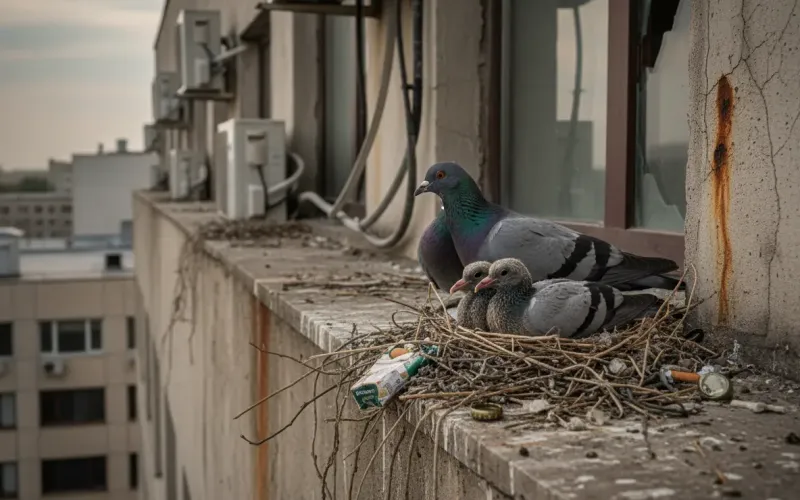
Bird activity is common around commercial buildings. Large structures provide height, shelter, warmth, and easy access to food sources. While birds are part of the natural environment, nesting on buildings often leads to property damage, safety concerns, and contamination risks. Understanding why birds choose these structures helps facilities choose better long-term deterrent strategies.
1. Height and Safety From Predators
Commercial roofs, beams, and ledges offer elevation. Birds prefer high spaces because they provide protection from ground predators and a clear view of the surroundings. Flat roofs, parapets, and large signs create ideal landing and nesting zones.
2. Warm Microclimates
Building surfaces hold heat during the day and release it slowly at night. Birds use this warmth to protect their nests and eggs. HVAC units, vents, solar panels, and metal structures create temperature pockets that attract nesting birds throughout the year.
3. Abundant Food Sources
Many commercial areas have open dumpsters, food establishments, and waste storage. These create easy access to food. Even small crumbs or spilled materials can support consistent bird activity, which encourages nesting close to the source.
4. Shelter From Weather
Overhangs, roof canopies, signs, and equipment clusters shield birds from wind, rain, and direct sunlight. Birds often build nests under solar panels, inside ventilation gaps, or along protected corners where weather exposure is low.
5. Hidden Gaps and Structural Openings
Any small opening can become a nesting site. Birds take advantage of:
- Gaps between panels
- Open rafters
- Damaged roof edging
- Unsealed vents
- Maintenance voids
These areas allow secure nest building and make removal difficult once birds settle.
6. Lack of Active Deterrents
Buildings without deterrent systems become long-term nesting sites. Birds return to places where they feel safe and undisturbed. Once a building becomes a consistent nesting area, the behavior continues across seasons and generations.
7. Learned Behavior and Patterns
Birds repeat habits. If a flock has successfully nested on a structure once, they return every season. Other birds also follow existing patterns, which increases nesting density around predictable commercial sites.
Stopping the Cycle With Better Monitoring
Birds choose commercial buildings for safety, warmth, food, and shelter. When these conditions stay consistent, nesting patterns become permanent. Facilities need deterrent systems that provide reliable and continuous coverage, not reactive solutions after nests appear.
This is where Symterra Pulse becomes valuable. It monitors the electrical performance of deterrent lines in real time, detects weak zones, and alerts teams before birds settle again. With consistent monitoring, facilities stop the nesting cycle by keeping the entire deterrent system active, stable, and reliable.