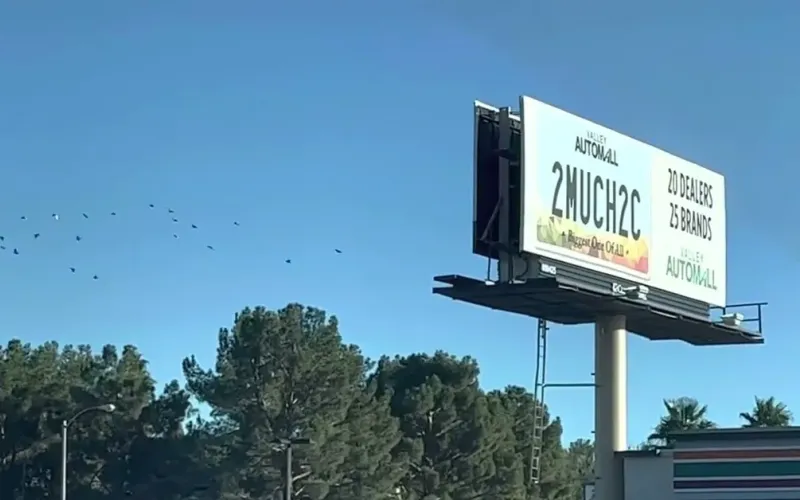
The most effective bird deterrent is one birds cannot adapt to, because adaptability is why spikes, sound devices, and visual scare tactics fail over time. System-based deterrents that influence bird behavior and navigation, rather than relying on fear or physical barriers, provide the most reliable long-term protection for structures like billboards
Birds are beautiful, smart creatures that play a very important role in our ecosystem. There is no denying that. Walking at the park, taking a stroll on the beach, or even just looking through your window to your backyard. Birdwatching is a fascinating hobby. However, you may not want those same beautiful creatures perching on your billboards.
Quick Answer
What is the most effective bird deterrent for billboards?
The most effective bird deterrent for billboards is one that reduces repeat landing, roosting, and nesting without blocking visibility, damaging the structure, or creating constant maintenance. Static tools like spikes, netting, sound devices, and visual scare tactics may work temporarily, but birds can adapt or move to nearby billboard surfaces. Long-term billboard protection works best when deterrence changes how birds experience the structure.
| Bird deterrent option | Billboard use case | Main limitation |
|---|---|---|
| Bird spikes | Can block narrow ledges or small landing points | Birds may move to nearby frames, letters, lighting arms, or rear panels |
| Bird netting | Can exclude birds from specific enclosed gaps | May sag, tear, collect debris, or affect service access |
| Visual scare devices | Can create short-term movement | Birds may adapt once the device feels harmless |
| Sound devices | Can disturb birds temporarily | Repeated sounds may lose impact and affect nearby environments |
| Chemical or gel deterrents | Can discourage landing on limited surfaces | Weather, dust, surface condition, and maintenance affect performance |
| Symterra Pulse | Supports long-term behavior-based deterrence for billboard structures | Requires proper site planning and coverage layout |
Why Do Traditional Billboard Bird Deterrents Stop Working?
Birds are known to cause serious damage to billboards. They will poke holes in vinyl copy and use vinyl pieces to nest. If the birds find their way into the head-plate, that potentially can turn into a very expensive problem to fix. Their feces are also highly acidic and will cause serious erosion over time.
Not only will birds physically cause damage to billboards but they will also require re-occurring maintenance costs that add up quickly. (Pressure washing, man hours to clean the vinyl, cleaning of bird pans, etc.).
How Birds Damage Billboard Structures
| Bird Activity | Billboard Risk | Business Impact |
|---|---|---|
| Perching on frames | Droppings collect on vinyl, catwalks, and structure | More cleanup and service calls |
| Nesting inside structure | Debris builds up in hard-to-reach areas | Higher maintenance complexity |
| Pecking or pulling vinyl | Holes, tears, and damaged copy | Replacement or repair costs |
| Roosting near lighting | Droppings and nesting debris affect fixtures | Lighting maintenance delays |
| Activity near head plates | Birds enter structural spaces | Expensive access and repair work |
| Repeat return behavior | Birds keep using the same structure | Ongoing operational costs |
Need to protect billboards from bird damage?
Symterra helps billboard owners and OOH operators reduce bird pressure around sign faces, frames, lighting areas, structural openings, and hard-to-reach maintenance zones.
Request a Site RecommendationWhy Billboards Need Low-Profile Bird Control
Billboards need bird control that protects the structure without distracting from the advertisement. Large barriers, visible hardware, sagging netting, or bulky devices can affect appearance, brand presentation, lighting access, and service work.
Birds often use billboard frames, lighting arms, rear panels, stringers, walkways, and elevated supports because these areas provide height, shelter, and low disturbance. If deterrence only protects one visible edge, birds may shift to another part of the structure.
A low-profile bird deterrent strategy should reduce bird pressure while preserving visibility, service access, and the clean appearance advertisers expect.
For more billboard-specific applications, review Symterra’s solutions for signs and billboards.
What Does Bird Damage Cost OOH Operators Per Year?
Pest birds have been a major issue that the Out of Home industry has faced since the very beginning. Solutions have come and gone but they never seem to stick, or they’re overpriced and not effective. Birds are highly smart creatures and can adapt very easily which is why most solutions in the past have only been temporary. The bird has continued to outsmart them.
Additionally, you want your bird deterrent solution to be very low profile. Most solutions in the past have been intrusive and not ideal for the advertising world where protecting your brand is everything.
I know I have personally heard from well-known veterans in the industry recently and they can all vouch that birds have been causing headaches for years and years and nobody has quite been able to solve for this problem, until now.
The Symterra solution is built for the Out of Home industry because it is non-lethal, low profile, effective, and designed for long-term deterrence. The system is low-profile and visually discreet, so it blends into the structure without drawing attention. Installation is minimal and can often be completed by a trained two-person crew in about two hours.
Signs Your Billboard Needs a Long-Term Bird Deterrent
Billboard bird problems often start small, then turn into repeat maintenance calls. If birds keep returning to the same sign face, frame, lighting area, or structural space, the issue will usually continue until the site becomes uncomfortable for landing and nesting.
Watch for these signs:
- Droppings on vinyl, catwalks, ladders, or frame areas
- Birds entering the head plate or structural openings
- Nesting material behind panels or inside support areas
- Vinyl holes, tears, stains, or damage
- Lighting or electrical access blocked by debris
- Pressure washing needed again and again
- Service crews reporting birds during repeat visits
- Bird activity returning after spikes, sound devices, or visual deterrents
When these signs appear, billboard owners need a long-term deterrent plan, not another short-term patch.
Why Billboard Owners Need a Low-Profile Bird Deterrent
Billboard owners need bird control that protects the structure without distracting from the advertisement. Large spikes, bulky barriers, visible netting, or messy deterrents can interfere with appearance, maintenance access, and brand presentation.
A stronger billboard bird control plan should help operators:
- Protect vinyl copy from staining and damage
- Reduce pressure washing and repeat cleanup
- Keep lighting and structural areas easier to access
- Limit nesting inside hard-to-reach billboard spaces
- Reduce service interruptions
- Protect revenue-producing assets
- Maintain a clean, low-profile appearance
For OOH operators, the best bird deterrent is not only about removing birds. It is about protecting the billboard’s appearance, uptime, and long-term value.
Stop repeat bird damage on billboard assets
If birds keep damaging vinyl, nesting inside billboard structures, or creating repeat service calls, Symterra can help evaluate your site and recommend a long-term deterrent plan.
Schedule a ConsultationWhy Static Billboard Deterrents Often Fail Long Term
Static billboard deterrents often fail because birds learn where the weak areas are. Spikes may cover one ledge, but birds can land on nearby supports. Netting may block one gap, but birds can use another access point. Visual and sound devices may create a short-term reaction, but birds may return once they learn the signal is predictable.
For billboard operators, this creates repeated service calls, cleanup, copy damage, bird pan cleaning, and technician access issues. The deterrent may still be present, but birds continue using the structure because the full behavior pattern was not addressed.
Long-term billboard bird control should focus on the way birds move through the entire structure, not just one perch or nesting area.
For a deeper explanation, read why static bird deterrents lose effectiveness over time.
How Does Electromagnetic Bird Deterrence Protect Billboard Structures?
Symterra uses technology that influences a bird’s natural response through an electromagnetic pulse, helping prevent birds from landing and redirecting them to other suitable areas without harming them. Because the system works through a non-contact approach rather than a physical barrier, birds are less likely to adapt compared to tactile deterrents.
After making such a substantial investment, you want to make sure that it is taken good care and able to create a successful stream of revenue for years to come. It can be devastating to watch a flock of birds decide to create a home inside your billboard, nesting right into the stringers, defecating and quickly deteriorating your asset.
Symterra would love to help you protect those assets and prevent bird damage, once and for all.
Learn more about Symterra Pulse and how it supports long-term bird deterrence for billboard structures and commercial assets.
Billboard Bird Control
Protect Billboard Assets From Recurring Bird Damage
If birds keep returning to billboard frames, lighting arms, stringers, vinyl copy, rear panels, or service areas, Symterra can help assess the structure and recommend a long-term deterrent strategy built around billboard layout and bird behavior.
Request a Billboard Bird Control AssessmentTo protect billboard structures from recurring bird pressure, contact Symterra for a site recommendation.
Frequently Asked Questions
What is the best bird deterrent for billboards?
The best bird deterrent for billboards is one that reduces repeat landing, roosting, and nesting without interfering with visibility, service access, lighting, or the billboard structure.
Why do birds land on billboards?
Birds land on billboards because elevated frames, lighting arms, rear panels, stringers, and supports provide height, shelter, and low-disturbance surfaces.
Do bird spikes work on billboards?
Bird spikes can help on narrow billboard ledges, but they may not solve the full problem if birds can move to nearby frames, supports, lighting areas, or rear panels.
Why do billboard bird problems keep coming back?
Billboard bird problems keep coming back when birds still find safe landing, roosting, or nesting areas on the structure. Cleanup and partial deterrents do not always change the behavior causing the problem.
How can billboard operators reduce recurring bird damage?
Billboard operators can reduce recurring bird damage by using a deterrent strategy that covers the full structure, protects service access, and addresses how birds move across frames, lighting arms, rear panels, and supports.